
You know something is off. Maybe sleep has been a struggle for months, or your mood swings in ways that feel bigger than stress alone. You search for a psychiatrist in Chicago and end up with a wall of names, ratings, and specialties that tells you almost nothing about where to actually start. The real question you’re trying to answer is: do you need a psychiatrist, a therapist, or both? The distinction matters more than most people realize, and getting it wrong costs real time and real money.
These two types of providers do fundamentally different work. Choosing a therapist when you need medication management can leave a biological condition untreated. Booking a psychiatry evaluation when what you really need is CBT and skill-building can leave you with a prescription and no support around it. Neither outcome moves you forward the way you need.
At River North Counseling, a licensed group practice based in Chicago’s River North neighborhood with offices in Skokie and virtual sessions throughout Illinois, this is one of the most common questions the team works through with new clients during intake. “Do I need a therapist or a psychiatrist?” has a real answer, and it depends on your specific presentation. This article gives you the framework to find yours.
What a psychiatrist actually does (and how they differ from a therapist)
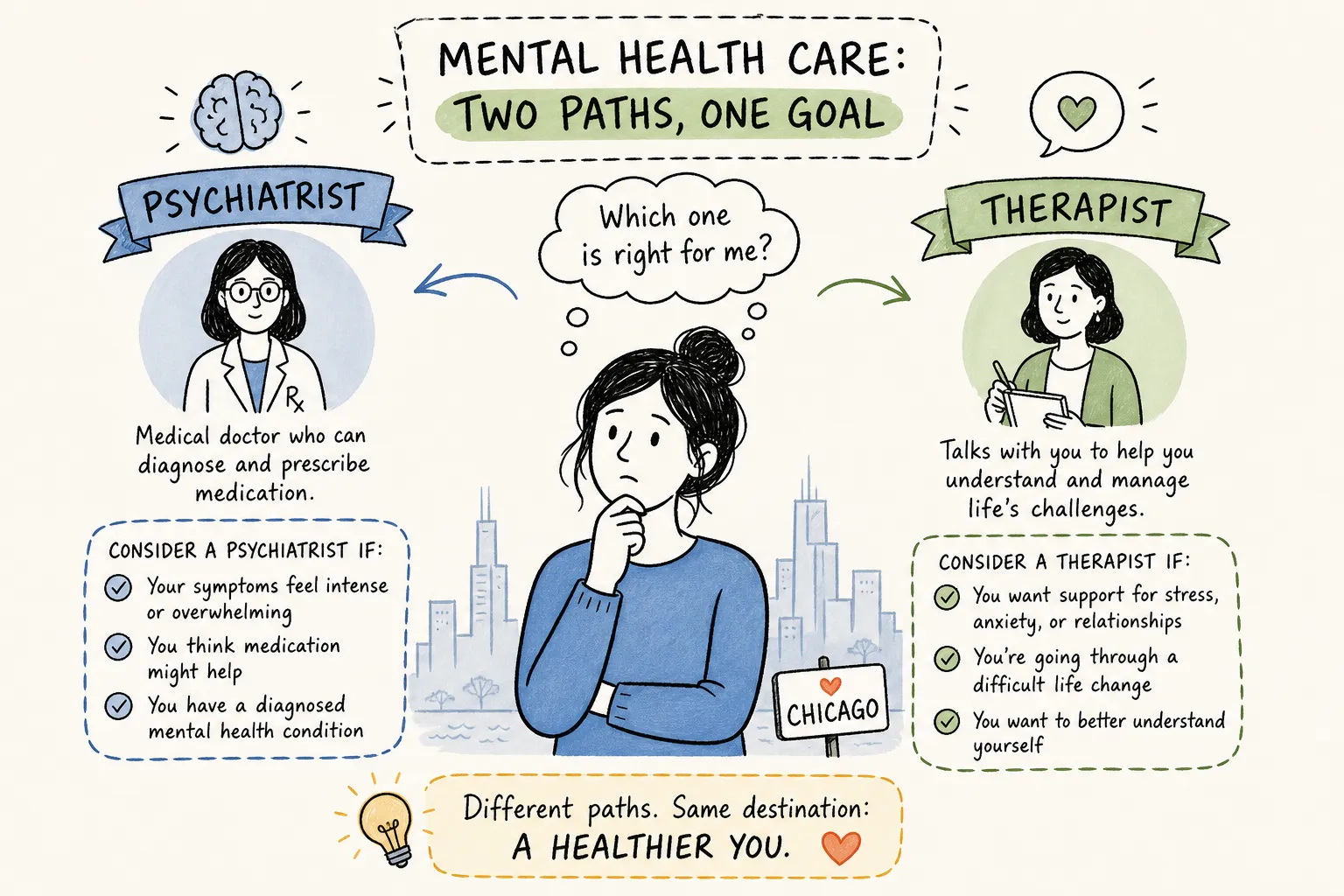
Psychiatrists are medical doctors (MD or DO) who specialize in mental health. Their primary clinical tool is medication. They can diagnose mental health conditions, prescribe and adjust psychiatric medications, antidepressants, mood stabilizers, antipsychotics, stimulants, and monitor the biological side of your mental health care. A first psychiatric appointment, typically called a psychiatric evaluation, usually runs 45 to 90 minutes. The psychiatrist gathers a detailed history covering symptoms, medical background, family psychiatric history, current medications, and how your challenges are affecting daily life. Follow-up visits focused on medication management are typically shorter, often 15 to 30 minutes.
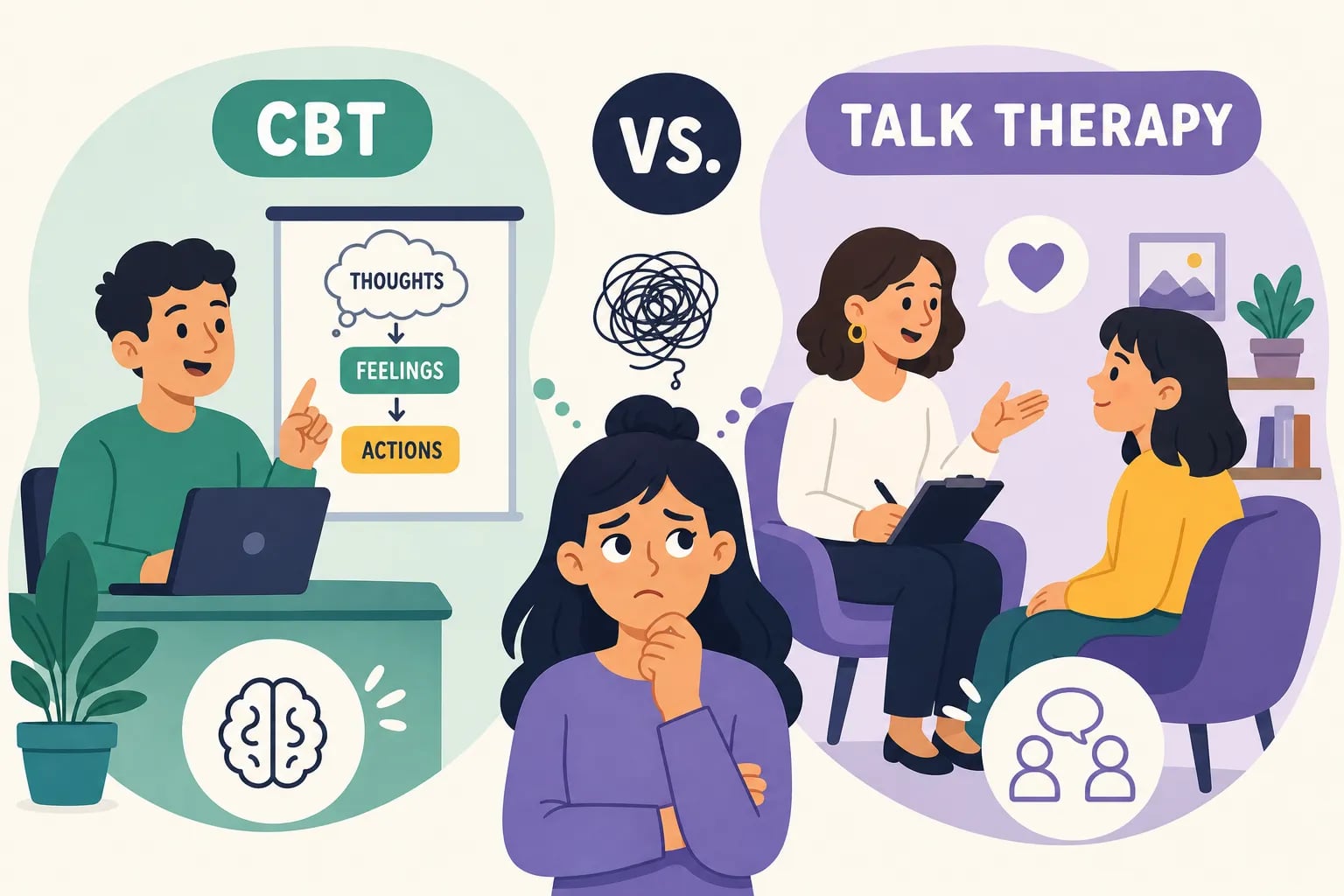
Therapists and licensed counselors hold graduate-level clinical degrees, not medical degrees. In Illinois, most licensed therapists, including LCSWs, LPCs, and the majority of psychologists, cannot prescribe medication. (A small, limited class of specially trained prescribing psychologists in Illinois may do so under strict collaborative agreements and regulatory restrictions, but this remains the rare exception rather than the rule.) Their work is talk-based: building coping skills, processing trauma, and restructuring thought patterns. They draw on structured approaches like Cognitive Behavioral Therapy to support clients through life transitions and ongoing mental health challenges. This isn’t a hierarchy. It’s a division of labor. Many people benefit from both simultaneously, with a psychiatrist managing medication and a therapist providing the structured, ongoing support that medication alone can’t deliver.
Some Chicago psychiatry clinics offer services that go well beyond standard medication management. Rush University Medical Center provides ECT (Electroconvulsive Therapy) for severe, treatment-resistant cases, along with TMS (Transcranial Magnetic Stimulation) and Spravato. Luxury Psychiatry Clinic also offers TMS and Spravato. For most people, however, the psychiatrist’s core role stays focused on evaluating whether medication is appropriate and calibrating it over time.
Clear signs you may need a psychiatric evaluation specifically
Certain presentations respond best to medication alongside, or even before, therapy. Severe or debilitating depression that makes basic functioning difficult, bipolar disorder with significant mood cycles, psychosis, schizophrenia, schizoaffective disorder, and panic disorder with intense physiological symptoms are all conditions where medication is not optional. If symptoms are so acute that concentrating in a therapy session feels impossible, a psychiatric evaluation is the smarter starting point, not because therapy doesn’t work, but because the biological component needs to be addressed first.
ADHD is another common reason people seeking a psychiatrist in Chicago reach out to a specialist directly, particularly when stimulant medication is being considered after a formal evaluation. If you’ve already been in therapy for several months and your symptoms haven’t improved meaningfully, that’s also a signal worth taking seriously. A psychiatrist can evaluate whether a biological component is going untreated. If a primary care physician has already prescribed psychiatric medication but it doesn’t feel right or isn’t working well, a psychiatrist’s specialized expertise adds significant value to fine-tuning that care.
Beyond an initial prescription, conditions including severe OCD, early-onset mood disorders, and the diagnoses listed above typically require ongoing psychiatric monitoring. These aren’t “one appointment and done” situations. Child and adolescent presentations, including severe ADHD or autism-related behavioral challenges, also warrant a specialist. In Chicago, Meridian Psychiatric Partners and Chicago Psychiatrists (Laura Anders, MD and William Lynch, MD) both offer child and adolescent psychiatry services.
Why a licensed therapist is often the smarter first step
For mild to moderate anxiety, depression, life transitions, relationship stress, or burnout, therapy is typically the appropriate starting point. A skilled therapist provides CBT, trauma-informed care, and practical skill-building that addresses root patterns, not just surface symptoms. Research consistently supports that combined therapy and medication yields better outcomes than medication alone for many conditions, and starting with therapy first gives you a clearer baseline to judge whether medication would genuinely add value on top of what therapy is already doing. For more on deciding between counseling and psychiatric care, see Therapist or Psychiatrist in Chicago: How to Decide.
A good therapist also recognizes when a client’s symptoms cross a threshold that warrants a psychiatric referral. That clinical judgment is part of the job. If your primary challenges are anxiety, depression, burnout, work stress, or relationship strain, a therapist is likely where you start. The team at River North Counseling handles exactly those presentations, working with adults, couples, families, and children across a wide range of concerns from their offices in River North and Skokie, as well as through virtual sessions across Illinois. During intake, their therapists assess symptom severity and history, and they’re direct with clients who may benefit from a psychiatric consultation running alongside their therapy work.
The move from therapy to psychiatric care, when it does happen, doesn’t mean therapy failed. Common triggers include symptoms that intensify despite consistent work in sessions, new symptoms suggesting a biological component, a therapist’s recommendation, or a significant life change such as the postpartum period or major trauma. In most cases, the two types of care run in parallel rather than replacing each other.
Finding a psychiatrist in Chicago: top clinics accepting new patients
Anyone looking for psychiatrists accepting new patients in Chicago will find several strong options across neighborhoods and insurance types. Before diving into the list, note that the providers below represent a range of specialties, access models, and coverage, use this as a starting point, then verify details directly with each clinic. You can also search clinician directories such as Psychology Today’s Chicago psychiatrist listings for provider profiles and filters.
Clarity Clinic (312-815-9660) offers psychiatry, therapy, TMS, and intensive outpatient programming with same-week appointments and virtual options. They accept BCBS, Aetna, UnitedHealthcare, Cigna, and Medicare. Meridian Psychiatric Partners (312-640-7743) provides a multidisciplinary team with specialties spanning mood disorders, ADHD, women’s mental health, and child and adolescent psychiatry, and they’re in-network for Aetna, BCBS, and UnitedHealthcare.
LifeStance Health at 1 E Erie Street (312-761-4726) is accepting new patients and works with Aetna, BCBS, UnitedHealthcare, Cigna via Evernorth, and Medicare. LifeStance Health’s Chicago location may be a convenient option for people seeking a large clinic network with multiple access points. Chicago Psychiatrists, Laura Anders, MD and William Lynch, MD, offer telehealth and in-person appointments including evenings and weekends, covering anxiety, mood disorders, ADHD, and adolescent psychiatry with integrated CBT.
For complex or treatment-resistant presentations, Rush University Medical Center Psychiatry and Psychology (312-942-5375, located at 2150 W Harrison St) offers ECT, TMS, Spravato, and autism-specific services that most private practices don’t carry. UChicago Medicine Psychiatry (1-888-824-0200) also accepts high patient volume across multiple locations; calling directly is recommended over online forms due to high inquiry volume.
For virtual-first care, Lakeside Psychiatry and YOU Psychiatry Clinic operate hybrid or fully virtual models covering Chicagoland and broader Illinois, two solid telepsychiatry Chicago options if scheduling in-person feels like a barrier. You can also review local telepsychiatry offerings and what they include on Modern Mental Health Chicago’s telepsychiatry page. If you’re on Illinois Medicaid, Luxury Psychiatry Clinic (located in the West Loop) explicitly accepts Illinois Medicaid across all managed care plans. For uninsured patients seeking sliding-scale options, the UIC Neuropsychiatric Institute offers fees ranging from $25 to $175 per session based on ability to pay.
Telepsychiatry and insurance: what to know before you book
Telepsychiatry follows the same clinical process as in-person visits: a video-based evaluation, diagnosis, and ongoing medication management. The primary geographic consideration is licensure, a provider generally must hold a license in the state where the patient is physically located at the time of the appointment. For most Illinois-based psychiatrists, that means they can see patients who are in Illinois during the session, though some providers hold multi-state licenses. Virtual psychiatry works well for initial evaluations and medication management follow-ups; it’s less appropriate when crisis intervention or physical examination is needed. Note that Illinois has moved to permanently expand telehealth access in recent years, which affects how some clinics deliver virtual psychiatric care (Illinois permanently expands access to telehealth).
The major insurers accepted across Chicago’s top psychiatric practices are BCBS, Aetna, UnitedHealthcare, and Cigna. Medicare is accepted at LifeStance, Luxury Psychiatry Clinic, and Clarity Clinic. Before scheduling, call your insurance company directly and ask three things: Is this specific provider in-network for my plan? What is my copay for psychiatric specialist visits? Does my plan require a referral? Some plans run through third-party administrators like Carelon or Beacon, which can affect in-network status even when a provider appears on your insurer’s main directory. Always verify with the clinic directly before your first appointment.
Clarity Clinic and LifeStance frequently offer same-week appointments, and several telepsychiatry Chicago providers maintain shorter lead times than traditional in-person practices. Rush and UChicago may have longer waits unless you specifically request the first available provider, which sometimes means a nurse practitioner who can see you sooner while you wait for a psychiatrist opening.
How to evaluate a provider and prepare for your first appointment
Before committing to a provider, work through a few practical questions: Does this psychiatrist specialize in your specific diagnosis? Do they integrate therapy referrals into their care model, or will you coordinate that separately? What is their philosophy on medication, and do they consider non-pharmacologic options? For ongoing care rather than a one-time evaluation, you want a psychiatrist you can build a relationship with over time. Ask about typical follow-up frequency and how they handle medication questions between appointments.
Prepare for your first evaluation by bringing a written summary of your symptoms: when they started, how they affect daily functioning, what you’ve already tried, and any current medications. Include relevant medical history and family psychiatric history if you know it. Be honest about severity. Psychiatrists need accurate information to make a useful assessment, and downplaying symptoms often leads to an underpowered treatment plan.
For faster access, call during business hours rather than submitting online forms, ask specifically for the “next available” slot, and consider virtual options if in-person scheduling has a longer wait at your preferred clinic. If you’re still unsure whether psychiatry is the right first call, starting with a therapist is a low-risk way to get a proper clinical assessment and, if needed, a direct referral to the right level of care. Our Teletherapy in Chicago: A Beginner’s Guide to Online Therapy covers practical tips for making virtual sessions work.
Choosing the right starting point
The clearest filter is this: if medication evaluation is genuinely on the table, because of symptom severity, a condition known to require pharmacological management, or previous treatment that hasn’t moved the needle, finding a psychiatrist in Chicago is the right first call. If your challenges are emotional, behavioral, relational, or rooted in burnout and life stress, start with a licensed therapist and let the clinical picture guide what comes next.
For those who need psychiatric services in Chicago, the options are strong. Clarity Clinic, Meridian Psychiatric Partners, LifeStance Health, Chicago Psychiatrists, and Rush University Medical Center are all accepting new patients with relatively accessible wait times. Telepsychiatry through providers like Lakeside Psychiatry and YOU Psychiatry Clinic expands those options further if in-person scheduling is a barrier. For broader practical guidance on navigating local services and coverage, see Mental health in Chicago: how to find the right care.
If you’re still working out which path fits your situation, that’s exactly the kind of first conversation River North Counseling is built for. Reach out to their team in River North or Skokie, or schedule a virtual session, and get a clear clinical read on where to start. Finding the right psychiatrist in Chicago, or the right therapist, doesn’t have to mean months of wrong turns. The right care is closer than it feels.