
Anxiety already takes up so much mental space. When you finally decide to get help, the next question, therapist or psychiatrist, can feel like another obstacle before you’ve even started. Some people delay seeking care because the choice feels unclear, and without a clear answer, they end up doing nothing at all. That delay is understandable, but it doesn’t have to happen to you.
So, do you need a therapist or psychiatrist for anxiety? Here’s the honest answer: both providers are legitimate paths to feeling better, but they work differently and serve different needs. For most people dealing with anxiety, a therapist trained in Cognitive Behavioral Therapy is where clinical guidelines point first. Medication has a clear and important role too, but knowing when that role kicks in makes all the difference. By the time you finish reading this, you’ll have a clear sense of which provider fits your situation and exactly what to do next.
Do I Need a Therapist or Psychiatrist for Anxiety? Understanding the Difference
The confusion between these two roles is common, and it makes sense. Both work in mental health. Both can assess your symptoms. But their training, tools, and day-to-day work are genuinely different.
The Therapist’s Role: Building Coping Skills Through Talk Therapy
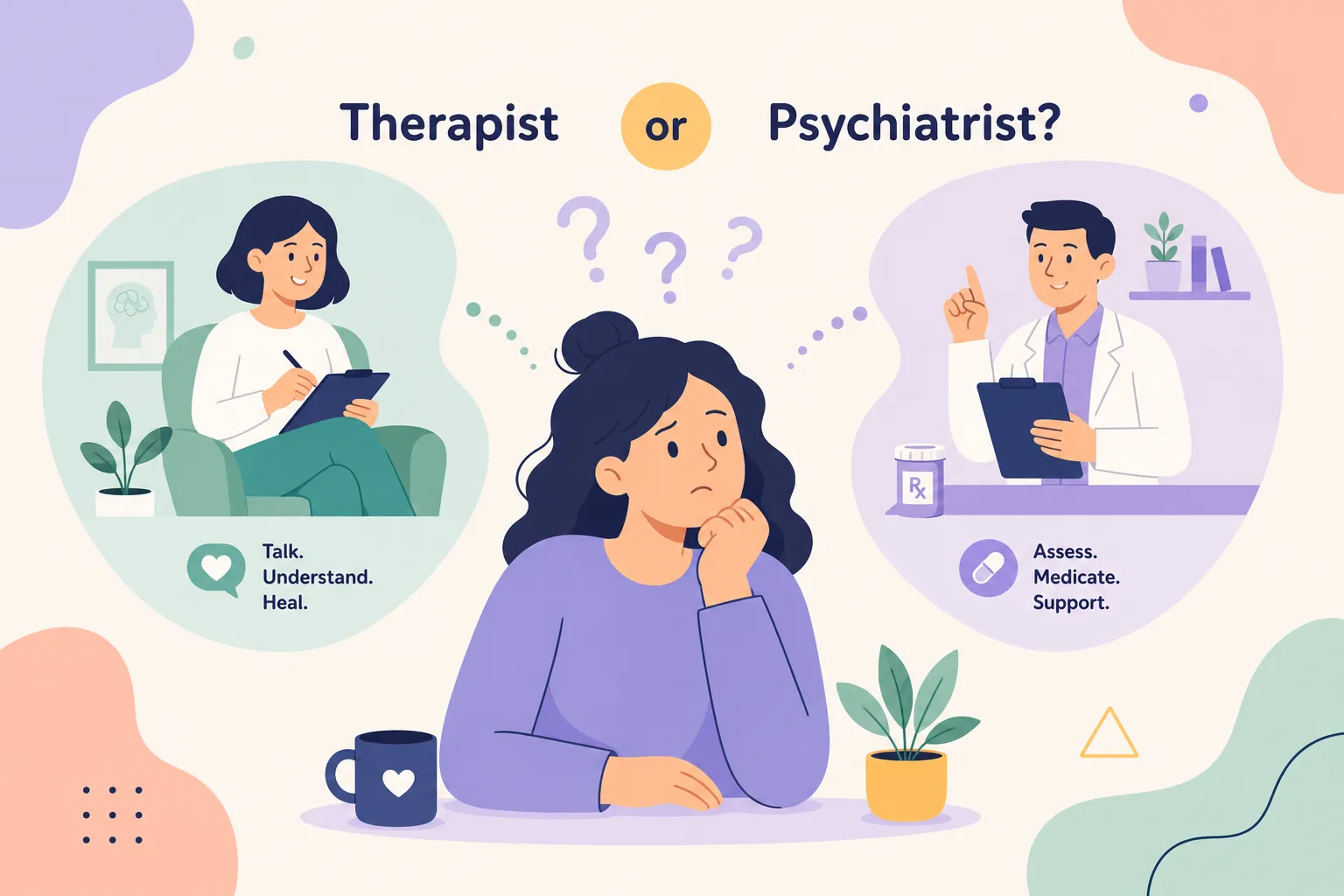
Therapists include licensed clinical social workers (LCSWs), licensed professional counselors (LPCs), and psychologists. They hold master’s or doctoral degrees in behavioral health and are trained to diagnose mental health conditions and deliver structured, evidence-based treatments. Testing can also clarify overlapping presentations like ADHD vs Anxiety, which helps guide whether therapy, medication, or both are appropriate. Their core work centers on identifying the thought patterns, avoidance behaviors, and emotional responses that fuel anxiety, then equipping you with practical tools to interrupt those cycles. In most U.S. states, therapists do not prescribe medication. A limited exception exists in a small number of jurisdictions where specially trained psychologists have obtained prescribing privileges, but this remains uncommon.
The Psychiatrist’s Role: Medical Evaluation and Medication Management
Psychiatrists are medical doctors who completed a residency in mental health. They are trained to evaluate the biological and neurological factors behind anxiety and to prescribe medications like SSRIs and SNRIs. While some psychiatrists also provide therapy, most focus primarily on medication management and coordinate with a therapist when ongoing talk therapy is part of the plan. The distinction isn’t about who is “better”, it’s about what each provider is built to do.
Why Therapy Is Usually the Recommended First Step for Anxiety
This isn’t a matter of opinion. Both the American Psychiatric Association and the Anxiety and Depression Association of America identify Cognitive Behavioral Therapy as the primary first-line treatment for anxiety disorders in their published clinical guidelines and position statements. That recommendation exists for good reason.
CBT as the Gold-Standard First-Line Treatment
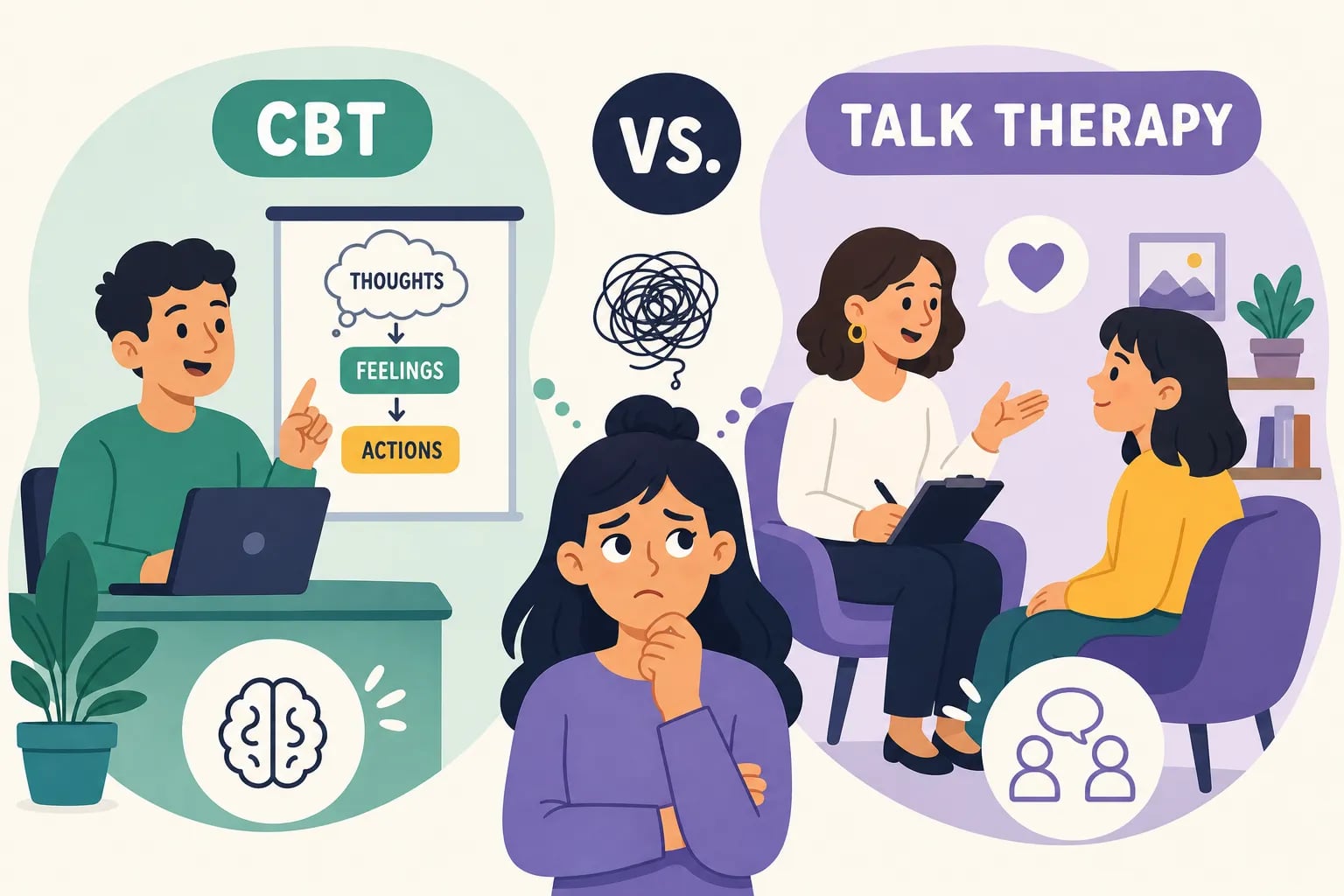
CBT works by targeting the specific thought distortions and behavioral patterns that keep anxiety running. Research consistently shows it outperforms medication alone in preventing relapse over the long term. Meta-analytic studies report that approximately 50% of adults with anxiety disorders achieve clinically significant improvement through a full CBT course without any medication, with relapse rates of just 0 to 14% after successful treatment. Compare that to the higher relapse rates seen when medication is discontinued, and the case for starting with therapy is strong.
What Therapy-First Care Looks Like in Practice
At River North Counseling in Chicago, structured CBT starts with a thorough intake to understand your specific type of anxiety, whether that’s generalized worry, social anxiety, panic, or something else. From there, your therapist builds a personalized treatment plan focused on real, portable coping skills, not just insight. For mild to moderate presentations, this approach alone is often enough to significantly reduce anxiety. Starting with therapy also creates a clear baseline: if you’re making solid progress, the question of a psychiatric referral may never need to come up.
When a Therapist Is the Right First Call: Do I Need a Therapist or Psychiatrist for Anxiety?
Symptom severity matters when figuring out where to start. Most people with mild-to-moderate anxiety fall squarely into therapist territory, and that’s actually a good thing, because the evidence shows therapy addresses the root of the problem in a way medication alone doesn’t, according to guidelines supporting psychotherapy as a first-line approach for those presentations.
When Daily Functioning Is Mostly Intact
If anxiety is uncomfortable but not shutting your life down, you’re still getting to work, maintaining relationships, and sleeping most nights, a therapist is the right first call. Worry, social anxiety, low-grade panic, and situational stress all respond well to structured CBT. Many people with mild-to-moderate anxiety improve significantly with evidence-based therapy alone, and introducing medication before trying therapy skips the step most likely to produce lasting change.
When the Anxiety Has a Clear Cognitive or Situational Pattern
If your anxiety is tied to identifiable triggers, work pressure, relationship conflict, a past experience, performance demands, a therapist can work directly with those root causes. CBT is particularly well-suited here because it teaches you to respond differently to those triggers, targeting the cognitive and behavioral mechanisms that sustain the anxiety cycle. Research comparing CBT’s long-term outcomes to medication supports this approach when a clear situational pattern is present. This is true even when anxiety shows up in high-achieving people, see our piece on how anxiety can manifest in seemingly “successful” individuals.
When to See a Psychiatrist for Anxiety: Signs a Psychiatric Evaluation Makes Sense
There are presentations where a medical lens is warranted, and recognizing them matters. A psychiatric evaluation for anxiety isn’t a last resort, it’s the right tool when specific clinical markers are present.
Severity Markers That Shift the Clinical Picture
Recurrent panic attacks that feel physically uncontrollable, anxiety so severe it prevents leaving the house, working, or sleeping, and any thoughts of self-harm all require medical assessment. Persistent anxiety that hasn’t responded to consistent, well-delivered therapy is another clear indicator. If you’ve genuinely put in the work with a therapist and symptoms remain debilitating, medication may need to be part of the equation. A psychiatric evaluation is also appropriate when physical symptoms, racing heart, dizziness, chronic muscle tension, are so persistent that they’re interfering with your ability to engage in therapy at all.
What a Psychiatric Evaluation Actually Involves
A psychiatric evaluation is a structured clinical interview, not a commitment to medication. The appointment typically runs 45 to 90 minutes and covers your current symptoms, medical and psychiatric history, and how anxiety is affecting your daily life. A psychiatrist will often use standardized screening tools like the GAD-7 to quantify symptom severity. For an overview of what clinicians cover during the first visit, see this detailed summary of the initial psychiatric assessment. If medication is recommended, a first-line option like an SSRI is typically discussed along with a realistic onset timeline: most people notice meaningful improvement within two to six weeks, with full effects often emerging around four to eight weeks. For practical detail on the timeline for starting antidepressants and analyses of SSRI and SNRI response trajectories, see the linked resources. The evaluation gives you information, and from there, you decide together with your provider what comes next.
When Both Providers Together Give You the Best Outcome
For some presentations, combined care isn’t just helpful, it’s the most effective clinical pathway available. Understanding when that applies helps you advocate for yourself.
How Medication and Therapy Work Differently, and Together
For severe or treatment-resistant anxiety, particularly panic disorder and anxiety complicated by depression, medication and therapy operate on different levels and complement each other well. Medication reduces symptom intensity to a more manageable baseline, creating calmer conditions under which therapy can do its deepest work. Think of it this way: medication quiets the alarm enough for you to actually learn the fire drill. CBT then builds the long-term cognitive and behavioral skills that medication alone cannot provide. That’s why combined treatment with psychotherapy and medication tends to produce better long-term outcomes than either approach on its own.
The Combined Care Model in Practice
In a combined care arrangement, a psychiatrist manages medication while a separate therapist leads the talk therapy component. The two providers coordinate on your care plan, often through shared notes or direct communication. This model is especially well-supported for panic disorder and severe generalized anxiety. It’s not a sign that your anxiety is too serious to manage, it’s a sign that you’re accessing the full breadth of what modern anxiety treatment offers. Many patients continue psychotherapy as the mainstay of long-term care after medications help stabilize symptoms, with medication playing a key supporting role early on.
Your Clearest Next Step Toward Anxiety Relief
If you’re asking yourself, “Do I need a therapist or psychiatrist for anxiety?”, for most people, the answer is a therapist first. Specifically, one trained in CBT who can assess your symptoms, build a structured plan, and evaluate whether a psychiatric referral makes sense down the road. That first appointment does most of the diagnostic work for you.
If you’re in the Chicago area and ready to take that step, River North Counseling offers CBT-focused individual therapy with licensed clinicians who specialize in anxiety treatment. Whether you’re dealing with low-grade daily worry or you’ve been struggling for years without relief, the intake process is designed to match you with the right therapist for your specific situation. In-person sessions are available in River North and Skokie, and virtual therapy is accessible across Illinois. Learn more about the Best CBT Therapists for Anxiety in Chicago: A Guide.
The clearest path forward is booking that first conversation. One appointment puts you in a position to understand your options, get a professional read on your symptoms, and start building a treatment plan, with a clear sense of whether therapy alone, medication, or a combination is the right fit for where you are right now.