
You’re a Chicago professional, sitting with a month of persistent anxiety, and you’ve finally decided to do something about it. You open a browser tab and immediately hit a wall: do you need a therapist or a psychiatrist? Is there actually a meaningful difference? The question of therapist vs. psychiatrist comes up constantly among Chicago residents, and the confusion is understandable, the mental health system does a poor job of explaining itself.
This article cuts through that confusion with a clear, practical breakdown of what each provider does, what their appointments actually feel like, and which one fits which situation. Many licensed therapy practices in Chicago, including River North Counseling, help clients navigate exactly this decision, and coordinate with psychiatric providers when medication becomes part of the care picture. By the end, you’ll have a straightforward framework for making that choice confidently.
What Actually Separates a Therapist from a Psychiatrist
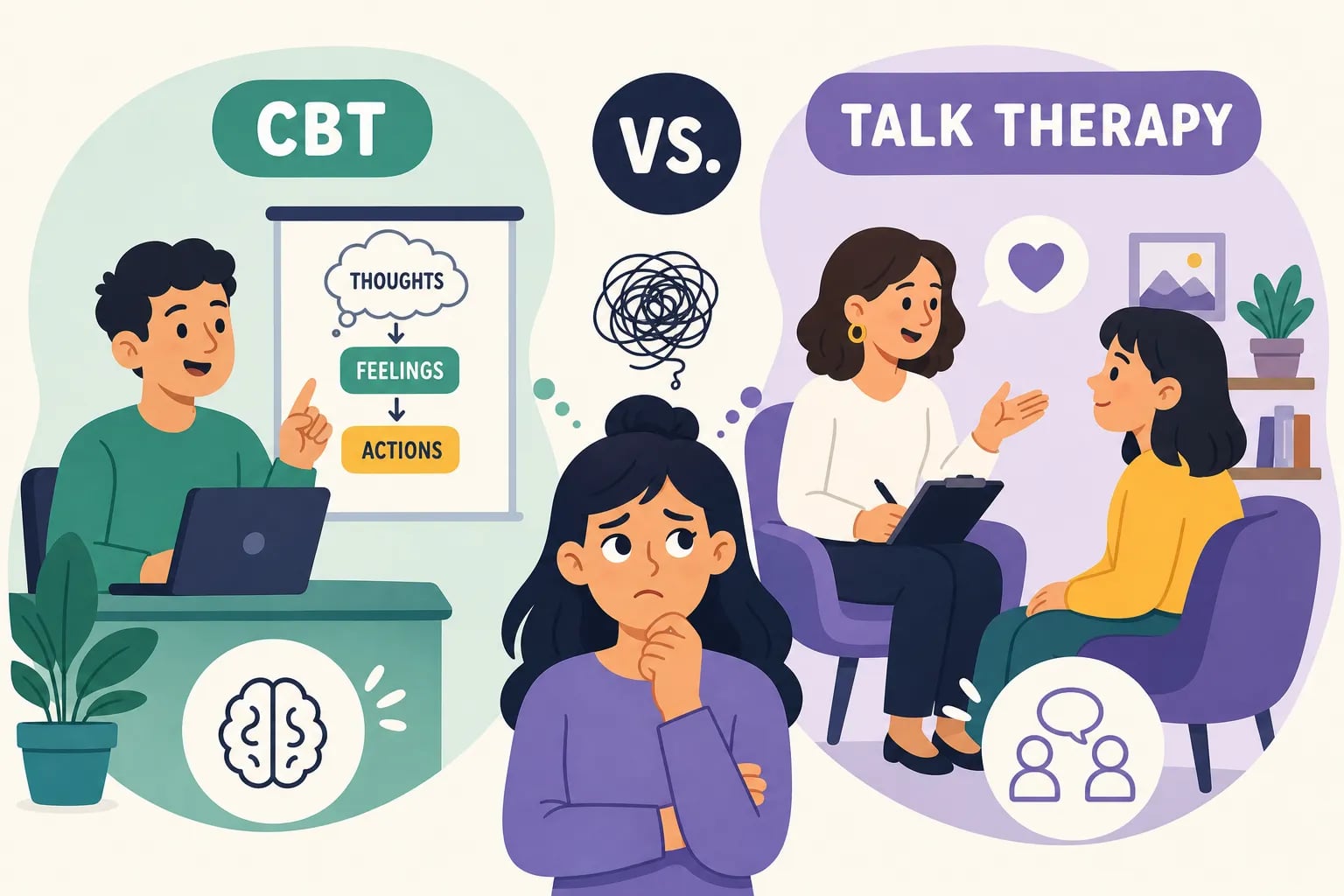
The word “therapist” gets used loosely, which is part of why this comparison feels murky. In Illinois, the therapist category covers several distinct license types: Licensed Clinical Social Workers (LCSWs), Licensed Clinical Professional Counselors (LCPCs), and doctoral-level psychologists (PhD or PsyD). All are licensed through the Illinois Department of Financial and Professional Regulation (IDFPR) and all are qualified to diagnose and treat mental health conditions. In nearly all clinical settings, therapists do not prescribe medication, the rare exception being a small, narrowly defined class of specially trained prescribing psychologists who operate under a collaborative physician agreement and face strict limits on the conditions and medications they can address. Their standard clinical approaches are rooted in structured, evidence-based talk therapy, including CBT, trauma-informed care, and interpersonal therapy.
Psychiatrists occupy a completely different role. They are medical doctors (MD or DO) who complete four years of medical school followed by a four-year psychiatry residency. That medical training grants them full prescribing authority in Illinois, covering medications for depression, bipolar disorder, anxiety, psychosis, and ADHD. Many outpatient psychiatrists focus primarily on diagnosis and medication management rather than extended therapeutic conversation.
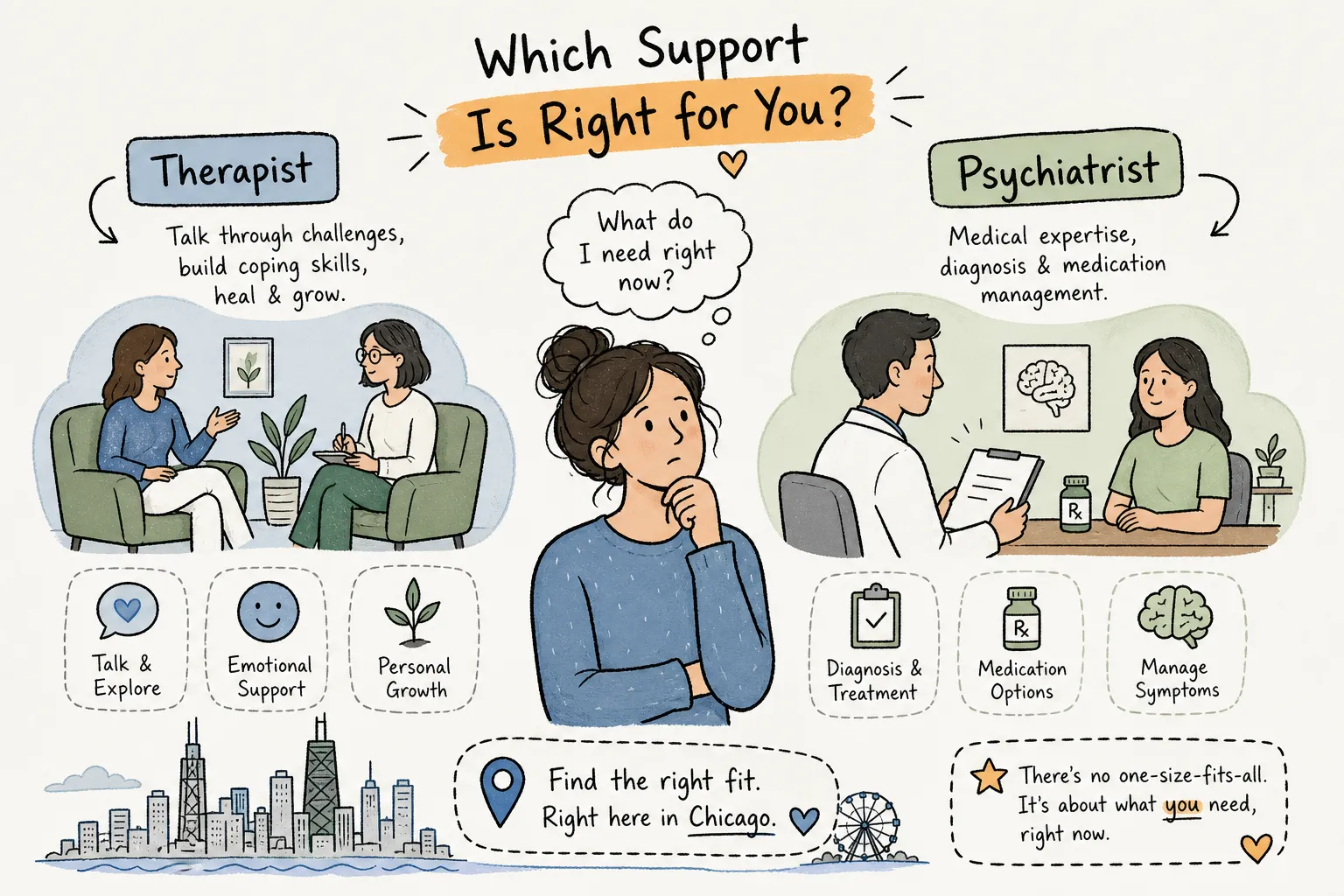
The clearest line: psychiatrists manage the biology of mental health through medication; therapists address thoughts, behaviors, and emotional patterns through structured conversation. Both are credentialed, highly trained professionals working toward the same goal from different angles.
Therapist vs. Psychiatrist: What to Expect from Each Appointment
Knowing what actually happens in each setting removes a lot of the anxiety around taking that first step. A psychiatric evaluation for a new patient typically runs 45 to 60 minutes. The psychiatrist reviews medical history, symptom history, prior diagnoses, and current functioning, then determines whether medication is indicated and what follow-up looks like. Ongoing medication management visits are shorter, usually 15 to 30 minutes, focused on monitoring progress and adjusting treatment.
The emphasis in a psychiatry appointment is clinical assessment. Some psychiatrists do provide psychotherapy alongside medication, but this is less common in a busy outpatient practice. If you’re expecting an extended emotional-processing conversation in a psychiatry office, you may leave feeling like something was missing.
A first therapy session runs 50 to 60 minutes and centers on understanding what brought you in, your background, and what you want to change. Ongoing sessions are structured conversations where the therapist guides you through coping strategies, thought patterns, relational dynamics, or trauma processing, depending on the clinical approach. Unlike a medication adjustment, the skills you build in therapy become yours to carry forward long after sessions end, research on CBT, for example, consistently shows durable gains in relapse prevention that persist well beyond active treatment.
Signs That Starting with a Therapist Is the Right Move
If you’re managing persistent worry, low mood, burnout, relationship strain, or a major life transition, and you’re still functioning day to day, therapy is typically the right starting point. Multiple randomized controlled trials confirm that CBT is a first-line treatment for mild to moderate anxiety and depression, producing lasting results without medication; see summaries of the clinical evidence for CBT in peer-reviewed reviews. A licensed therapist can assess your full clinical picture, help you build practical coping skills, and refer you to a psychiatric provider if medication becomes appropriate later.
Therapy is particularly well-suited for situations rooted in patterns: how you respond to stress, how you communicate in relationships, how past experiences shape present behavior. Conditions like generalized anxiety disorder, social anxiety, mild depression, grief, trauma responses, and work-related burnout often respond very well to structured psychotherapy. The skills clients develop in therapy tend to outlast the treatment itself, a meaningful advantage for people managing chronic stress.
Starting with therapy doesn’t mean ruling out medication forever. It means beginning with the treatment that most directly targets what’s driving your symptoms. If the clinical picture shifts, a good therapist will recognize it and help you navigate what comes next.
When a Psychiatric Evaluation Should Come First
Severity changes the calculus. If symptoms are disrupting daily functioning at a significant level, a psychiatric evaluation belongs in the conversation right away. This includes being unable to get out of bed, experiencing panic attacks that feel physically dangerous, or struggling with thoughts of self-harm. When there is a prior diagnosis of bipolar disorder, schizophrenia, or a condition previously managed with medication, reconnecting with psychiatry first is the clinically sound path.
In crisis situations, medication can stabilize symptoms faster than therapy alone. That stabilization creates the neurological baseline that makes therapy more productive. Trying to process trauma or restructure thought patterns when symptoms are acute and severe is like trying to have a detailed conversation during a fire alarm, the environment has to be safe before the work can happen.
Bipolar disorder, psychotic disorders, and severe major depressive disorder typically require mood-stabilizing or antipsychotic medication as a foundation. If you’ve been in therapy without meaningful improvement, a psychiatric evaluation to assess whether a biological component is being missed is a reasonable and often productive next step, not a sign that therapy failed.
Why Coordinated Care Often Works Better Than Choosing Just One
For moderate to severe depression and anxiety disorders, the combination of psychotherapy and medication consistently outperforms either treatment on its own. A large meta-analysis across 52 studies found a mean effect size of 0.43 in favor of combined treatment over medication alone, with 40% lower rates of relapse and rehospitalization at 12 months or more, and 13% higher treatment adherence in combined care. Adding a citation to the underlying review (Cuijpers et al., 2020 is one commonly cited source for this body of research) gives readers a verifiable starting point for further reading.
Medication reduces symptom intensity enough to make therapy more productive. Therapy builds the skills and insight that sustain recovery long after medication is adjusted or discontinued, and for many people, that combination is a more effective and durable path than either approach alone.
At River North Counseling, licensed therapists work with clients navigating both talk therapy and questions about medication. When a client’s needs go beyond what therapy alone can address, the team supports coordination with psychiatric providers across Chicago, so clients aren’t managing two separate care conversations in isolation. Their therapist stays informed, the care stays connected, and the treatment plan reflects the full picture. For Chicago residents who want a therapy home that takes their whole mental health seriously, including the moments when psychiatry becomes part of the answer, that integrated approach makes the process far less overwhelming.
How to Find a Therapist or Psychiatrist in Chicago
Psychology Today and Zocdoc are the two most useful starting directories for Chicago-area mental health providers. Both allow you to filter by insurance, specialty, language, and location. Zocdoc also shows real-time availability, which matters: psychiatry wait times in Chicago average around 23 days for new patients (based on 2026 local market data), while therapy appointments, particularly through telehealth, are often available within days.
For a Chicago-specific resource, the UIC Counseling Center Community Provider Database lists local mental health professionals who accept multiple major insurers, including BCBS PPO, Aetna, and Cigna. If you have a Blue Cross Blue Shield of Illinois plan, BCBSIL’s Provider Finder tool lets you search in-network behavioral health providers directly, removing the guesswork around coverage before you ever pick up the phone. Searching “psychiatrist near me” or “psychotherapist Chicago” in either directory will surface providers by neighborhood.
Here is a realistic cost range for Chicago-area providers:
- Therapist sessions typically run $90 to $200 out of pocket, with in-network copays usually falling between $20 and $60
- Psychiatric initial evaluations often run $250 to $400, with medication management visits at $100 to $300 out of pocket
- Sliding-scale options are available at community mental health centers for those without insurance or with Medicaid
Telehealth has meaningfully expanded access to both therapy and psychiatry across Illinois, often with faster availability than in-person appointments. River North Counseling offers flexible evening and virtual scheduling for Chicago-area clients who can’t easily make it to an in-person office in River North or Skokie, making it easier to get started wherever you are.
Making the Call and Taking the Next Step
The distinction is worth knowing clearly: therapists treat mental health through conversation and skill-building; psychiatrists evaluate and manage medication. Both are valuable, and most people simply need clarity on which fits their current situation, not a debate about which is better overall.
Start by assessing severity. Mild to moderate symptoms with no prior medication history point toward therapy first. Severe impairment, a prior diagnosis, or conditions with strong biological drivers point toward psychiatry, or toward a coordinated approach combining both. If you’re unsure where you fall, that uncertainty is exactly what a first therapy appointment is designed to help you work through.
When people in Chicago weigh therapist vs. psychiatrist options, the right answer usually comes down to one question: how much is your day-to-day functioning affected right now? If you’re ready to start with therapy or want guidance on whether psychiatry should be part of your plan, River North Counseling offers licensed therapists in River North and Skokie, plus virtual sessions across Illinois. A consultation is the fastest way to stop wondering and start getting the right care for where you actually are.
Frequently Asked Questions
How do I find a psychiatrist near me in Chicago?
Zocdoc and Psychology Today both allow you to search for psychiatrists by Chicago neighborhood, insurance type, and availability. The BCBSIL Provider Finder is useful if you’re on a Blue Cross Blue Shield of Illinois plan. Telehealth options have also expanded psychiatry access significantly, with many Chicago-area providers now offering virtual evaluations.
What is the difference between a psychiatrist and a psychologist?
Psychiatrists are medical doctors with prescribing authority; psychologists hold a doctoral degree (PhD or PsyD) and are trained primarily in psychological assessment and therapy. In Illinois, psychologists generally do not prescribe medication, though a very narrow class of specially trained prescribing psychologists can do so under strict collaborative-practice requirements. For most patients, psychologists function similarly to other licensed therapists in a talk-therapy setting.
What does a psychotherapist in Chicago typically cost?
Out-of-pocket rates for psychotherapists in Chicago generally run $90 to $200 per session. In-network copays through major insurers typically fall between $20 and $60. Sliding-scale options exist at community mental health centers for clients without insurance or on Medicaid.