
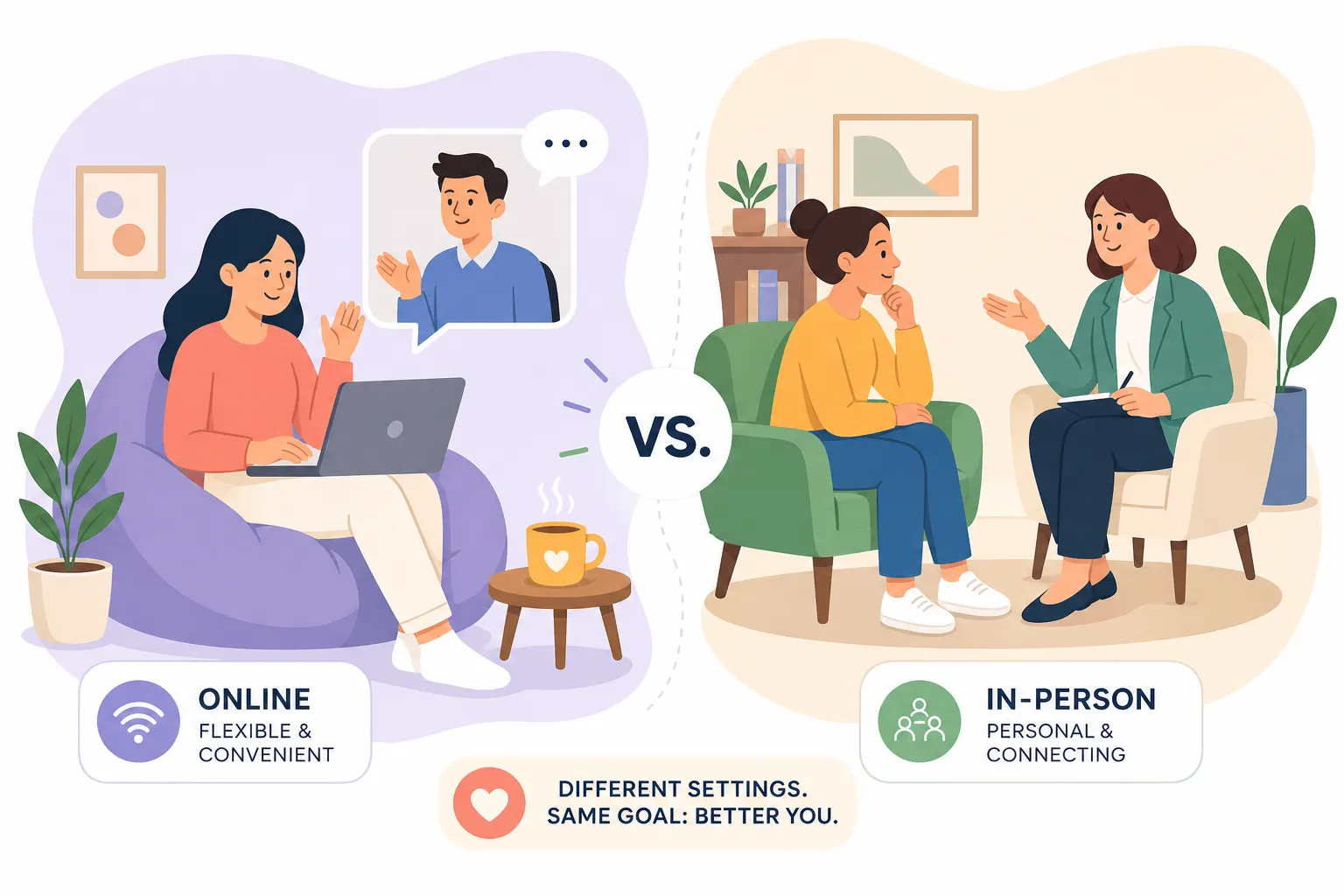
Millions of Americans now face a genuine choice that simply didn’t exist a decade ago: sit in a therapist’s office or open a laptop and log into a session from your kitchen table. If you’ve been weighing the pros and cons of online therapy vs. in-person counseling, you’re not alone, and the decision is harder than it looks precisely because both options carry real clinical backing, both are covered by insurance in Illinois, and both can produce lasting change.
The honest answer is that neither format is universally better. The right choice depends on your diagnosis, your schedule, your home environment, and how you actually show up when it matters. Some practices, like River North Counseling in Chicago, offer both in-person sessions and virtual therapy across Illinois, so clients aren’t forced into a permanent commitment before they’ve even started.
This article walks through five key dimensions of the comparison: clinical effectiveness, convenience and access, cost and insurance, privacy and safety, and therapeutic connection. At the end, you’ll find a short checklist to help you make the call with confidence.
What the research actually says about effectiveness
Before weighing personal preferences, it helps to know what the science shows. (See Is Virtual Therapy as Effective as In-Person Sessions?) A large meta-analysis of 47 studies involving more than 3,500 patients found that videoconferencing therapy produced effect sizes nearly identical to in-person therapy across depression, anxiety, and PTSD (Luo et al., 2020). The pre-post effect size for video-delivered therapy was large and statistically significant, and it differed negligibly from face-to-face results. That’s not a finding from one optimistic study; it holds up across the literature (see a 2020 analysis in the Journal of Medical Internet Research for a comprehensive review published in JMIR).
Internet-based CBT (iCBT) shows comparable results as well. A combined analysis of 20 randomized controlled trials found that guided online CBT was just as effective as in-person CBT for both depression and anxiety (Carlbring et al., 2018). One University of Zurich study added an interesting long-term wrinkle: 57% of online therapy patients showed no depression symptoms at three months, compared to 42% in the in-person group, with online patients continuing to improve at six months while in-person patients plateaued.
There are important nuances worth acknowledging. One meta-analysis found that while PTSD outcomes were similar immediately after treatment, videoconference therapy produced slightly inferior results at the three-to-six-month follow-up compared to in-person care. Therapeutic alliance, though still clinically meaningful online, has also been rated slightly lower in some videoconferencing studies. For clients with severe or complex presentations, professional guidelines recommend in-person care because clinicians can better assess risk and nonverbal cues, in-person care may be preferable for safety and close monitoring. For most common diagnoses, however, the research is clear: format is not the primary driver of outcomes.
Convenience and access: where online therapy changes everything
This is the dimension that tips the decision for most people, and it’s central to any honest comparison of the pros and cons of online therapy vs. in-person counseling. Convenience isn’t just about comfort; it directly affects whether someone shows up consistently, and research indicates consistent attendance strongly influences outcomes. Access barriers can reduce attendance, which means improving consistency can be as important as modality for many clients. Teletherapy eliminates geographic limits, commute time, parking costs, and the need to block out a midday appointment slot on a packed workday calendar. According to a 2022 analysis published in the Journal of Medical Internet Research, online therapy can be booked up to 7.8 times faster than in-person sessions. A 2021 study conducted at a federally qualified health center found that behavioral health no-show rates dropped from 60% to 9% after switching to telehealth (see the study). For Chicago-area professionals managing demanding corporate or finance schedules, or parents in Skokie without built-in childcare, that kind of accessibility is clinically meaningful.
Evening and weekend slots are also far more common on virtual platforms than in traditional clinic settings. Most telehealth platforms offer extended availability that extends well beyond standard business hours, which matters for anyone whose schedule doesn’t fit neatly inside a nine-to-five window. For clients in underserved areas or those with mobility challenges, teletherapy removes barriers that would otherwise prevent care entirely.
What you trade when therapy comes to you is real, though. Online therapy requires a private, quiet space with reliable internet, and not everyone has both. Living with a partner, roommates, or children makes genuine confidentiality difficult to guarantee at home. There’s also a psychological case for in-person care worth considering: leaving the house and arriving at a dedicated space creates a mental transition that many clients report reinforces the seriousness of the work. Some clients report doing significantly better when therapy happens somewhere other than the couch where they stream television.
Cost and insurance: the full picture
Session fees and hidden costs
Cash-pay rates for in-person therapy typically run between $100 and $350 per session, with a national average around $174 (Therapy Den Market Survey, 2023). Online therapy cash-pay rates range from $50 to $200, with subscription platforms offering weekly rates of $65 to $95. But the real cost gap isn’t in the session fee itself. Transportation, parking, childcare, and lost work hours add up quickly for in-person care and are effectively zero for a virtual session.
Insurance parity in Illinois
On the insurance side, Illinois has strong protections for teletherapy clients. Public Act 102-0104 requires insurers to reimburse virtual mental health sessions at the same rate as in-person visits, and parity for mental health and substance use disorder telehealth is permanent under state law (see Illinois enacts telehealth parity bill). In-network in-person copays average around $23 nationally; teletherapy copays average $25 or less when covered. For most clients with commercial insurance in Illinois, the out-of-pocket difference between formats is minimal.
The caveat worth noting: some popular subscription-based apps don’t accept insurance at all, which can make them more expensive in the long run than seeing a licensed therapist through your plan. Always verify your specific plan’s telehealth rules and confirm your chosen provider is in-network before scheduling your first session. Working with a practice that handles insurance billing directly removes a lot of that guesswork.
Privacy, safety, and the limits of virtual care
Teletherapy advocates sometimes underemphasize this dimension, but it matters. HIPAA-compliant video platforms protect data in transit, but they don’t control what happens on the client’s end. A thin apartment wall, a family member walking in mid-session, or a smart speaker on the nightstand introduces real privacy risks that simply don’t exist in a soundproofed therapy office. Clients dealing with highly sensitive disclosures, domestic situations, or trauma content may feel genuinely less safe speaking openly at home, and that psychological constraint can limit the depth of the work.
There are also clinical situations where in-person care is the standard of care, not just a preference. Virtual therapists are trained to manage crises remotely, and they work from pre-established emergency contact protocols. But their tools are limited compared to a clinician sitting in the same room. Clients who are actively suicidal, experiencing psychotic symptoms, or require close behavioral monitoring benefit from in-person care where a therapist can observe full nonverbal signals and coordinate immediate support. Clinical guidelines from both the American Psychological Association and the American Psychiatric Association are consistent on this point: high-acuity presentations belong in a physical clinical setting, regardless of a client’s general format preference.
Children and adolescents are another population where in-person care tends to offer more. Research and professional guidance indicate that a skilled child therapist in the room can pick up on subtle behavioral cues that don’t translate through a screen, and the structured, neutral environment of an office often provides a level of safety and engagement that a home setting can’t replicate.
Therapeutic connection: can you build a real relationship through a screen?
This concern comes up in almost every conversation about virtual therapy, and it deserves an honest answer. A 2021 systematic review in Psychological Medicine found that therapeutic alliance in videoconferencing therapy is slightly lower on average than in face-to-face sessions, but still clinically meaningful and consistently associated with positive outcomes. The difference is real but not disqualifying (for additional research on therapeutic relationship outcomes, see related reviews in Frontiers in Psychiatry).
Therapists working remotely use specific techniques to bridge the gap: maintaining consistent eye contact, amplifying facial expressions, increasing session frequency when a client needs more support, and being more deliberate about checking in on the relational dimension of the work. For many clients, the convenience of logging in from a familiar space actually reduces anxiety about attending, which strengthens long-term engagement even if the moment-to-moment connection feels slightly less immersive.
Who tends to do better in person? Clients who struggle with emotional regulation and rely on reading their therapist’s full body language often report stronger sessions face-to-face. Adults processing deep grief, relationship trauma, or identity-level questions sometimes describe needing the physical presence of another person to fully access the emotional work. These aren’t hard rules; they’re honest patterns worth factoring into your decision.
How to choose your format (and why you don’t have to choose forever)
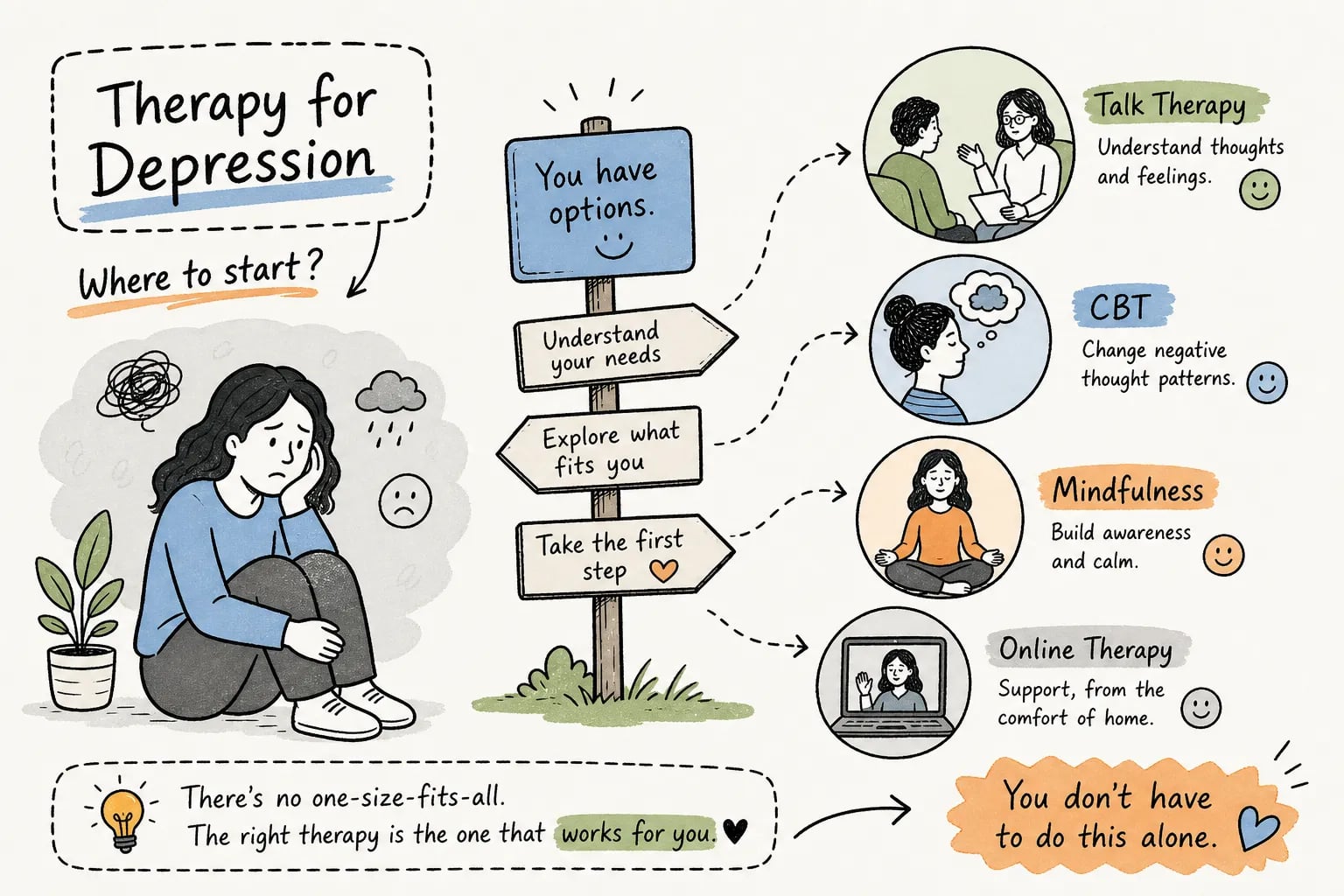
After reviewing the research and the practical realities, the decision comes down to an honest self-assessment across a few key questions. Work through these before committing to a format: (If you want more detail on matching diagnoses to approaches, see Explaining different therapy types and their benefits, River North Counseling.)
- Do you have a private, quiet space at home where you can speak openly without interruption?
- Does your diagnosis fall into a high-acuity category that benefits from in-person monitoring and support?
- Does your schedule or geography make regular in-person attendance realistic and sustainable?
- Does your insurance cover teletherapy at the same rate as in-person visits through your chosen provider?
- Do you tend to connect better with people in physical spaces, or do you feel just as present on video?
No single answer determines the right choice. The goal is an honest look at your actual circumstances, not a checklist with a predetermined outcome built in.
The more important point: you don’t have to choose forever. Clients can start with teletherapy for the convenience, transition to in-person sessions when they want deeper work, or alternate between both depending on the season of life. This kind of flexibility isn’t just a scheduling perk; it removes the pressure of making the “right” choice upfront and lets the format evolve alongside your needs. A client who starts virtually after having a baby may shift to in-person once their schedule stabilizes. A client doing intensive trauma work may eventually want the grounding of a physical space, then return to virtual for ongoing maintenance. That’s not inconsistency; it’s smart care.
The choice that actually matters most
Weighing the pros and cons of online therapy vs. in-person counseling ultimately matters far less than the decision to start therapy at all. Both formats are clinically validated. Both can produce real, lasting change when you’re matched with the right therapist. Your schedule, budget, clinical needs, and home environment are what should drive the format decision, not fear that one approach is inherently lesser than the other.
Ask potential providers directly about their format options and their clinical reasoning before committing. Treat your choice as adjustable. River North Counseling offers both in-person care at their Chicago locations and virtual therapy across Illinois, with a team that can help you work through exactly the kind of format question this article covers. Learn more about their local and virtual offerings on their Teletherapy in Chicago: A Beginner’s Guide to Online Therapy page.
If you’re ready to take the next step, reach out to River North Counseling to schedule a consultation and explore which format, in-person, virtual, or a combination of both, fits your life right now.