
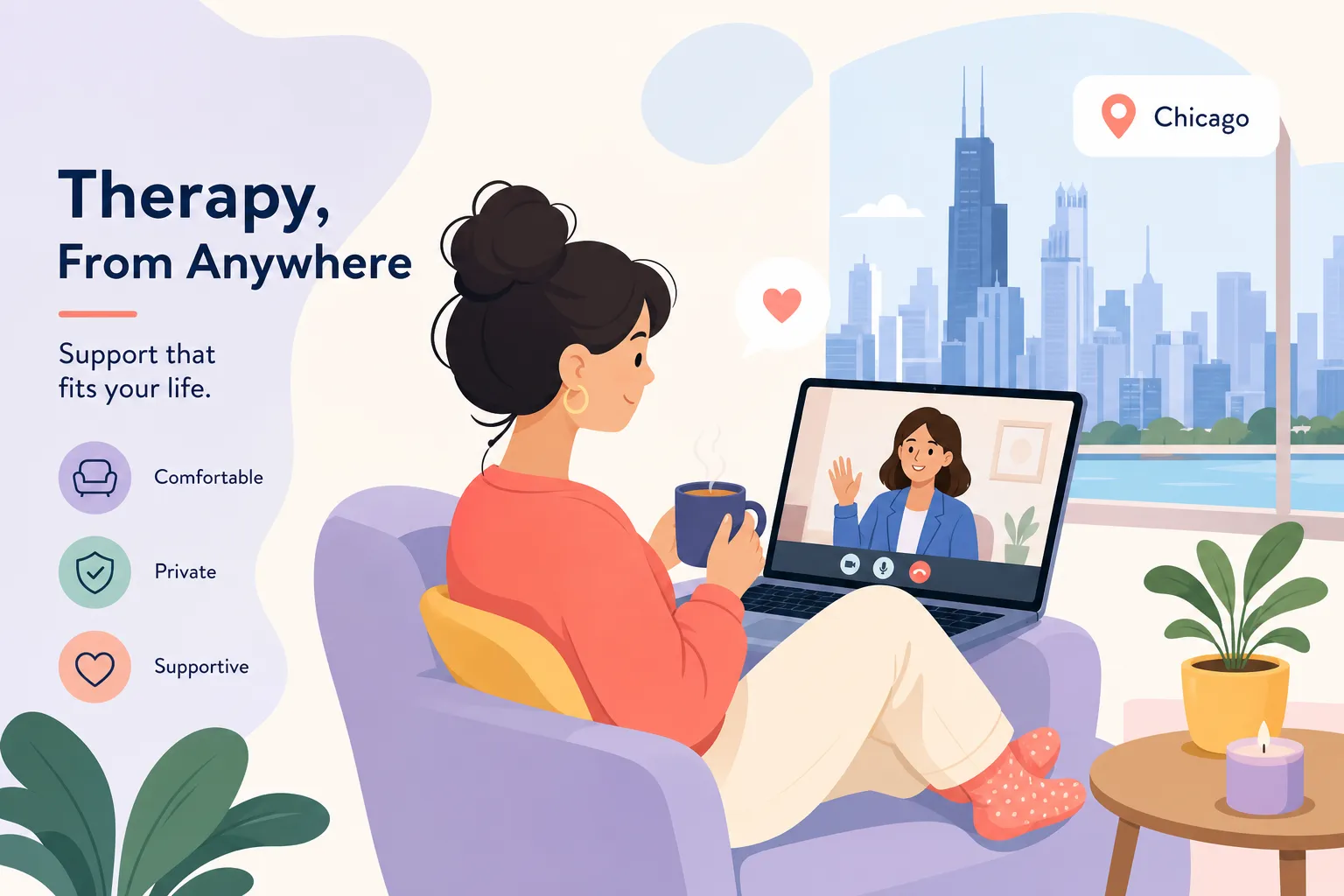
Chicago runs on long hours, packed schedules, and commutes that eat up more of the day than most people plan for. When you finally decide to prioritize your mental health, the last thing you need is another logistical barrier. Teletherapy in Chicago has changed that equation for a lot of residents. You can see a licensed therapist from your home, your office, or anywhere with a decent internet connection, without sacrificing the quality of care you’d get in person.
This guide covers everything you need to know before booking your first online session: how video appointments actually work, what technology you need, which conditions respond well to virtual care, how to verify your provider’s Illinois license, what you’ll pay, and how to set yourself up for a productive first appointment. Practices like River North Counseling now offer seamless virtual counseling in Chicago alongside in-person sessions in River North and Skokie, so there’s a clear path forward whether you’re ready to start online today or prefer to keep your options open.
How teletherapy sessions actually work
A virtual therapy session follows the same structure as an in-person appointment. You connect with your licensed therapist at a scheduled time, the session typically runs around 45 to 50 minutes (though length varies by practice and insurance plan), and the conversation follows the same clinical structure as face-to-face care. The medium is different. The therapeutic work is the same.
What to expect during a video session
Your provider sends you a secure link before the appointment. You click it, and you’re in a virtual waiting room. The therapist admits you, opens with a check-in, moves through the clinical work, and closes with a brief summary or next steps. Many platforms are designed so joining requires nothing beyond clicking that link, though it’s worth checking your provider’s instructions ahead of time in case any basic setup is needed. Most platforms don’t record sessions, and your therapist joins from a private room on their end, so confidentiality is built into the setup from both sides.
The technology setup you actually need
You need a smartphone, tablet, or computer with a working camera and microphone, plus a stable internet connection. The technical minimum is 1.5 Mbps upload and download, but stability matters more than raw speed. A consistent 10 Mbps connection beats a fast but unpredictable one every time. Close other apps and browser tabs before the session starts to free up bandwidth, and consider using headphones if anyone else is nearby. That small step protects your privacy and sharpens the audio on both ends. For more details on recommended connection speeds, see the internet speed requirements for teletherapy.
HIPAA compliance and platform security
Your session is protected health information, and Chicago providers treat it that way. The platforms most practices use, including SimplePractice and encrypted browser-based video tools like Doxy.me, are designed specifically for healthcare and built to HIPAA-compliant standards. Many use strong encryption in transit for audio and video; confirm your provider’s specific platform and ask whether they have a signed Business Associate Agreement in place, which legally binds them to protect your data. The platforms are built to the same security standard as your medical records, no technical expertise required on your end. For a plain-language overview of platform and record security, review this guide to HIPAA compliance in online therapy.
What online therapy in Chicago can effectively treat
Online therapy is not a watered-down version of care. Systematic reviews consistently find no significant difference in outcomes between teletherapy and in-person sessions for the conditions most people seek treatment for. Illinois law reinforces this: providers must meet the same standard of care whether the session happens in an office or over video.
Conditions well-suited to virtual care
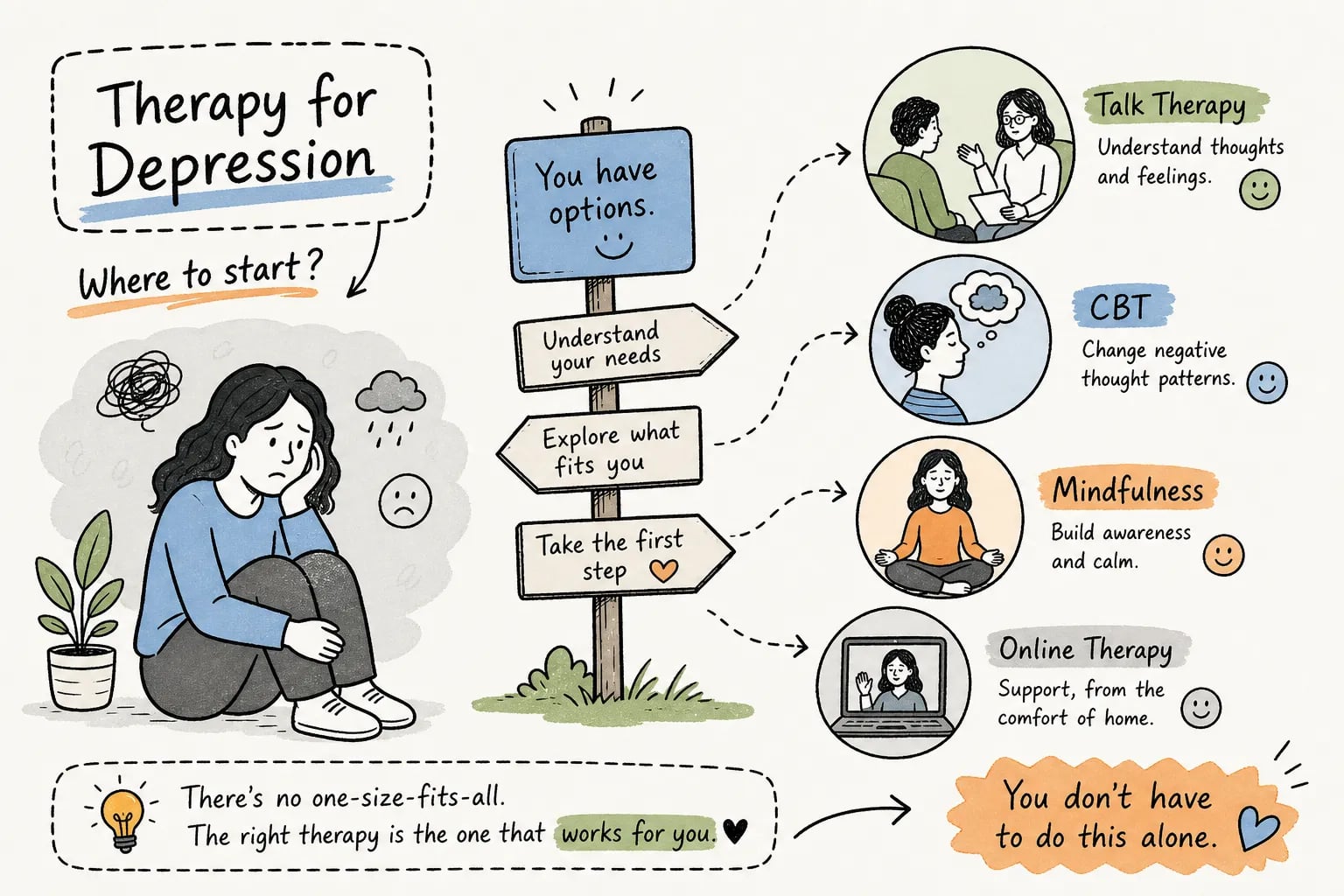
The clinical evidence is strongest for anxiety disorders, depression, and PTSD, with studies showing comparable symptom improvement and patient satisfaction to in-person care. Work-related stress, burnout, grief, life transitions, relationship strain, and performance concerns all respond well to the virtual format too. Evidence-based approaches like Cognitive Behavioral Therapy translate directly to video sessions because the core work, examining thought patterns and building coping skills, happens in the conversation itself, not in the room.
When in-person care may be a better fit
Virtual care isn’t the right fit for every situation, and it’s worth naming that honestly. Severe psychiatric crises, certain neuropsychological assessments that require standardized in-person testing, and clients who find the virtual format genuinely distracting may benefit more from face-to-face sessions. That’s a practical distinction, not a limitation of the technology. Many clients start online, then transition to in-person care as their needs evolve. Practices that offer both formats make that transition seamless. For practical guidance on starting with video visits in the state, see Virtual Therapy in Illinois: What to Know Before You Start.
How to find a licensed teletherapy provider in Chicago
Not every therapist who lists “online sessions” is authorized to work with you if you live in Illinois. Knowing the licensure rules before you search saves time and protects you from booking a provider who legally cannot treat you.
Illinois licensure rules every client should know
Illinois law treats a therapy session as occurring where the client is located, not where the therapist sits. That means any therapist providing virtual care to a Chicago resident must hold an active Illinois license issued by the IDFPR, regardless of where the therapist is physically based. Valid license types include LCSW, LPC, and clinical psychologist. Before you book, verify the therapist’s license directly on the IDFPR website, a quick search there confirms you’re working with someone legally authorized to practice in this state. Official state resources outline the specific rules; see a summary of Illinois telehealth regulations for more details.
Where to search for verified Chicago providers
Start with Psychology Today’s Chicago filter, which lets you sort by specialty, insurance, and telehealth availability. TherapyTribe also lists verified Illinois providers, and your insurer’s in-network directory is another strong starting point, especially if cost is a primary concern. Searching for online therapists in Chicago through your insurer’s portal often surfaces in-network options you won’t find on general directories. One practical advantage of multi-therapist group practices: if the first clinician isn’t the right fit, the practice can match you with another therapist from the same team rather than starting your search over from scratch. If you need help starting your search, our guide How to Find the Right Therapist in Chicago for You walks through the process.
What a quality practice looks like
A strong virtual therapy practice checks several boxes: specialty match with your presenting concern, a HIPAA-compliant platform, a clear and streamlined intake process, and scheduling flexibility that works around a real life. Online Therapy in Chicago: How to Find the Right Therapist is a concrete example of what that looks like in practice. Their licensed therapists offer virtual mental health care across Illinois and see clients in-person at their River North and Skokie offices, covering a range of concerns including anxiety, depression, and child and adolescent therapy. For anyone who wants the option to shift from online to in-person care, that dual model matters.
Teletherapy in Chicago: costs and insurance
Cost uncertainty is one of the most common reasons people delay starting therapy. The numbers are more accessible than many people expect, especially in Illinois, where the law actively protects your right to fair reimbursement.
Typical out-of-pocket rates for virtual sessions
Private practitioners in Chicago typically charge between $125 and $200 per session for virtual appointments. Subscription-based telehealth platforms average $60 to $100 per week, but many don’t bill insurance directly, which means you’re paying out of pocket regardless of your coverage. People with insurance often find that working with an in-network individual practice or group practice results in lower overall costs. Call ahead to ask for a fee schedule before booking.
Using insurance for teletherapy in Illinois
Illinois has a permanent payment parity law for mental health services, signed into law in 2021 and extended without expiration for behavioral health. Insurers are legally required to reimburse virtual therapy sessions at the same rate as in-person sessions; read more about the state’s payment parity law and how it affects coverage. Major insurers accepted by Chicago providers include Blue Cross Blue Shield, UnitedHealthcare, Cigna, and Aetna, with in-network copays typically running $20 to $40 per session. Before booking, call your insurer to confirm your mental health benefits, ask whether the provider is in-network, and clarify where you stand on your deductible. That one call prevents surprises after your first session.
Booking and preparing for your first session
The mechanics of starting are simpler than most people expect.
How to book: a step-by-step walkthrough
- Identify two or three licensed Illinois providers whose specialties match your presenting concern.
- Check their insurance acceptance and verify each therapist’s Illinois license on the IDFPR website.
- Complete the practice’s online contact form or call to schedule an intake appointment.
- Complete intake paperwork electronically before your first session.
- Confirm your session link or call-in details 24 hours in advance.
Response times vary by practice; many aim to respond within a few business days, and some Chicago clinics offer same-week availability. You don’t need to have everything figured out before you reach out. The intake process is designed to help your therapist understand where you’re starting from.
Setting up your space for a productive session
Choose a private room where you won’t be overheard, and place a phone playing white noise outside the door if needed. Use headphones during the session to protect your privacy and sharpen the audio on both ends.
On the technical side, close your self-view window once you’re connected, seeing your own face on screen is more distracting than most people realize, and most platforms let you hide it without hiding yourself from your therapist. Test your internet connection and camera at least 10 minutes before the session starts, and let your therapist know if you’re joining from a location other than your usual address. That information matters in case of an emergency.
Making the most of your first appointment
Your first session is a clinical intake, not a performance. Your therapist will ask about your presenting concerns, review confidentiality and how virtual sessions work at their practice, and begin building a picture of your goals. You don’t need to prepare a speech or arrive with a list of talking points. Showing up, being honest about what’s been hard, and asking any questions you have about the process is the entire job. Everything else builds from that honest starting point.
Frequently asked questions about teletherapy in Chicago
Is teletherapy in Chicago as effective as in-person therapy?
Yes, for most conditions. Systematic reviews find no significant difference in outcomes between teletherapy and in-person care for anxiety, depression, and PTSD. Illinois law holds online therapists to the same standard of care as in-person providers.
Do I need special software to use online therapy in Chicago?
Usually not. Many HIPAA-compliant platforms let you join a session by clicking a secure link in your browser. Check your provider’s instructions in advance, some may recommend a quick test run before your first appointment.
How do I find virtual counseling in Chicago that accepts my insurance?
Start with your insurer’s in-network directory and filter for telehealth. Psychology Today’s Chicago filter also lets you sort by insurance and telehealth availability. Illinois’s payment parity law requires insurers to reimburse virtual sessions at the same rate as in-person visits.
What licenses should an online therapist in Chicago hold?
Look for an active Illinois license from the IDFPR, valid types include LCSW, LPC, and licensed clinical psychologist. You can verify any therapist’s license directly on the IDFPR website before booking.
Getting started is the hardest part
Teletherapy in Chicago is clinically validated, covered by most major insurance plans, and more accessible than ever for people managing demanding schedules. The core steps are clear: understand how sessions work, confirm your provider holds an active Illinois license, check your insurance benefits, and book an intake appointment.
River North Counseling offers both virtual and in-person care, with licensed therapists serving clients across Illinois online and in-person at their offices in River North and Skokie. Whether you’re ready to start with a video session this week or want the flexibility to move to in-person care over time, the practice is built around meeting you where you are. Learn more about their approach in Online Therapy in Chicago: How to Find the Right Therapist.
Ready to take the next step? Reach out to River North Counseling to schedule your first appointment. The intake process is straightforward, the team is responsive, and the support you’re looking for is available to you right now.