

Finding the best licensed therapists in Chicago, Illinois can feel overwhelming when a single search returns hundreds of names, license acronyms, star ratings, and profile photos. Most people click through a few listings, feel overwhelmed, and either pick someone at random or give up entirely. Neither outcome is good, and neither is your fault. The system isn’t built for clarity.
What most people actually want isn’t the highest-rated therapist on a directory. They want the right match: someone whose training aligns with the real concern, whose schedule fits real life, and who works within their budget. That’s a different search than a five-star filter can run for you.
This guide gives you a practical framework for evaluating Chicago-area therapists the way a clinician would: by licensure, specialization, evidence-based approach, and logistics. You’ll also get a clear checklist so you leave with a decision, not more tabs open. If you want to see what a well-vetted, multi-specialty group practice in Chicago looks like as a reference point, River North Counseling is a useful example throughout.
What “best” actually means when choosing a therapist in Chicago, Illinois
Star ratings on platforms like Zocdoc or Psychology Today measure patient satisfaction, not clinical outcomes or therapist-client fit. A 5-star therapist with excellent reviews for generalized anxiety may be entirely wrong for someone navigating complex trauma or a recent diagnosis. The scores aren’t wrong; they’re just answering a different question than the one you’re asking.
The four qualities that actually signal a strong match are more specific. First: an active Illinois license in good standing, verifiable through the state’s public lookup tool. Second: a specialization that directly aligns with your presenting concern, not a general-purpose profile listing 15 different issues. Third: a therapeutic approach backed by research, such as CBT, DBT, ACT, or trauma-focused care. Fourth: practical availability, meaning office hours, location, and communication style that fit your actual schedule and preferences. These four criteria define your personal “best” far more accurately than any aggregate rating.
How to find the best licensed therapists in Chicago, Illinois: start with credentials
Chicago’s licensed therapists hold several different credentials, and understanding what each one means helps you search smarter. An LCSW (Licensed Clinical Social Worker) holds a master’s degree in social work from an accredited program, completed 3,000 supervised clinical hours post-degree, and passed the ASWB Clinical exam. They’re fully authorized to diagnose and treat mental health conditions. An LCPC (Licensed Clinical Professional Counselor) is Illinois’s clinical counselor designation, also master’s-level with supervised hours, and a credential commonly seen on outpatient therapy listings throughout the state.
An LPC is a licensed professional counselor at an earlier stage of the LCPC pathway, still qualified to provide therapy under supervision, but not yet at the full clinical licensure level. PsyD and PhD psychologists are doctoral-level providers, typically most appropriate for complex dual-diagnosis cases, psychological testing, or neuropsychological evaluations. For most individual therapy concerns, anxiety, depression, life transitions, or burnout, an LCSW or LCPC is fully qualified and often more accessible. Knowing which tier applies to your situation narrows the search before you read a single bio.
The single most important vetting step takes only a minute or two: visit the Illinois Department of Financial and Professional Regulation (IDFPR) License Lookup tool and search the therapist’s name. The database is updated daily and displays the license type, current status (active or expired), expiration date, and any disciplinary actions on record. If the license is expired or shows a disciplinary flag, stop there and move to the next name on your list. No amount of positive reviews outweighs a lapsed license.
Matching specializations to your specific needs
A therapist bio that lists 15 specializations is a yellow flag, not a selling point. Clinical depth comes from focused training, supervision in a specific modality, and years of treating a consistent population, a broad catch-all list often signals the opposite of that focus. Common specializations you’ll encounter across Chicago’s licensed counselors include anxiety and depression, trauma and PTSD, couples and relationship therapy, adolescent and teen therapy, life transitions, burnout, and performance stress. Matching your presenting concern to a therapist’s actual training is widely recommended by clinicians as a way to improve the likelihood of appropriate, effective care.
One practical advantage of working with a group practice is that a single intake call can match you to the right licensed professional on the team, rather than asking you to search therapist by therapist. River North Counseling illustrates how this model works: the practice brings together licensed therapists with distinct specializations covering individual therapy, child psychology, couples counseling, CBT, neuropsychological assessment, and parent coaching. That breadth of focused specialization within one practice means you’re matched to the right clinician from the start, not assigned whoever has an opening. Learn more about how clinics approach matching in How to Find the Right Therapist in Chicago.
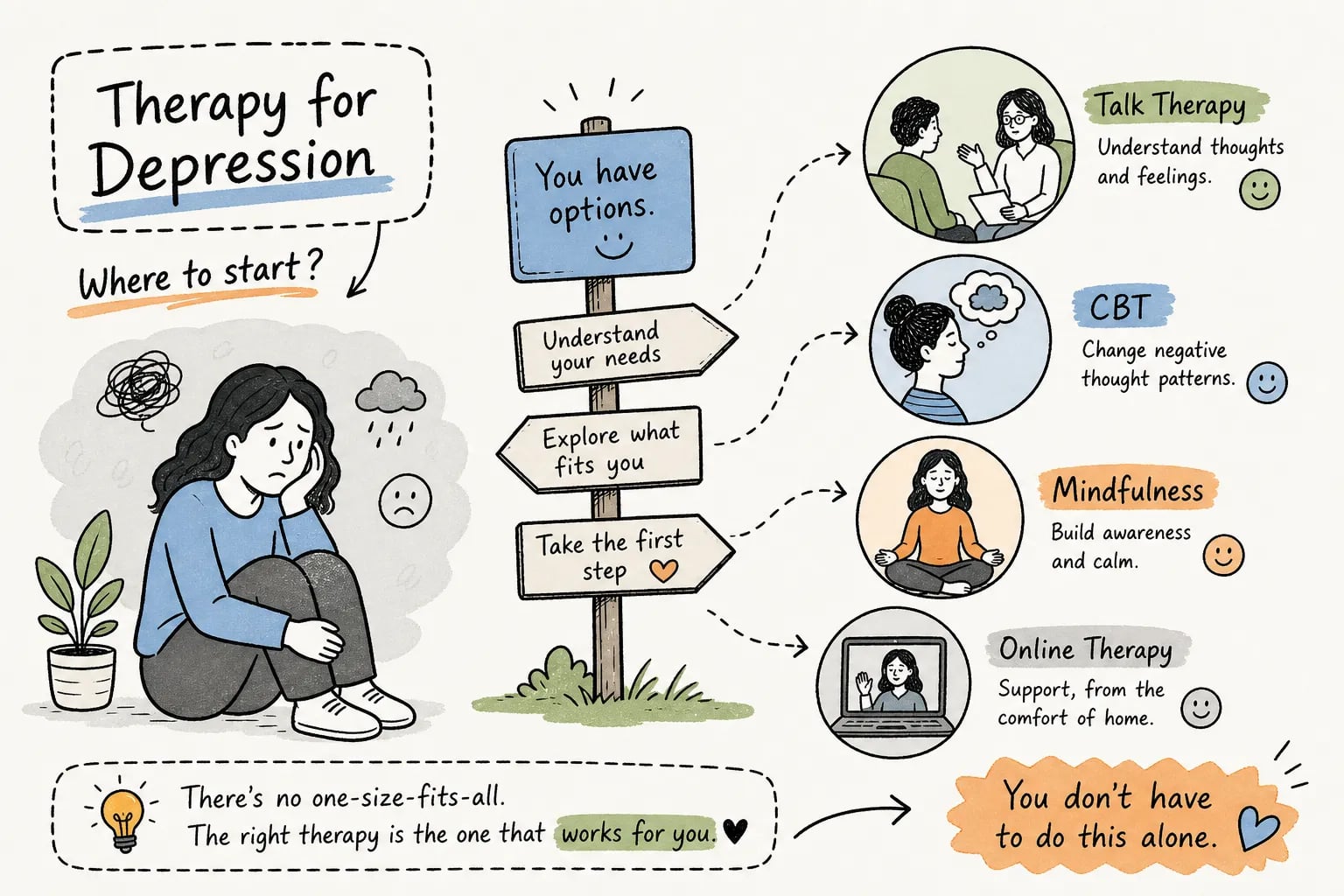
Before you start searching, it helps to know a few key terms. CBT, or Cognitive Behavioral Therapy, is one of the most rigorously researched approaches for anxiety, depression, and related conditions such as OCD. When a therapist says they use CBT, it’s worth asking whether they have specific training in the model or are using it loosely as a descriptor. Trauma-informed care is a framework that shapes how a therapist structures sessions and builds the therapeutic relationship, not just a single technique. EMDR and prolonged exposure are trauma-specific modalities with strong evidence bases for PTSD. Knowing these terms lets you ask better questions during a consultation rather than accepting a vague “I work with a lot of different approaches.”
How to evaluate reviews and vet a therapist’s background
When reading client reviews, consistent themes across many responses carry far more weight than a perfect score from two reviewers. Look for reviews that mention the specific concern treated, not just general warmth or the comfortable office. A therapist with a 5.00 rating from 24 verified reviews on Zocdoc’s Chicago listings tells you something meaningful. A therapist with five stars from three reviews tells you almost nothing. Psychology Today and Zocdoc follow different verification processes, so the platform context matters when you’re reading.
Red flags worth taking seriously include vague bios with no stated specialization or therapeutic approach, an expired or lapsed IDFPR license status, and therapists who move immediately to booking a paid session without offering any form of initial consultation. A quality clinician welcomes a brief consultation call because they understand that fit matters as much to them as it does to you. Also watch for profiles with no clear policy on cancellations, session communication, or confidentiality. These aren’t small details.
Five questions are worth asking before you commit to working with any therapist:
- What is your specific experience with [your concern], and how do you typically approach it?
- What therapeutic modality do you use, and how do you measure progress over time?
- Are you currently accepting new clients, and what is your typical wait time?
- What does the first session look like: structured assessment or open conversation?
- How do you handle situations where the fit isn’t working for the client?
That last question is particularly telling. A confident, ethical therapist will have a clear, calm answer about referral or transition. Any hesitation or deflection there is useful information.
Insurance, telehealth, and location: the practical checklist
Many established Chicago practices accept Blue Cross Blue Shield PPO, Aetna, Cigna, and UnitedHealthcare, but plan-level coverage varies significantly. For BCBS plans specifically, in-network outpatient therapy copays typically run in the $15, $40 per session range depending on the specific plan tier. Some practices also offer sliding-scale fees for clients without insurance or with high deductibles, with rates in some cases ranging from $10, $150 per session. Always confirm insurance and fee details directly with the practice before your first session: online directory listings are frequently out of date. If you need plan-specific details for Blue Cross Blue Shield in Illinois, see this overview of Blue Cross Blue Shield IL Blue Choice.
Telehealth is widely available from Chicago-based licensed therapists and is fully recognized under Illinois law for outpatient mental health services. Illinois requires that the treating therapist hold an active Illinois license when the client is physically in the state during the session, regardless of the platform used. Many practices now offer a hybrid model: in-person sessions at a Chicago office for weeks when that works, and virtual sessions for everything else. For working professionals with demanding schedules, this kind of flexibility isn’t a bonus feature; it’s often what makes weekly therapy sustainable.
Neighborhood and office hours matter more than most first-time therapy seekers expect. Major therapy corridors in Chicago include the Loop, River North, Lakeview, and Lincoln Park, each with multiple licensed practices. A 40-minute round-trip commute for weekly sessions adds up to more than 30 hours per year. Evening and Saturday availability is worth confirming upfront if a standard 9, 5 schedule makes daytime appointments difficult. If you’re in the north suburbs, practices with both a downtown Chicago location and a suburban office, like River North Counseling’s River North and Skokie locations, give you more options without requiring a separate search. For a practical walk-through on finding and booking local clinicians, see Find a therapist in Chicago: Your step-by-step guide.
How to book your first session and what to expect
A quality intake process starts with a brief intake call or intake form, not an immediate booking link. This is where a well-run group practice earns its value: rather than presenting you with a list of available therapists and asking you to choose, a good intake process gathers information about your concern, schedule, and insurance, then makes a specific recommendation. You don’t need a diagnosis or a perfectly articulated problem to start this process. A few sentences about what’s been difficult and what you’re hoping to address is enough.
For Chicago-area readers who want a clear, low-fatigue starting point, River North Counseling offers both in-person sessions at their River North and Skokie offices and virtual therapy across Illinois. Their licensed team covers anxiety, depression, trauma, couples counseling, child and adolescent therapy, CBT, and neuropsychological assessment. Reaching out for a consultation carries no commitment: it’s simply the step that tells you whether the fit is right before you book a paid session. If you’d like more guidance on choosing and preparing for your first appointment, review How to Find the Right Therapist in Chicago for You.
Choosing well is the point
When you’re searching for the best licensed therapists in Chicago, Illinois, the right fit isn’t necessarily the clinician with the most reviews or the longest credential list. It’s the one with the right license, the right specialization, an evidence-based approach that suits your concern, and the practical availability to make consistent care possible.
Use this as your checklist: verify the IDFPR license, confirm the specialization aligns with your actual concern, ask about the therapeutic approach and how progress is measured, confirm insurance and session logistics, then book a consultation. Each step takes a few minutes. Together, they turn an overwhelming directory search into a confident, informed decision.
The hardest part is usually making the first call. Having a clear framework makes that easier. If you’re looking for the best licensed therapists in Chicago, Illinois and want a vetted, multi-specialty team as your starting point, River North Counseling is a strong place to begin.