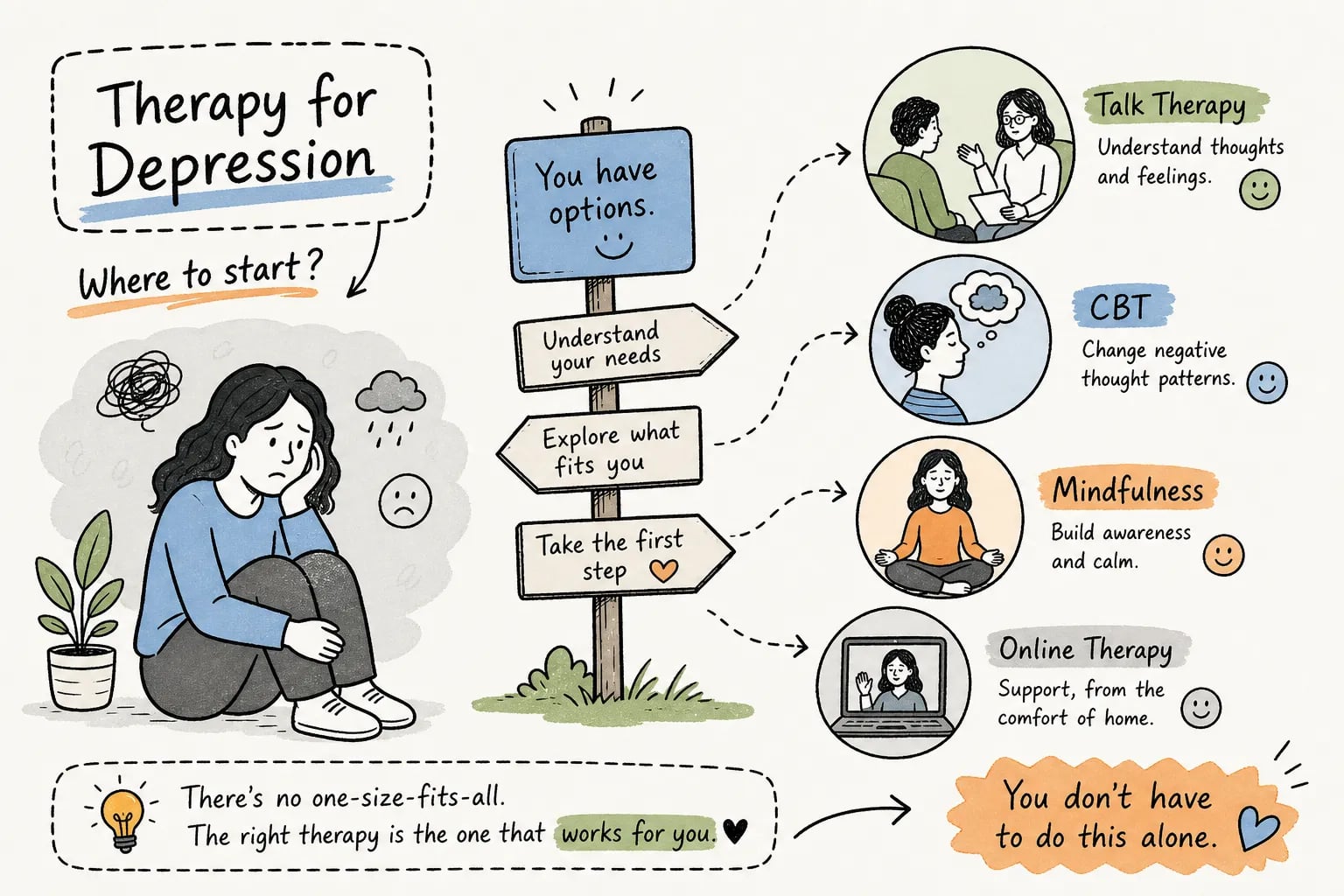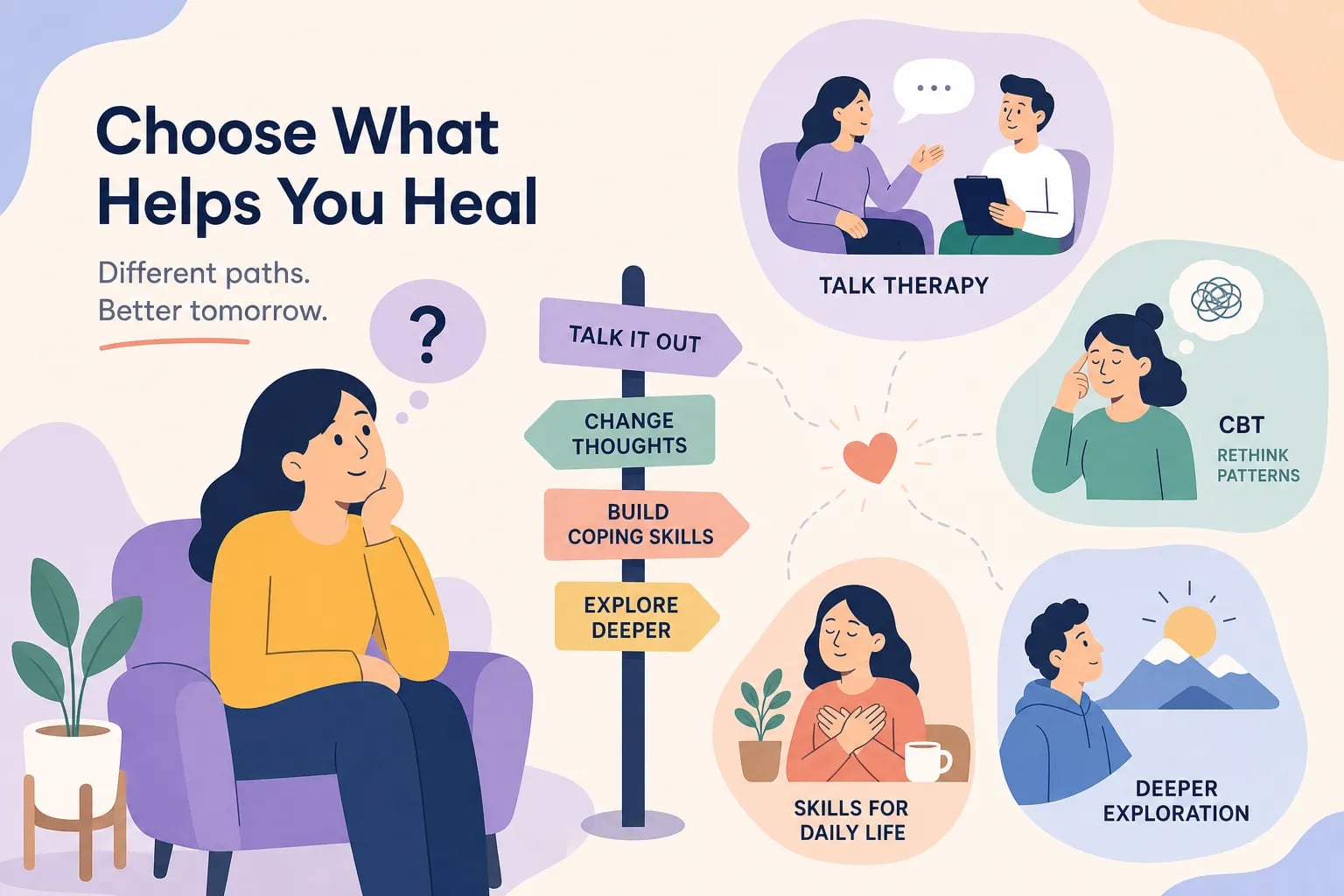

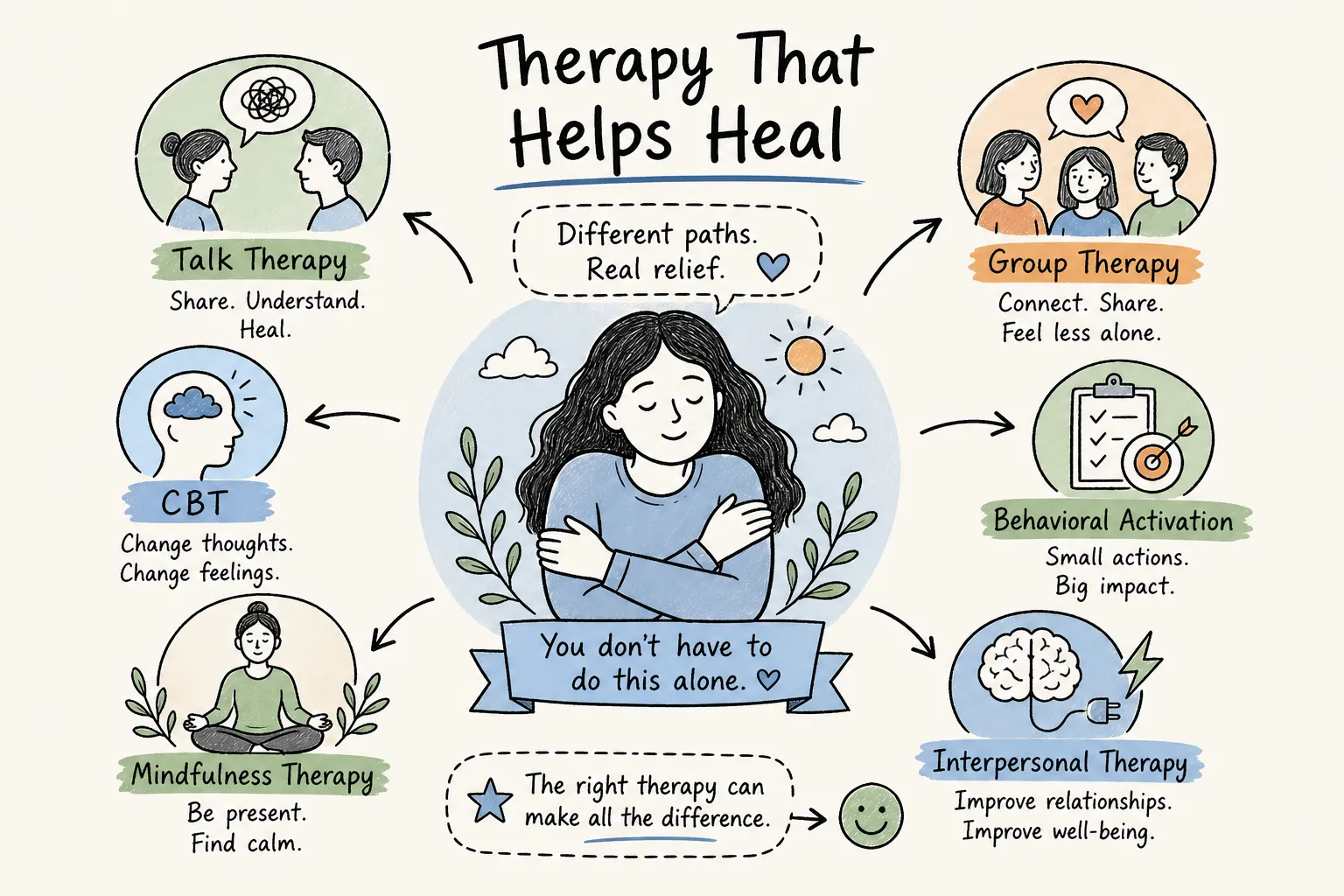
Clinical depression is one of the most common and treatable mental health conditions in the world, and understanding the most effective therapy types for treating clinical depression is one of the clearest ways to shorten the road to recovery. Yet many people spend months, sometimes years, in treatment that isn’t the right fit, often because no one took the time to explain their options. Clinicians frequently encounter this gap between what the research supports and what clients actually know during the very first session.
If you’ve heard terms like CBT, IPT, or behavioral activation and had no idea what they meant for your specific situation, you’re not alone. Evidence-based psychotherapy spans many approaches, and the terminology can feel designed for providers rather than the people actually seeking help. This article translates that research into something useful: the therapies with the strongest clinical backing for major depressive disorder, how they compare to medication, and what your options look like if standard approaches haven’t worked.
Clinicians at evidence-based practices, including the team at River North Counseling in Chicago, work through exactly this question during intake. The goal isn’t to assign a treatment category. It’s to match a person with the approach most likely to help them, specifically.
Why the therapy type you choose genuinely matters
Not all depression responds the same way to every treatment. A therapist who uses the right modality for the right clinical presentation gets meaningfully different results than one who defaults to whatever they know best. The American Psychological Association formally recognizes seven evidence-based psychosocial interventions for major depressive disorder in its clinical practice guidelines, which signals something important: even official bodies acknowledge there is no one-size-fits-all answer here.
Research on treatment matching makes this concrete. A frequently cited randomized trial found that matched CBT produced an 86% remission rate compared to just 25% for mismatched treatment. That’s not a small difference in outcomes; it’s the kind of gap that changes someone’s year, or longer.
How clinical presentations shape treatment selection
A person whose depression is rooted in unresolved grief after a major loss is working through something fundamentally different from someone whose low mood is driven by years of automatic negative thinking, or someone who’s become so withdrawn that daily life has nearly stopped. Each of those presentations points toward a different therapeutic approach. The same diagnostic label, major depressive disorder, can show up in very different ways, and effective treatment starts by recognizing those differences.
What a good intake process looks like
In clinical settings, the first one to three sessions involve a thorough case formulation before any modality is selected. A trained clinician gathers history, identifies the specific patterns maintaining the depression, and uses that information to recommend an approach. This is why working with a qualified therapist rather than self-selecting a treatment type matters so much: the intake process itself is where the most important clinical decisions get made.
Most effective therapy types for treating clinical depression: what the research shows
Cognitive Behavioral Therapy is the most extensively researched psychotherapy for major depressive disorder. Published meta-analyses report an effect size of g = 0.75 unadjusted and g = 0.65 after correcting for publication bias, figures that reflect clinically meaningful symptom reduction in a substantial majority of people who receive CBT, with results that hold up under conservative scrutiny. For summaries of the meta-analytic evidence, see relevant published meta-analyses that synthesize outcomes across trials.
CBT consistently outperforms both waitlist controls and care-as-usual conditions, with the magnitude of advantage varying by comparator type. It is not definitively superior to every other psychotherapy, but it is the most thoroughly studied, which means clinicians have the most evidence to draw on when recommending it. One of its strongest advantages emerges over time: CBT matches antidepressant medication in short-term symptom reduction but shows significantly greater effectiveness at six to twelve month follow-ups. For a clear, patient-focused overview of how CBT works and what to expect, see the Mayo Clinic’s description of CBT.
How CBT targets depressive thought patterns
The cognitive model of depression holds that how you interpret events, not just the events themselves, drives emotional responses. CBT works by identifying automatic negative thoughts, such as “I always fail” or “nothing will get better,” examining the evidence for and against them, and gradually replacing distorted patterns with more accurate ones. A therapist might ask a client to track situations where their mood dropped and then examine what thought preceded the shift. Over time, that process becomes internalized as a skill rather than something that requires a therapist to prompt.
Session count and what the timeline feels like
CBT for depression typically runs between 5 and 20 sessions. Most clients begin noticing improvement within 2 to 4 weeks of starting structured sessions. This often surprises people who assume therapy takes years to produce results. CBT is a structured, skills-based model with a relatively clear endpoint, and that structure is part of what makes it work: clients aren’t just processing feelings, they’re building tools they’ll use long after sessions end.
Behavioral activation and IPT: two more clinician-backed options
CBT gets most of the public attention, but behavioral activation and interpersonal therapy have equally strong clinical standing and are both recognized as first-line options by the APA, supported by decades of research for major depressive disorder. For certain depression presentations, these approaches are a better fit than CBT. For a concise guide to the different evidence-backed models, see our article on Types of therapy for depression that actually work.
Behavioral activation: addressing the inactivity cycle in depression
Depression typically involves a withdrawal cycle: low mood leads to reduced activity, reduced activity leads to fewer rewarding experiences, and fewer rewarding experiences deepen the low mood. Behavioral activation breaks that cycle directly by systematically reintroducing meaningful, pleasurable, and values-consistent activities into a person’s daily life. It sounds straightforward, but done well, it’s clinically rigorous.
Meta-analyses, including head-to-head comparisons such as the COBRA trial, show BA produces outcomes comparable to full CBT for depression, often in just 6 to 12 sessions. Its accessibility is a genuine advantage: BA can be delivered by a broader range of providers and even through structured digital tools, which makes it a strong option in settings where specialist access is limited.
IPT: when depression is rooted in relationships or loss
Interpersonal therapy is the clearest fit when a person’s depression is connected to grief, a significant role transition, or ongoing interpersonal conflict. IPT doesn’t analyze why relationships are hard; it focuses on the specific relationship problem connected to the current depressive episode and works to resolve it. The typical course runs 12 to 16 sessions, and clients often notice relational shifts within the first 4 to 6 weeks. For an accessible overview of IPT’s structure and goals, see the information on IPT from CAMH.
The APA and NICE both recognize IPT as a first-line option alongside CBT, a designation supported by multiple IPT meta-analyses. If your depression began after a loss, a divorce, a job change, or a significant conflict with someone close to you, IPT may be the most direct route to recovery.
Therapy vs. medication vs. combining both
In the acute phase of treatment, psychotherapy and antidepressant medication produce comparable symptom reduction. That finding surprises many people who assume medication is faster or more powerful. For mild to moderate depression, evidence-based therapy alone is a fully legitimate first-line choice.
The long-term data shift the picture significantly. Combined treatment reduces relapse rates dramatically compared to medication alone: one meta-analysis found a 21% relapse rate for combined treatment versus 78% for medication-only maintenance. Psychotherapy alone also outperforms medication alone for relapse prevention, a finding most people haven’t encountered. The reason is straightforward: medication reduces symptoms while it’s being taken, but it doesn’t build skills. Therapy does.
When combined treatment is the right call
The clinical scenarios that typically warrant combining therapy with medication include moderate to severe depression, prior treatment failures, significant functional impairment (difficulty working, maintaining relationships, or caring for oneself), and client preference for a comprehensive approach. The APA specifically recommends CBT or IPT paired with a second-generation antidepressant for these presentations. This combination addresses both the neurobiological and psychological dimensions of depression at once.
What this means for long-term recovery
Medication can reduce symptoms; therapy builds the skills that prevent them from returning. That distinction explains the relapse data as clearly as anything. Skills developed through CBT, behavioral activation, or IPT remain with a client after treatment ends. Medication’s effects do not persist once it’s discontinued. Viewing therapy as an investment in long-term functioning, rather than just a support tool, reflects what the research actually shows about how lasting recovery happens.
When standard therapy isn’t enough: treatment-resistant depression
For a meaningful percentage of people with clinical depression, first and second-line therapies don’t produce adequate relief. This is a recognized clinical category called treatment-resistant depression (TRD), and it’s not a personal failure. It means the standard approaches weren’t the right fit for the biology or complexity of that person’s depression, and it calls for different tools.
Repetitive TMS and accelerated TMS protocols
Repetitive transcranial magnetic stimulation (rTMS) is FDA-cleared for treatment-resistant depression and non-invasive. Conventional daily TMS produces around 52% symptom reduction, and accelerated theta-burst protocols (aTBS) show 52% response rates and 34% remission rates in recent trials. The Stanford SAINT protocol, an intensive accelerated approach, demonstrated remission in over 90% of participants in an early-stage study, a striking figure that has drawn significant clinical attention, though sample sizes were small and replication is ongoing. Standard rTMS and iTBS are widely available at established clinics, while accelerated and at-home protocols represent an emerging tier with expanding but still limited access. Recent clinical coverage on accelerated theta-burst approaches highlights growing evidence for these protocols in TRD management (pragmatic accelerated theta-burst stimulation).
ECT and ketamine: when faster or more intensive intervention is needed
Electroconvulsive therapy remains the clinical gold standard for TRD, with response rates of 39 to 58% and decades of safety data. IV ketamine and FDA-approved esketamine (Spravato) offer rapid symptom relief within hours to days, which is particularly significant in cases involving suicidal ideation where speed of response matters. These interventions are typically coordinated between psychiatrists and therapists, reinforcing why well-connected, multidisciplinary care systems are so valuable for complex presentations.
How to choose among the most effective therapy types for treating clinical depression
The best therapy for clinical depression depends on the specific presentation, severity, prior treatment history, and what the individual values most about the process. That’s not an evasion; it’s the clinical reality. Knowing that CBT, behavioral activation, and IPT all have strong research backing is useful. Knowing which one fits your particular depression is what actually moves treatment forward.
At River North Counseling, Chicago-based therapists are trained across multiple evidence-based modalities and work collaboratively with clients during intake and case formulation to identify the most appropriate approach, whether that’s CBT, behavioral activation, IPT, or a combined strategy with medical coordination. The practice serves clients both in person at its River North and Skokie offices and virtually throughout Illinois, so access isn’t a barrier to getting that match right. Learn more about how we provide Therapy for Depression in Chicago: How to Get Real Help.
Questions worth asking before your first session
- What therapeutic modalities are you trained in, and how do you decide which approach to use?
- How do you conduct your initial assessment, and what does that inform about treatment planning?
- How many sessions does your typical course of treatment involve for depression?
- What does progress look like, and how will we know if the approach needs to change?
What to expect in the first few weeks of treatment
Most evidence-based therapies for depression begin showing measurable improvement within 2 to 6 weeks. The first session focuses on understanding the full picture, not delivering immediate relief. Clients who know this going in are far more likely to follow through, because they’re not waiting for something to feel dramatically different after one conversation. They’re building toward it.
Moving forward with the right approach
Clinical depression is highly treatable, and the research strongly supports CBT, behavioral activation, and IPT as first-line psychotherapy options. Each has distinct indications and comparable effectiveness; choosing between them is a question of fit, not hierarchy. For moderate to severe or recurrent presentations, combined treatment with medication offers particularly strong long-term relapse protection, though psychotherapy alone also outperforms medication alone in preventing relapse, a finding worth knowing. For those who haven’t responded to standard approaches, neuromodulation options are more accessible and more effective than most people realize.
The most important step isn’t picking a therapy type from a list. It’s connecting with a clinician who can match the approach to you, specifically. That matching process is what separates adequate care from care that actually works.
If you’re in the Chicago area and ready to start that conversation, River North Counseling’s team can help you identify the approach most likely to work for your specific presentation. Reach out to schedule an initial consultation and learn about depression treatment in Chicago and get a clear sense of what treatment could look like for your situation.