
When Kids Lie: What It Usually Means and How to Respond
Lying can worry parents because it may look like disrespect, manipulation, or a sign that something is wrong. Yet occasional Dishonesty is common during childhood and often reflects developing thinking skills, fear of consequences, social pressure, wishful thinking, or an attempt to protect privacy. The most useful response usually combines calm curiosity, clear limits, reasonable consequences, and repeated opportunities to practice honesty. When lying becomes frequent, elaborate, risky, or tied to major emotional or behavioral changes, a child mental health professional can help families understand what drives the pattern.
A child standing beside an empty cookie jar while denying eating the cookies can leave a parent wondering what happened to honesty. A teenager who says homework is finished when several assignments are missing may create a different concern. The behavior looks similar on the surface, but the reasons behind it can be very different.
Children do not always lie for the same reasons adults do. Development matters. Young children are still learning the difference between imagination, wishful thinking, mistakes, and intentional deception. Older children and teenagers understand honesty more clearly, but they also face stronger pressures involving independence, friendships, school expectations, embarrassment, and consequences.
Research on childhood deception has found that lie-telling can emerge during the preschool years as children develop greater self-control and a better understanding that other people have thoughts and knowledge different from their own. That does not make every lie acceptable. It does mean that the most helpful response begins by asking what the behavior is communicating before deciding how to correct it.
What Lying in Children Often Means
Developmental Experimentation Is Different From Chronic Dishonesty
Young children often experiment with truth as their imagination and social understanding grow. A preschooler who claims a stuffed animal spilled the juice may understand that a spill occurred but still be testing whether another explanation could change an adult’s reaction. Fantasy can also blend with reality more easily during early childhood.
Byschool ages, children generallyunderstandg that a statement can be intentionally false. Their reasons for lying may also become more complex. A child might deny breaking a rule to avoid losing screen time. Another might exaggerate a story to impress classmates. A socially sensitive child might hide the truth because admitting a mistake feels embarrassing.
Studies available through the National Institutes of Health have linked developing lie-telling abilities with skills such as theory of mind and executive functioning. In simple terms, children become better able to understand what another person knows, remember what they have already said, and control what information they reveal. These are normal cognitive skills even though they can sometimes be used dishonestly.
This distinction matters because a single lie rarelydefinese a child’s character. Labels such as “liar” can turn a behavior that needs correction into an identity. A more useful message separates the child from the choice: the statement was not truthful, honesty matters, and there is still an opportunity to repair the situation.
Fear, Shame, Attention, and Independence Can All Play a Role
Avoiding punishment is one of the most familiar reasons children lie. If a child expects an intense reaction to a broken lamp, poor grade, or forgotten chore, hiding the truth can feel safer than admitting the mistake. This does not mean rules should disappear. It suggests that children need to learn that telling the truth is manageable even when consequences remain.
Shame can create similar behavior. A child who already feels inadequate at school may hide a failed test because the truth seems to confirm a painful belief that they are unsuccessful. A teenager may conceal social problems because talking about rejection feels humiliating.
Some lies seek attention or status. A child may invent stories about vacations, possessions, achievements, or friendships to feel more interesting or accepted. The useful question is not only whether the story is false. It is also what need the child is trying to meet through the story.
Teenagers introduce another layer: privacy. Adolescents naturally seek more independence, and conflict can arise when parents interpret every attempt at privacy as deception. Healthy privacy and deliberate Dishonesty are not identical. Families benefit from clarifying expectations around safety, school responsibilities, whereabouts, technology use, and other areas where caregivers still need accurate information.
How Parents Can Respond Without Turning Honesty Into a Power Struggle
Start With the Truth You Already Know
Questions can sometimes invite another lie when the answer is already obvious. Asking, “Did you draw on the wall?” while standing beside a child holding the marker can turn the moment into a test of confession.
A calmer approach states what is known and shifts attention toward responsibility. The message might be that the marker is on the wall, drawing belongs on paper, and the wall now needs cleaning. If the child denies doing it, the parent can address that separately by explaining that telling the truth helps rebuild trust.
This approach reduces interrogation while keeping the boundary intact. It also teaches an important distinction: honesty does not erase every consequence, but Dishonesty does not need to trigger humiliation or an emotional showdown.
Harsh reactions can create a difficult cycle. A child fears the response, lies to avoid it, gets caught, and then experiences an even stronger reaction. The next mistake feels even more dangerous to admit. A steady response interrupts that pattern by making honesty safer without making rule-breaking consequence-free.
Make the Consequence Fit the Behavior
Consequences work best when they are connected to what happened. A child who secretly uses a tablet after bedtime may temporarily lose unsupervised access. A teenager who gives false information about where they are going may need tighter check-ins until trust improves. Repairing damage, replacing an item, correcting misinformation, or apologizing can also be appropriate.
Very large punishments for relatively small lies can shift the lesson away from honesty and toward avoiding detection. The goal is for children to understand that truthful communication is expected and that trust carries practical privileges.
Parents can also give children a chance to restart. A simple statement such as, “Think about your answer and try again,” creates space for self-correction. That small pause can be especially helpful when a child has responded impulsively.
Modeling matters too. Children observe how adults handle inconvenient truths. A parent who admits they forgot an appointment, apologizes for losing patience, or corrects an inaccurate statement shows that honesty includes acknowledging mistakes. Recent psychological research continues to examine how parental messages and parental behavior together shape children’s understanding of honesty.
Local Spotlight: Supporting Honest Communication in Chicago Families
Chicago families often manage several systems at once. School expectations, after-school activities, work schedules, commuting, shared parenting arrangements, peer groups, and digital communication can all affect what children feel comfortable revealing at home.
A child may hide a missing assignment because school pressure already feels overwhelming. Another may conceal friendship problems rather than explain a complicated social conflict. Teenagers may encounter situations involving group chats, social media, parties, academic expectations, and changing relationships where telling the full story feels risky.
In these situations, lying may be one part of a larger communication pattern. Looking at what happens before and after the Dishonesty can provide more useful information than focusing only on the false statement. Parents may notice that lying increases around homework, transitions between homes, certain friendships, discipline, anxiety-provoking events, or conversations about performance.
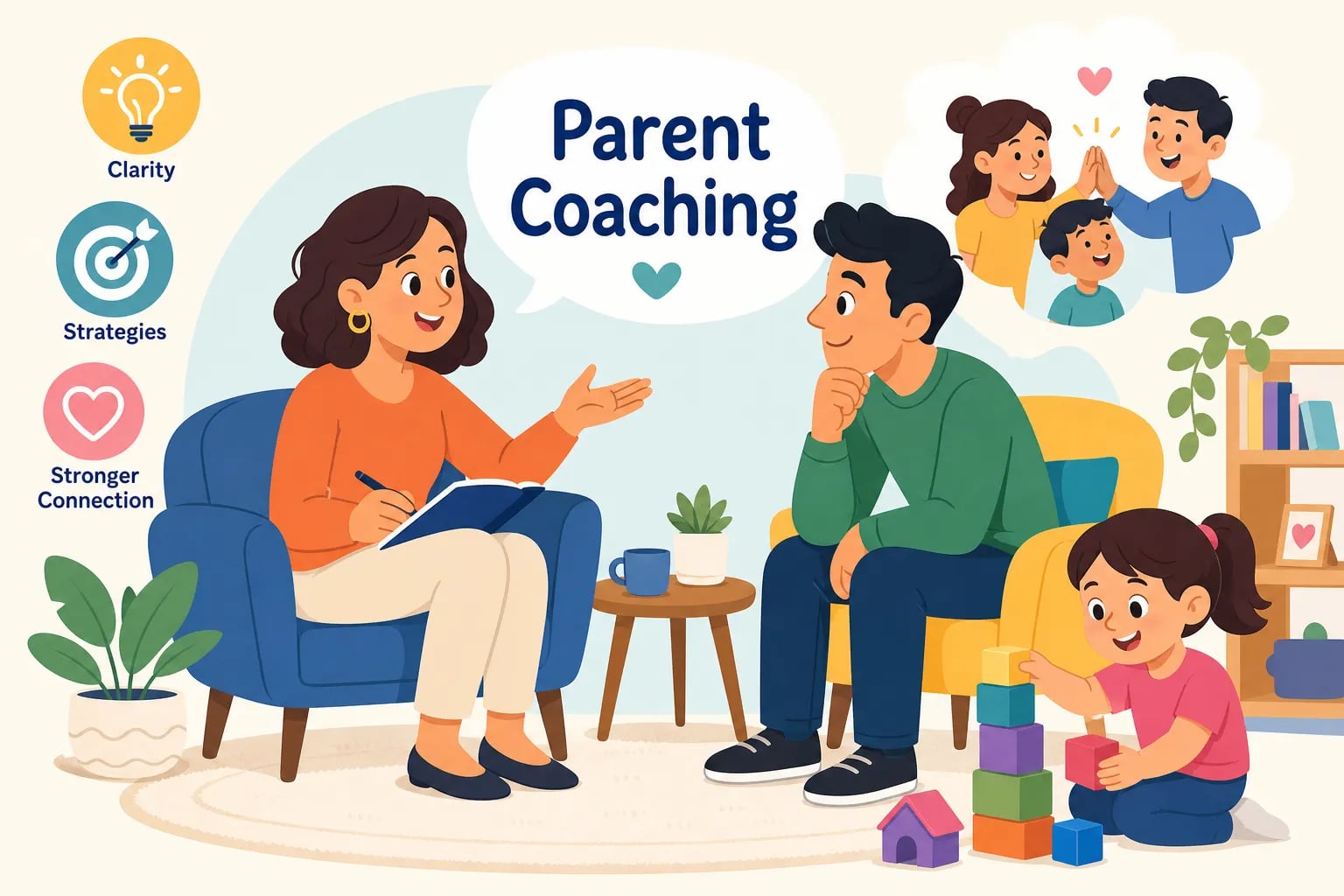
River North Counseling Group LLC provides child and adolescent therapy, family-focused support, and parent coaching for Chicago-area families. Counseling can help identify emotional triggers, strengthen parent-child communication,seth clearer expectations, and address concerns that maycontributeg to persistent Dishonesty.
When Lying Deserves Closer Attention
Look for the Pattern Around the Lie
Occasional lying by itself usually does not establish that a child has a mental health condition. Frequency, context, intensity, and impact matter more. A pattern deserves closer attention when Dishonesty becomes persistent across settings, repeatedly damages relationships, creates safety concerns, or appears alongside significant emotional or behavioral changes.
For example, repeated lying about school may occur alongside anxiety, learning difficulties, attention problems, bullying, perfectionism, or fear of disappointing adults. Dishonesty about money, substances, risky behavior, or whereabouts may call for a more immediate safety-focused response. Sudden changes in behavior can also justify a broader conversation about what has changed in the child’s life.
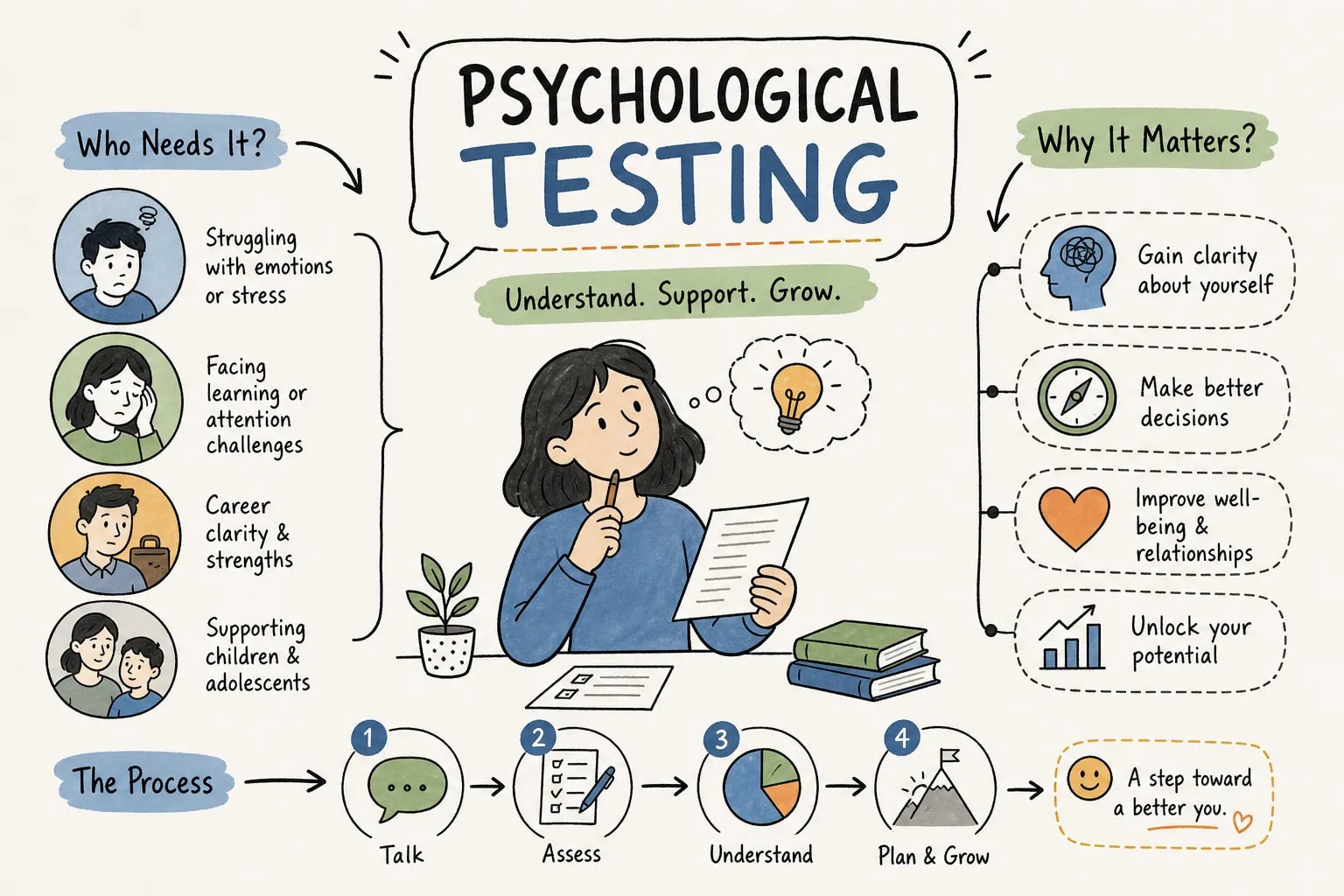
Parents should avoid assuming that one diagnosis explains lying. Dishonesty can stem from many factors and is not a diagnosis by itself. A qualified clinician can assess the child’s development, emotional health, family relationships, school functioning, stressors, behavior patterns, and other relevant factors.
Professional support can also be useful when every conversation about honesty ends in shouting, denial, or escalating punishment. Family patterns sometimes become so established that everyone expects the next conflict before it begins. Counseling can create a structured setting for learning different ways to ask questions, set limits, repair trust, and discuss difficult subjects.
Common Questions Around Why Kids Lie
Is lying normal for children?
Some lying is common during childhood. Research shows that children can begin experimenting with deception during the preschool years as cognitive and social abilities develop. What matters is the child’s age, the reason for the lie, how often it occurs, and whether it causes meaningful problems.
Why does a child lie even when the parent already knows the truth?
Children sometimes react automatically when they expect trouble. Fear, embarrassment, wishful thinking, impulsivity, or an attempt to delay consequences can lead to denial even when evidence is obvious. Calmly stating what is already known can be more productive than repeatedly asking for a confession.
Should a child be punished for lying?
Dishonesty should be addressed, but punishment does not need to be severe. Developmentally appropriate consequences tied to the behavior can teach responsibility more effectively. Children can also be encouraged to correct the story, repair harm, and understand how honesty affects trust.
How can parents encourage a child to tell the truth?
Clear expectations, predictable consequences, calm responses, opportunities to correct an impulsive answer, and adult modeling can support honest communication. Children are more likely to practice truth-telling when they know they can discuss mistakes without ridicule or humiliation.
When should parents consider counseling for chronic lying?
Professional support mayhelpl when lying is frequent,hardt to interrupt,linked toh risky behavior, affecting school or relationships, or accompanied by major changes in mood, behavior, sleep, friendships, or daily functioning. Counseling may also help when communication and discipline have become ongoing sources of family conflict.
Related Terms
- childhood lying and honesty
- parent-child communication
- child behavior counseling
- parent coaching in Chicago
- child and adolescent therapy
Additional Resources
- HealthyChildren.org: When Children Lie: What Parents Can Do
- Centers for Disease Control and Prevention: Positive Parenting Tips
- American Psychological Association: The Truth About Why Kids Lie
Expand Your Knowledge: National Library of Medicine research on the emergence of lying in young children; PubMed meta-analysis on theory of mind, executive function, and lying; CDC Essentials for Parenting Toddlers and Preschoolers.
Relevant Keywords: why kids lie, why children lie, child lying behavior, how to respond when a child lies, children and honesty, parenting a child who lies, chronic lying in children, child behavior therapy, child counseling Chicago, child therapist Chicago, parent coaching Chicago, family counseling Chicago, River North child therapy, child and adolescent therapy Chicago.
Tags: Parenting, Child Development, Child Behavior, Honesty, Parent Coaching, Child Therapy, Family Counseling, Chicago Counseling.
Educational Notice: This information is educational and is not a substitute for individualized medical, psychological, or mental health evaluation or treatment.
Support for Chicago Families
When persistent lying is affecting trust, school, relationships, or family communication, professional counseling can help identify what may be driving the behavior and build healthier ways to respond.
River North Counseling Group LLC
405 North Wabash Avenue
Suite 3209
Chicago, Illinois
60611
Office: 312.467.0000
https://www.rivernorthcounseling.com