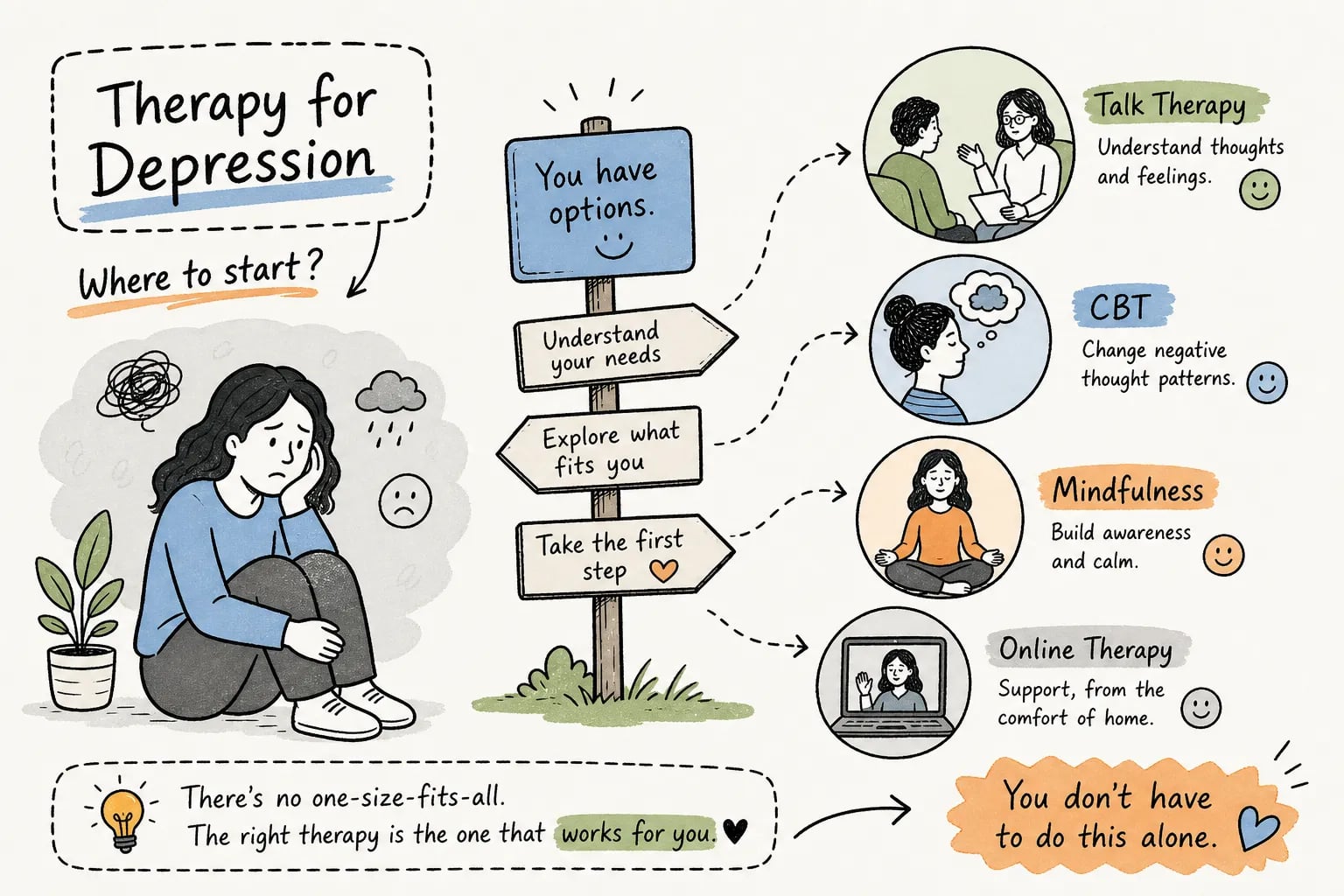


Deciding how to start therapy is one of the most self-aware choices a person can make. And yet, for most people, the actual process of beginning therapy, figuring out who to call, what it costs, whether they even “qualify”, creates just enough friction to put it off indefinitely. If you’ve been circling this decision for weeks or months, this guide is for you. By the time you finish reading, you’ll know exactly how to find the right therapist, understand your cost options, and walk into your first session without second-guessing yourself.
The steps aren’t complicated. They just need to be laid out clearly.
Recognizing when it’s time to seek support
Signs that go beyond a rough week
Everyone has hard stretches. The question is whether what you’re experiencing is situational stress that naturally resolves, or a persistent pattern that keeps showing up regardless of what changes around you. Persistent anxiety, low mood, difficulty functioning at work, emotional numbness, and feeling stuck in the same cycles are all meaningful signals. A useful gut check: if you’ve been having the same internal conversation for six months and nothing has shifted, that’s not a rough patch. That’s a pattern worth addressing.
Therapy isn’t reserved for crisis moments. Research on therapy outcomes consistently shows that beginning counseling when things feel “manageable but not great” often produces better results, because you have the bandwidth to actually do the work. Waiting for a breaking point isn’t a prerequisite.
What’s actually driving the hesitation
The most common barriers are stigma, cost anxiety, not knowing where to start, and a vague fear of what therapy might surface. Each of these is real, and each one has a concrete workaround. Cost concerns, for example, have more solutions than most people realize, from EAPs to sliding-scale fees to community mental health centers. If you’ve been genuinely uncertain whether you “need” therapy, that uncertainty itself is a signal worth taking seriously. Curiosity about whether therapy could help is reason enough to take the first step.
How to start therapy: finding a therapist that fits
Where to search and what to look for
The most reliable therapist directories are Psychology Today, TherapyDen, Zocdoc, and the APA Psychologist Locator. Each lets you filter by location or telehealth availability, specialty area, insurance accepted, and therapist availability. For a first-time searcher, those four filters alone will narrow an overwhelming list down to something workable.
Pay attention to credentials. The most common licenses you’ll see are LPC (Licensed Professional Counselor), LCSW (Licensed Clinical Social Worker), LMFT (Licensed Marriage and Family Therapist), and PhD or PsyD for psychologists. All of these indicate graduate-level clinical training. You can verify that a therapist’s license is active through your state’s licensing board website. It takes about two minutes and gives you peace of mind before you ever make a call.
A smarter shortcut for first-time clients
Scrolling through profiles and hoping one feels right is genuinely exhausting, especially when you’re already stretched thin. A group practice with an in-house matching process removes that friction entirely. At River North Counseling, new clients don’t have to figure out which therapist to pick from a list. The intake team handles matching directly, pairing each client with the right provider based on their specific concerns, goals, and preferences across a multi-specialty team. One intake conversation replaces hours of solo searching, and you’re connected with someone who actually fits your situation rather than whoever happened to have an opening.
How to start therapy: costs and your options
Checking insurance before your first call
Call the member services number on the back of your insurance card and ask specifically about behavioral health benefits. The questions that matter most: What’s my copay per session? Have I met my deductible? How many sessions are covered per year? Do I need a referral? In-network therapy typically runs $15 to $35 per session after your deductible. Out-of-network means paying the full rate upfront and submitting a superbill (a detailed invoice) to your insurer for partial reimbursement.
One important step most people skip: confirm directly with the therapist that they’re in-network for your specific plan. Insurance directories aren’t always up to date, and finding out after several sessions that you’ve been billed at out-of-network rates is an avoidable surprise. For a straightforward overview of how insurance commonly handles therapy, see Does insurance cover therapy?
Low-cost therapy options when insurance isn’t enough
If insurance coverage is limited or you’re uninsured, you have real options that don’t require compromising on quality:
- Employee Assistance Programs (EAPs): Check with your HR department. Most EAPs provide 3 to 8 free sessions per issue, no diagnosis required, and completely confidential from your employer.
- Sliding-scale fees: Many licensed therapists adjust their rates based on income. It’s worth asking directly. The answer is often yes.
- Open Path Collective: A vetted directory of therapists offering sessions at $40 to $70 after a one-time $65 membership fee.
- Community mental health centers: Federally funded and income-based; many serve uninsured clients at low or no cost.
- Teletherapy platforms: Online therapy options can reduce per-session costs significantly, though quality varies by provider. If you’re in Illinois, many licensed practices, including those offering virtual sessions statewide, accept a wide range of insurance plans.
Choosing the right type of therapy for your situation
The main approaches explained plainly
You don’t need an advanced degree to understand the difference between therapy types and their benefits. Here’s what matters for a practical decision:
CBT (Cognitive Behavioral Therapy) is the most widely practiced and evidence-backed approach. It’s structured and skill-building, focused on the link between thoughts, emotions, and behaviors. It works especially well for anxiety, depression, OCD, and stress. If you want concrete tools and a clear framework, CBT is usually the right starting point.
Psychodynamic therapy goes deeper into patterns rooted in past relationships and experiences. It’s less structured and better suited to long-standing emotional difficulties that don’t have an obvious recent trigger. DBT (Dialectical Behavior Therapy) is a CBT adaptation built for people who experience emotions intensely, it’s particularly effective for mood swings, self-destructive patterns, and borderline personality disorder. EMDR is specifically designed for trauma and PTSD processing, using structured eye movements to help reprocess traumatic memories. For a concise external overview of common therapy approaches, see 5 Different Types of Therapy in Psychology.
You don’t need to know the right answer before your first call
Most first-time clients have no idea which modality applies to their situation, and that’s completely fine. The therapy intake process is specifically designed to answer that question. A good therapist will assess your situation and explain which approach fits best. What you can do is ask directly: “What approach do you typically use, and how would it apply to what I’m dealing with?” That question alone tells you a great deal about how a therapist thinks and communicates.
What happens at your first therapy session
The intake process before you sit down
Most practices send intake paperwork digitally before the first appointment. Expect informed consent forms, a privacy notice, practice policies, and a brief questionnaire about your history and goals. Completing these in advance means the session itself can focus on conversation rather than paperwork. Intake sessions typically run 60 to 90 minutes, longer than a standard therapy hour, because the therapist needs a full picture before any treatment planning can begin. There are no wrong answers in this paperwork: it’s information-gathering, not a test. Many clinicians follow structured documentation practices; a useful primer is A Therapist’s Guide to Conducting and Documenting an Intake Session.
Inside the first session
The session usually opens with introductions and a clear explanation of confidentiality. Then the therapist shifts into assessment mode: what brought you in, how long this has been happening, how it’s affecting your daily life, and any relevant history. They’ll also ask what you’d like to see change. These questions aren’t intrusive, they’re the therapist building the map they’ll use to actually help you.
Confidentiality is absolute with two specific exceptions: imminent risk of harm to yourself or others, and mandated reporting for child abuse. Your therapist will explain these limits at the start of the session. Everything else stays private. The first session also serves as a mutual fit assessment. You’re evaluating whether this person feels right to work with, just as much as they’re learning about you.
How to prepare for your first appointment
A simple pre-session checklist
You don’t need a polished narrative or a rehearsed speech. A few bullet points before you walk in (or log on) is more than enough. Jot down what’s been bothering you, how long it’s been happening, any previous therapy experience, current medications, and your main goals for starting therapy. That starting point is all the preparation you need.
On the logistical side: confirm your appointment format, test your video platform if you’re doing a virtual session, and have your insurance card and any completed intake forms ready to go.
Questions worth asking in session one
First-time clients often forget they’re allowed to ask the therapist questions too. These four are worth keeping in your back pocket:
- “What does your approach look like in practice?”
- “How will we measure progress over time?”
- “How often do you recommend we meet?”
- “What should I do between sessions if I’m struggling?”
Preparation isn’t about having the right answers. It’s about showing up ready to be honest. That’s genuinely all it takes to begin.
How to start therapy: the hardest part is behind you once you make the call
Starting therapy feels harder than it actually is, mostly because it’s invisible until you break it into steps. Now you have the steps: recognize the pattern that’s keeping you stuck, find a therapist who fits your needs and budget, understand what the first session actually looks like, and show up with a few honest notes and an open mind.
Every therapist you speak to has helped someone else through that exact same hesitation. The call you’ve been putting off is the same call hundreds of other people made before things changed significantly for them. The process of how to start therapy is more accessible than it looks from the outside.
If you’re in the Chicago area and ready to take that step, the team at River North Counseling handles the matching process so you don’t have to navigate it alone. They see clients in person in River North and Skokie, and virtually across Illinois. Reach out directly to get matched with a therapist who fits your specific situation, and the team will take it from there. Learn more about their virtual services at Teletherapy in Chicago: A Beginner’s Guide to Online Therapy.