
When you’re ready to get help for depression, understanding the difference between seeing a therapist and a psychiatrist for depression can make the first phone call a lot easier. But for many people, that question, therapist or psychiatrist?, is exactly what stops them from reaching out at all. The two titles get used interchangeably, and they shouldn’t be. They represent different training, different tools, and different roles in your care. Once you understand the distinction, the decision usually clarifies itself.
At River North Counseling, one of the most common questions new clients ask before their first appointment is exactly this one. It’s not a trivial question. The answer shapes everything from what your first appointment looks like to whether medication becomes part of your treatment. The good news is that when you understand what each provider is actually trained to do, the right starting point tends to become clear.
What Therapists and Psychiatrists Each Bring to Depression Care
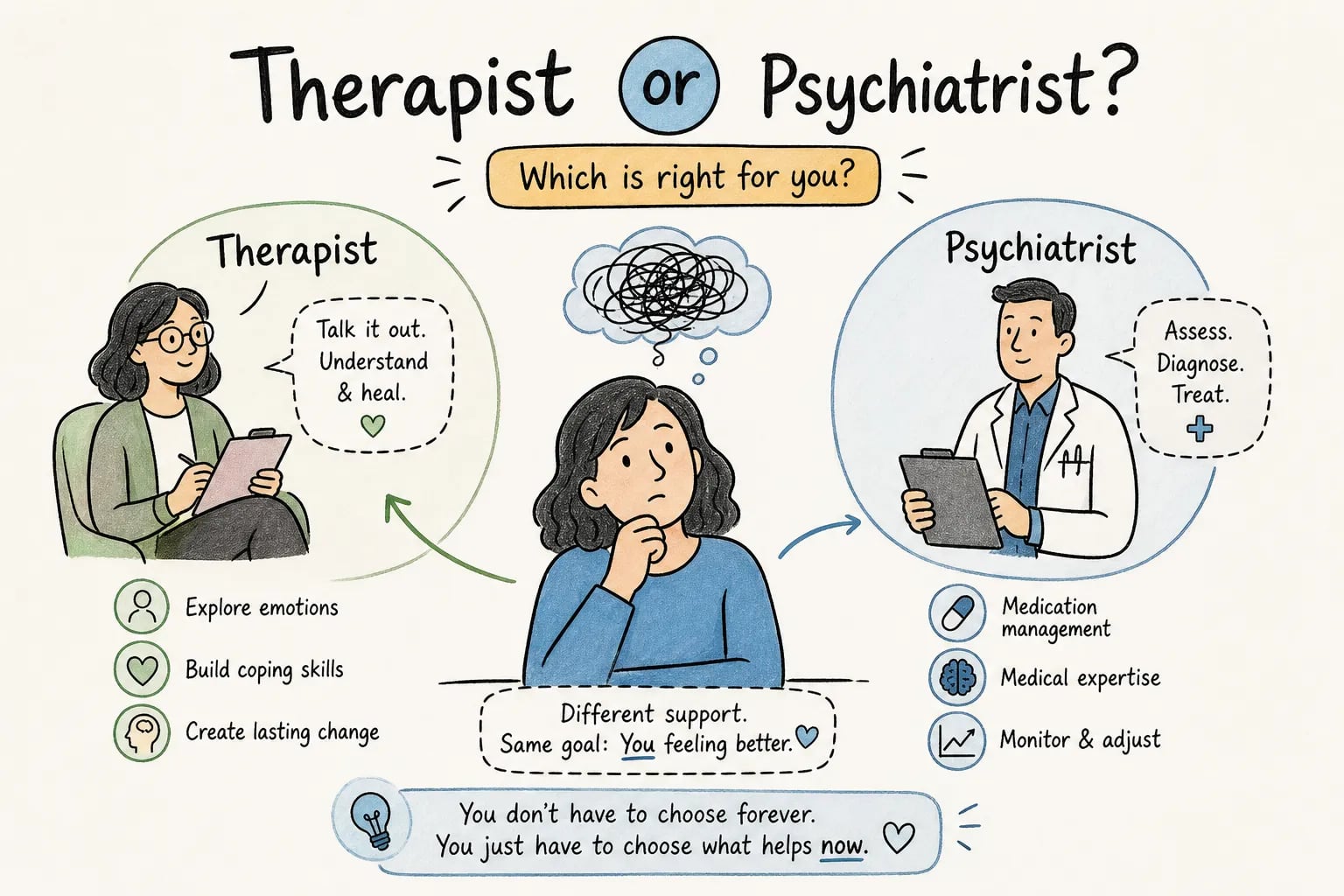
The foundational difference between these two providers comes down to training, licensure, and what they’re legally authorized to do. Psychiatrists complete four years of medical school followed by a four-year psychiatry residency. They are fully licensed physicians. Therapists, including licensed clinical social workers (LCSWs), licensed professional counselors (LPCs), and marriage and family therapists (LMFTs), complete a master’s or doctoral degree in counseling, social work, or psychology, followed by supervised clinical hours before licensure. Neither path is a lesser version of the other. They’re designed for different jobs.
Therapists provide psychotherapy, often called talk therapy, using evidence-based approaches like Cognitive Behavioral Therapy (CBT), behavioral activation, and interpersonal therapy. Their work focuses on thought patterns, emotional responses, coping skills, and relational dynamics. In most states, therapists do not prescribe medication, a small number of specially trained psychologists hold limited prescribing authority in certain states, but this remains the exception. Therapists also conduct psychosocial and mental health assessments, though they typically do not perform medical or laboratory evaluations. Their scope of practice is built around delivering structured, skills-based treatment.
Psychiatrists bring medical training and prescribing authority to depression care. They can diagnose, prescribe, and medically manage psychiatric conditions, ordering labs, assessing how physical health is affecting mood, and adjusting medications over time. In practice, many psychiatrists today focus primarily on medication management and diagnostic evaluation rather than delivering ongoing talk therapy. Some provide both, but that combination is less common in most practice settings. When you need medication evaluation and management, a psychiatrist is the right clinician. When you need psychotherapy, a licensed therapist is.
The Difference Between Seeing a Therapist and a Psychiatrist for Depression: Your First Appointment
A first appointment with a psychiatrist is a structured diagnostic evaluation. Expect a detailed symptom interview, a standardized screening tool like the PHQ-9, a review of your medical and psychiatric history, and sometimes basic physical checks or lab referrals. First appointments typically run 45 to 60 minutes, though length can vary by clinician and setting. The session ends with a treatment recommendation, which may or may not include a prescription. The goal is to determine your diagnosis, assess severity, and decide whether medication is clinically appropriate.
A first therapy session looks quite different. It’s more conversational and exploratory. Your therapist will ask about your current symptoms, life stressors, relationships, past experiences, and what you’re hoping to get out of treatment. Together, you’ll set goals and agree on an approach. If CBT is the right fit, your therapist will explain how the model works and what specific skills you’ll build over the course of treatment. You leave with a clear direction, not a prescription.
Both providers will form an initial treatment plan, but their frame of reference differs. A psychiatrist centers the plan on diagnosis and medical management, and a referral to a therapist is often part of that recommendation. A therapist centers the plan on psychotherapy goals and behavioral change, and if your symptoms seem moderate to severe, they’ll likely ask whether you’ve seen or considered working with a prescriber. These aren’t competing plans, they’re complementary ones.
Talk Therapy, Medication, or Both: What the Evidence Says
Evidence for Mild to Moderate Depression
For mild to moderate depression, research consistently shows that evidence-based psychotherapy like CBT is comparable to antidepressant medication in reducing symptoms during active treatment. Major systematic reviews and meta-analyses find no statistically significant difference between second-generation antidepressants and CBT in response or remission rates when used as a first-line treatment for adults in this range. CBT also carries a durability advantage: research suggests the skills learned in therapy can provide meaningful protection against relapse even after sessions end, a benefit that medication alone does not consistently offer, though the size of this effect varies across studies.
Evidence for Moderate to Severe Depression
For moderate to severe depression, the picture shifts. Research suggests medication can speed initial symptomatic response for some patients, which may be especially relevant for symptoms like disrupted sleep, appetite changes, and severe low energy, though individual response varies. The American Psychological Association’s clinical practice guidelines recommend combination treatment, an antidepressant plus psychotherapy, as the preferred approach for moderate to severe presentations. A psychiatric evaluation is the right starting point when medication looks like part of the picture. Needing medication isn’t a failure of therapy; it’s a matter of matching the right tool to the right severity level.
The most consistent finding across meta-analyses is that combined therapy and medication outperforms either treatment alone for adults with depression, particularly during the acute phase. Talk therapy and psychiatric care are not competing options. For many people navigating depression, the most effective path runs through both, with each provider doing what they’re trained to do.
Warning Signs That Point Toward Psychiatric Care First
For most people with depression, starting with a therapist is a reasonable and effective first step. There are circumstances, though, where psychiatric evaluation needs to come first or happen concurrently, and being clear about those circumstances matters.
Active or intensifying suicidal thoughts, especially with a plan or a prior attempt, require urgent psychiatric evaluation, not a therapy intake appointment. This is a medical situation. Psychotic symptoms such as hearing voices, losing contact with reality, or severely disorganized thinking warrant immediate psychiatric attention. So does severe functional impairment: being unable to eat, maintain basic hygiene, or perform essential daily tasks signals that psychiatric care should be the first call rather than something added later.
Other red flags include rapid symptom escalation, a history of a previous severe episode, or depression accompanied by significant mood instability. These presentations may warrant a psychiatric evaluation before or alongside starting therapy. If a therapist identifies any of these concerns during an intake session, they will refer to a psychiatrist. That referral isn’t a rejection, it’s coordinated care working exactly the way it should.
When to See a Psychiatrist vs. Therapist for Depression: The Case for Combined Care
In a collaborative care model, a therapist and a psychiatrist communicate about the same client, adjusting their respective treatments based on how the person is progressing. The therapist handles weekly psychotherapy; the psychiatrist handles medication check-ins, which typically happen monthly or less frequently once a regimen is stable. Each provider is operating within their area of expertise rather than one clinician trying to manage everything. For moderate to severe depression, this model tends to produce stronger outcomes than either approach alone.
For many people, especially those in the mild to moderate range, starting with a licensed therapist who specializes in depression is a practical and effective first step, and one that can be expanded. A skilled therapist will recognize when medication should become part of the picture and help coordinate that referral without disrupting the therapeutic work already underway.
At River North Counseling in Chicago, therapists who specialize in depression use CBT and other evidence-based approaches as the clinical foundation. When a client’s care calls for medication as well, the team works alongside prescribers to keep that transition smooth and well-coordinated. Integrated depression care starts with a clear, informed first step. The goal is always to make sure you have access to every tool that might help.
Practical Steps to Begin: Cost, Insurance, and Wait Times
Out-of-pocket costs vary meaningfully between the two provider types. Therapy sessions typically run between $100 and $200; initial psychiatric evaluations often range from $200 to $500. With in-network insurance, copays for both can land in the $20 to $60 range depending on your specific plan. Before your first appointment, confirm whether the provider is in-network. Most practices will verify your benefits during the intake process so there are no surprises.
Wait times also differ in ways that can affect your planning. Therapists are generally faster to access, with waits measured in days to a few weeks in many markets. In-person psychiatry appointments for new patients frequently involve longer waits, published data suggest national medians around two months for in-person care, with significant variability by location and practice. Telehealth psychiatric options can shorten that timeline, though availability still varies by platform and provider. If you’re in the moderate-to-severe range but not in crisis, starting therapy while you wait for a psychiatry appointment is a widely recommended approach. You don’t have to wait for every piece to be in place before getting support.
Before your first appointment, a few targeted questions can help you assess fit quickly:
- Do you specialize in depression treatment?
- What therapy approach do you use, and why?
- Do you coordinate with prescribers if medication becomes relevant?
- Do you offer in-person and virtual sessions?
These questions don’t require a clinical background to ask or evaluate. The answers will tell you quickly whether this is the right provider for where you are right now.
Making the Decision: A Clear Framework for Moving Forward
The difference between seeing a therapist and a psychiatrist for depression comes down to three things: training, prescribing authority, and clinical focus. For mild to moderate depression, therapy is often the right place to start, and CBT in particular has strong evidence behind it. For more severe presentations or symptoms that raise safety concerns, psychiatric evaluation belongs in the picture early. For many people, the strongest outcome comes from both providers working together on a shared plan.
If you’re in Chicago and ready to start with evidence-based talk therapy for depression, River North Counseling offers in-person sessions at our River North and Skokie offices, as well as virtual therapy options for clients across Illinois. Our therapists specialize in depression treatment and will work with you from the first session to determine whether you need one provider, two, or a coordinated care plan built from the ground up. Contact our intake team to take that first step, we’ll help you figure out the right fit from there.
Frequently Asked Questions
What is the main difference between seeing a therapist and a psychiatrist for depression?
The core difference is scope of practice. Therapists provide structured, evidence-based psychotherapy, approaches like CBT focused on changing thought patterns and building coping skills. Psychiatrists are licensed physicians who evaluate, diagnose, and prescribe medication. In most states, therapists do not prescribe. For mild to moderate depression, therapy alone is often an effective first step. For more severe depression, medication management through a psychiatrist, often combined with therapy, tends to produce the best outcomes.
Should I see a therapist or psychiatrist first for depression?
For most people with mild to moderate depression and no safety concerns, starting with a therapist is a practical and evidence-supported choice. If your symptoms are severe, involve suicidal thoughts, or include psychotic features, a psychiatric evaluation should come first. When in doubt, a therapist can assess your needs during an intake session and refer you to a psychiatrist if your symptoms call for it.
Can a therapist and a psychiatrist work together on my care?
Yes, and for many people with depression, this collaborative model produces the strongest results. Research consistently shows that combined therapy and medication outperforms either treatment alone for adults with depression, particularly during the acute phase. River North Counseling coordinates with prescribers when medication becomes part of a client’s care plan, so the two sides of your treatment stay connected.
How long do I have to wait to see a psychiatrist vs. a therapist?
Therapists are generally faster to access, often within days to a few weeks. In-person psychiatry appointments for new patients can involve significantly longer waits, national data suggests a median of roughly two months, though this varies widely by location and whether you’re using telehealth. If you’re waiting for a psychiatry appointment, starting therapy in the meantime is a widely recommended and productive approach.