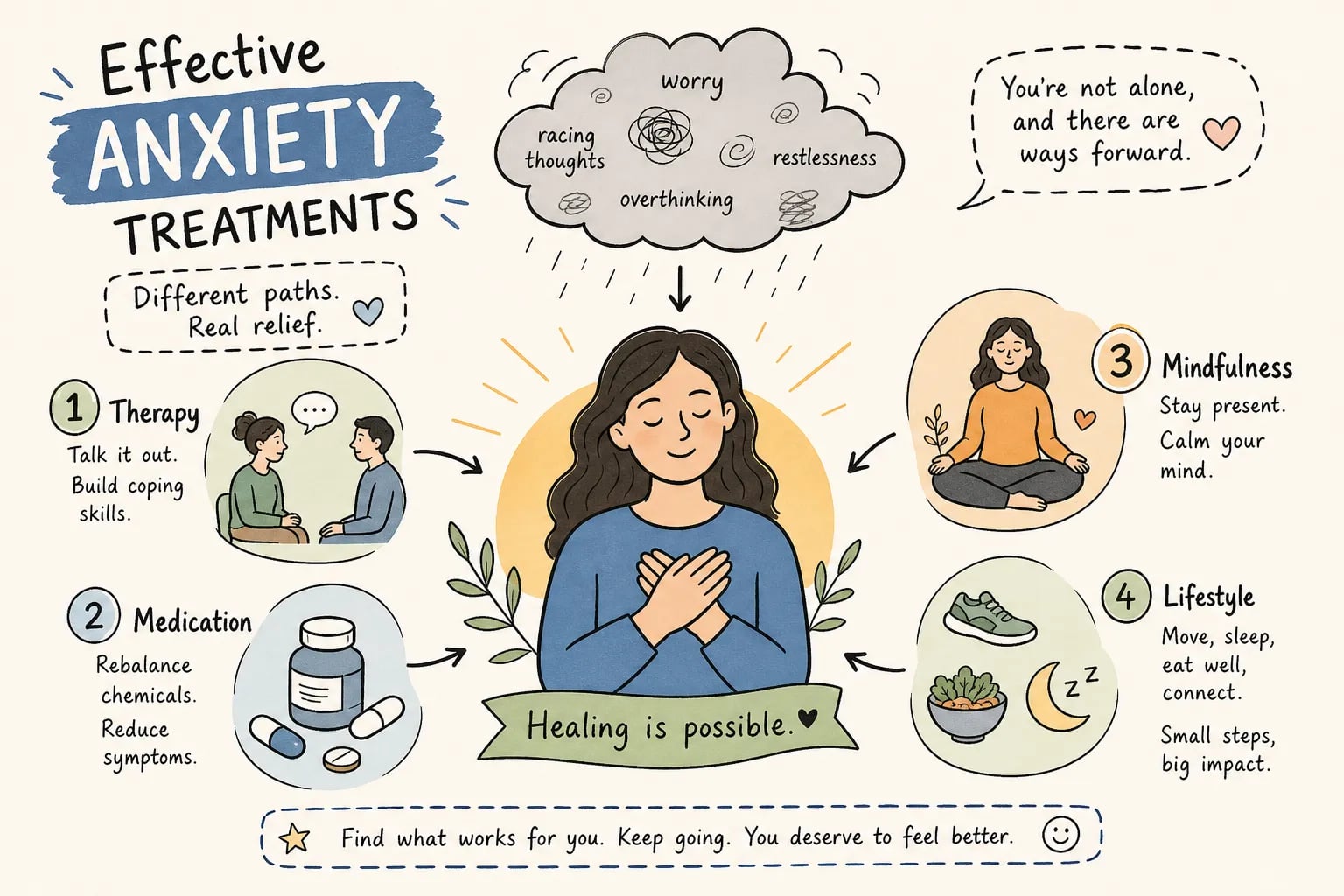


Depression counseling is a structured course of talk therapy with a licensed professional, typically running 8 to 20 sessions over two to four months, using evidence-based approaches like CBT, behavioral activation, or interpersonal therapy. Most people meet weekly for 50-minute sessions, and measurable improvement often becomes clear somewhere between sessions four and eight. Therapy is often structured and collaborative, involving between-session practice and goal-setting, and finding a therapist with direct experience treating depressive disorders is an important factor associated with better suitability of care. River North Counseling matches clients with therapists who specialize in treating depression.
If you’re not sure where to start, that’s completely understandable. Depression itself makes it harder to research options, make phone calls, or evaluate whether a treatment approach is right for you. This guide covers the full picture: what sessions actually look like, which approaches have the strongest evidence, how long results take, how to evaluate a counselor’s credentials, what it costs, and what to do if things feel urgent right now.
Key takeaways about depression counseling
- Structured and time-limited: A standard course of counseling for depression runs 8 to 20 sessions over two to four months, with weekly 50-minute appointments.
- Evidence-based options exist: CBT, behavioral activation, IPT, and ACT all outperform waiting lists and usual care, with response rates around 41 to 42% compared to roughly 16 to 17% for control conditions.
- Improvement takes time: Early shifts may appear in the first few sessions, but clearer progress typically becomes measurable around sessions four to eight.
- Credential type matters less than specialty: The most important factor is whether the provider routinely treats depression using an evidence-based approach, not the letters after their name.
- Crisis support is available now: In the U.S., call or text 988 for free, confidential, 24/7 crisis support.
What a depression counseling session actually looks like
The first appointment is a clinical assessment, not paperwork. Your therapist builds a picture of your current symptoms, personal and family history, life context, and treatment goals. A thorough intake also covers confidentiality, session structure, and what to do if symptoms worsen between appointments. This information directly shapes the treatment plan that follows.
Ongoing sessions follow a recognizable rhythm: reviewing how the past week went, exploring specific thoughts, behaviors, or situations connected to your depression, practicing a skill or technique together, and identifying something to work on before the next appointment. Sessions feel like a focused, structured conversation, not an open-ended venting session. Your counselor is actively directing the work, which is what makes it therapeutic rather than just supportive.
Most evidence-based approaches include between-session practice: keeping a mood log, scheduling a specific activity, challenging a recurring thought pattern, or practicing a coping strategy. This is not busy work. The time between sessions is where much of the actual change happens, and a skilled counselor explains clearly why each practice matters and how it connects to your treatment goals.
Which therapy approaches work best for depression?
Research consistently shows that CBT, behavioral activation, IPT, and ACT all outperform waiting lists and usual care, but no single approach reliably outperforms the others across all people. The best fit for depression therapy depends on your symptom profile, personal preferences, and the specific expertise of your therapist.
| Therapy | Main focus | Response rate (meta-analysis)* | Best suited for |
|---|---|---|---|
| CBT | Identifies and changes unhelpful thought patterns and avoidance behaviors | ~42–44% | Broad depression presentations; most extensively studied option |
| Behavioral activation | Systematically increases rewarding, meaningful activities; reduces withdrawal | ~34–50% depending on study type | When inactivity and avoidance are fueling the depression cycle |
| IPT | Targets relationship conflict, grief, role transitions, and social support | ~37% | When interpersonal stress or life changes are central to symptoms |
| ACT | Builds psychological flexibility; reduces avoidance of difficult emotions | Not consistently pooled; effect sizes favor ACT over inactive controls | When self-criticism or emotional avoidance is prominent |
*Response rates drawn from large-scale psychotherapy meta-analyses and network meta-analyses comparing active treatments to control conditions.
CBT and behavioral activation
CBT is the most extensively researched psychotherapy for depression and performs broadly comparably to antidepressant medication in the short term, with benefits that may persist longer after treatment ends, according to a major review published by the American Psychological Association. Behavioral activation is closely related to CBT and produces comparable outcomes by focusing on one core mechanism: getting people back into contact with rewarding activities. Both are considered strong first-line options for mild to moderate depression.
IPT and ACT
IPT works especially well when grief, conflict, isolation, or major transitions like a job loss or new diagnosis are sitting at the center of the depression. ACT builds the capacity to sit with difficult internal experiences rather than fighting them, and to take action guided by personal values. Its evidence base is smaller than CBT’s, but growing, and it fits particularly well when self-criticism or emotional avoidance are prominent features.
How long does it take to see results from depression counseling?
Standard courses of CBT or IPT run 16 to 20 sessions over three to four months, according to clinical guidelines, while many brief courses for mild or uncomplicated depression run 8 to 16 sessions over eight to twelve weeks. Research summarized by the American Psychological Association indicates that about half of patients recover by approximately 15 to 20 sessions. Early shifts in mood or energy can appear within the first few sessions, but clearer, measurable progress typically becomes apparent around sessions four to eight.
Progress is rarely linear. A difficult week does not mean treatment is failing. If there is little change after roughly six to twelve weeks, the treatment plan should be actively reviewed rather than simply continued. This might mean adjusting the therapy approach, checking for conditions that often accompany depression like anxiety or trauma, evaluating whether medication makes sense, or increasing session frequency. After the main course ends, three to four maintenance sessions over the following months help protect against relapse.
What credentials should your depression counselor have?
The credential type matters less than most people assume. LPCs and LMHCs hold master’s-level counseling training and often specialize in depression, anxiety, or trauma. LCSWs have social work training and frequently integrate practical support alongside therapy. Psychologists hold doctoral degrees and can provide both therapy and formal psychological or neuropsychological assessment, like the evaluations offered at River North Counseling.
Psychiatrists are physicians who diagnose and prescribe medication; they’re the right referral when medication evaluation is needed. What matters most across all of these credentials is whether the provider routinely treats depressive disorders using an evidence-based approach.
Before your first appointment, ask these questions directly:
- How often do you treat depression, and which types?
- What therapy approach do you use, and what does a typical session involve?
- How will we set goals and measure progress?
- What happens if I’m not improving after several weeks?
- What is your approach if I have thoughts of self-harm?
Clear, concrete answers to these questions separate experienced depression therapists from those who treat it only occasionally. Also confirm practical details: insurance coverage, cancellation policy, session frequency, and whether telehealth is available. At River North Counseling, we offer both in-person sessions at our River North and Skokie offices and virtual therapy across Illinois, so clients can access care in whatever format works best for their schedule.
How much does depression counseling cost?
Several options can lower out-of-pocket costs significantly, according to 2026 counselor advocacy data and insurer guidance:
- Open Path Collective: Connects clients with therapists offering sessions around $40 to $70 after a one-time membership fee.
- Employee Assistance Programs (EAPs): Often provide several free sessions per year through an employer, worth checking before you schedule anything.
Before your first session, call your insurer and confirm whether individual psychotherapy for depression is covered, what your copay or coinsurance is before and after the deductible, and whether your specific therapist or platform is in-network. If you’re paying without insurance, you have the right to request a Good Faith Estimate before starting care.
If you are in crisis right now
If you may act on suicidal thoughts, have seriously harmed yourself, or cannot stay safe, call 911 or go to the nearest emergency department now. In the United States, call or text 988 to reach the free, confidential, 24/7 Suicide and Crisis Lifeline. Do not stay alone. Move away from anything you could use to hurt yourself, and tell someone you trust directly: “I am in danger and need you to stay with me.”
A safety plan is a short, written personal guide you create with a therapist or counselor that identifies your warning signs, coping steps, people you can call, and how to make your environment safer. If you already have a therapist, contact them now rather than waiting for your next scheduled appointment. If you are beginning to find a therapist for depression, choosing one who discusses safety planning during the intake session is a sign of thorough, thoughtful care.
The next step is simpler than it feels
Depression counseling is a structured, evidence-based process that typically takes two to four months and works best when there is a strong match between your needs and your therapist’s approach. A range of lower-cost options exist, including sliding-scale clinics, university training clinics, and EAPs, so cost is often less of a barrier than it first appears. Knowing what questions to ask, understanding the different depression therapy approaches, and being realistic about the timeline all make a meaningful difference in how quickly you begin to feel better.
If things feel urgent, call or text 988 now. If you’re ready to take the next step toward care, reach out to our team at River North Counseling. We work with adults, couples, families, and children across Chicago and Skokie, and we’ll match you with a therapist who has direct experience treating depression, whether you’re coming in person or connecting virtually.
Frequently Asked Questions
Are short courses of counseling effective for mild depression?
Yes, brief courses can be effective for mild or uncomplicated depression, typically running 8 to 16 sessions over eight to twelve weeks. These shorter, focused courses are commonly used and can produce meaningful improvement for less complex presentations.
How important are between-session practices to making progress in therapy?
Between-session practice is very important because much of the actual change happens between appointments. Keeping a mood log, scheduling specific activities, challenging recurring thoughts, or practicing coping strategies are standard parts of evidence-based approaches and are explained so you understand how each practice connects to your goals.
How common is recovery and how long does it usually take for people to recover?
About half of patients recover by approximately 15 to 20 sessions according to the research summarized here. Early shifts in mood or energy can appear in the first few sessions, with clearer measurable progress typically becoming apparent around sessions four to eight.
What can help reduce the chance of relapse after the main course of therapy ends?
Having a small number of follow-up sessions helps protect against relapse, with three to four maintenance sessions over the months after treatment commonly recommended. These maintenance contacts support ongoing gains and reduce the likelihood of symptoms returning.