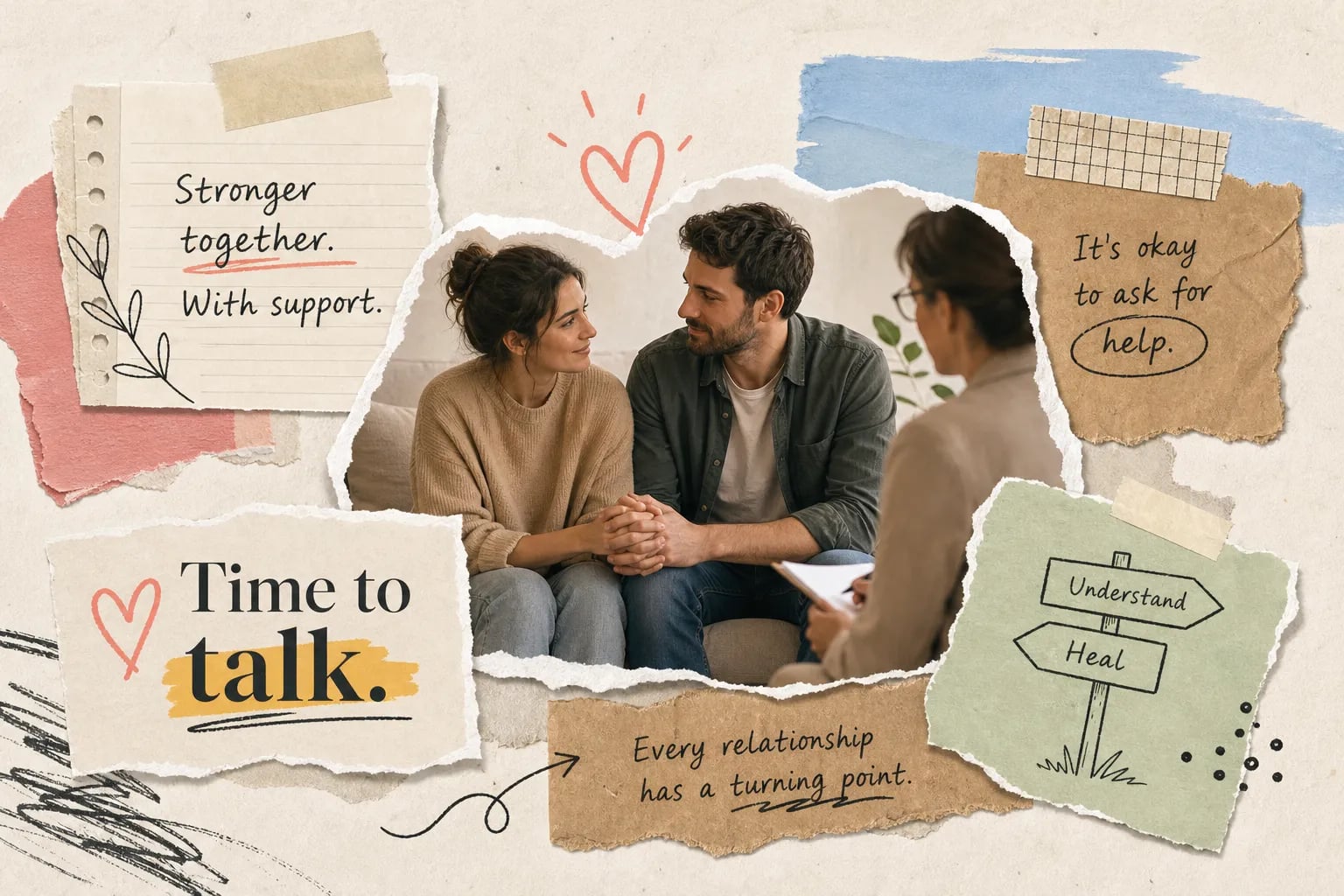

Couples counseling is not a last resort. It is a structured, evidence-based process designed to help two people communicate more clearly, understand each other more deeply, and build a more resilient relationship at any stage. Many couples wait until something has broken before they reach out. Research suggests that delay stems from several overlapping barriers, stigma, cost, logistics, and the widespread misconception that seeking help means the relationship is failing. It doesn’t.
This article covers what couples counseling actually involves, who it genuinely serves, what evidence-based approaches look like in practice, and what outcomes are realistic. Whether you’re navigating a recurring argument that never quite resolves or simply want to strengthen an already solid partnership, what follows will help you make an informed decision. River North Counseling in Chicago works with couples at every stage, not just those in crisis, in a setting that’s direct, professional, and judgment-free.
Key takeaways
- Not just for crises: Couples counseling benefits relationships at any stage, from proactive skill-building to repairing serious conflict.
- Evidence-based outcomes: A major meta-analysis of 30 randomized controlled trials found that couples receiving therapy did better than roughly 80% of untreated couples, with moderate-to-large improvements across established models.
- Earlier is better: Couples who start before patterns become deeply entrenched tend to see stronger, more durable results.
- Therapist role: A relationship therapist is not a referee. Their job is to create safety, identify destructive cycles, and help both partners feel heard.
- Multiple approaches work: EFT, the Gottman Method, and CBT for couples each have solid research support. A skilled therapist matches the method to your specific dynamic.
- First changes come quickly: Most couples notice meaningful shifts within four to eight sessions when both partners participate consistently.
What does couples counseling actually involve?
Sessions are structured conversations facilitated by a trained therapist, not free-form venting. The therapist observes how you and your partner interact, asks targeted questions, and guides both of you toward new ways of expressing needs and hearing each other. Frequency is typically weekly or biweekly, and most courses of treatment run anywhere from a few months to six months or more depending on the concerns involved.
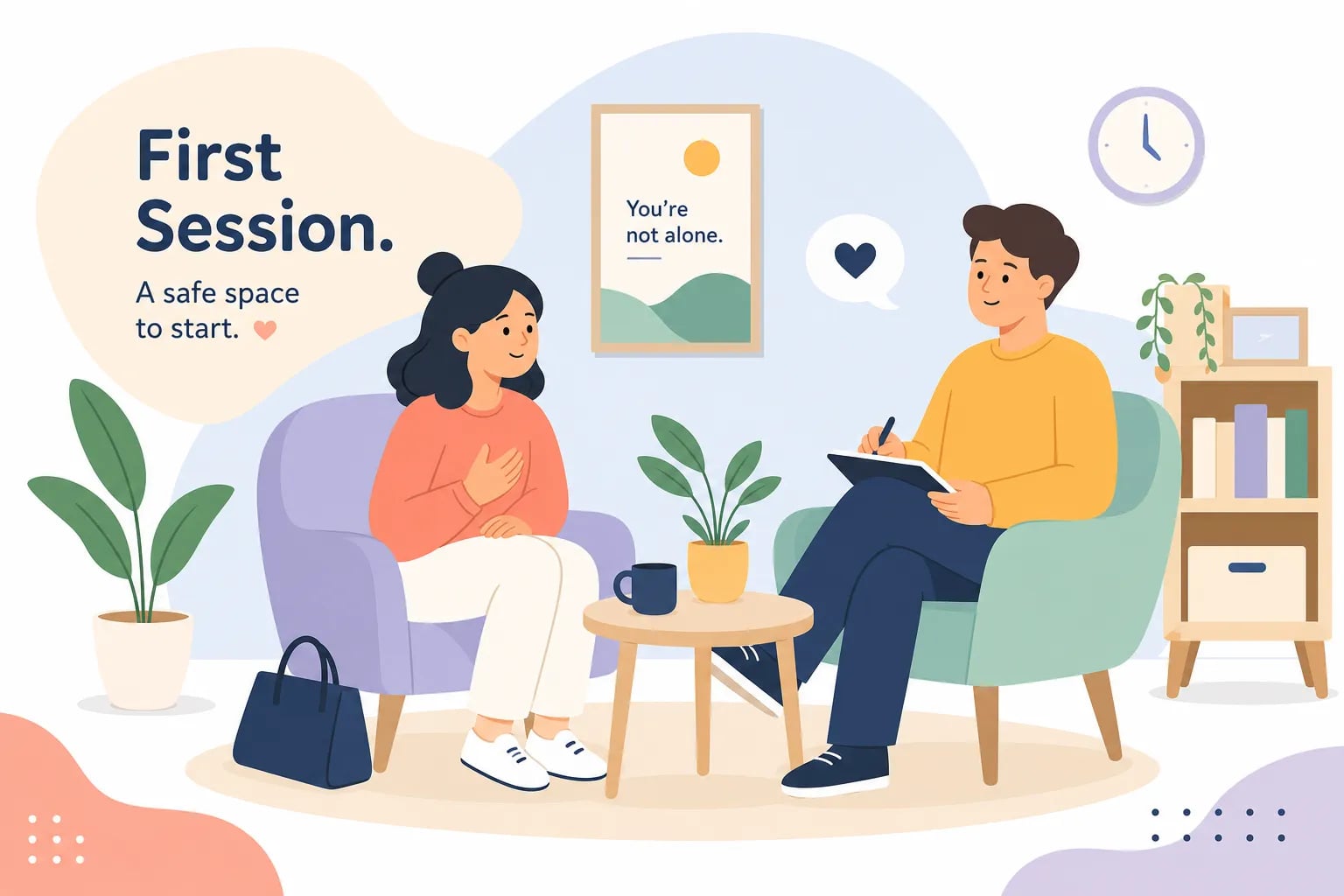
Early sessions usually begin with an intake process, sometimes a joint session, sometimes brief individual meetings, where the therapist gathers a picture of the relationship’s history, patterns, and goals. From there, treatment moves through assessment, goal-setting, and active skill-building, with periodic reviews where progress is evaluated together. You don’t need to agree on what the problem is before you walk in. Part of the therapist’s job is helping both partners articulate their experience clearly enough to find common ground.
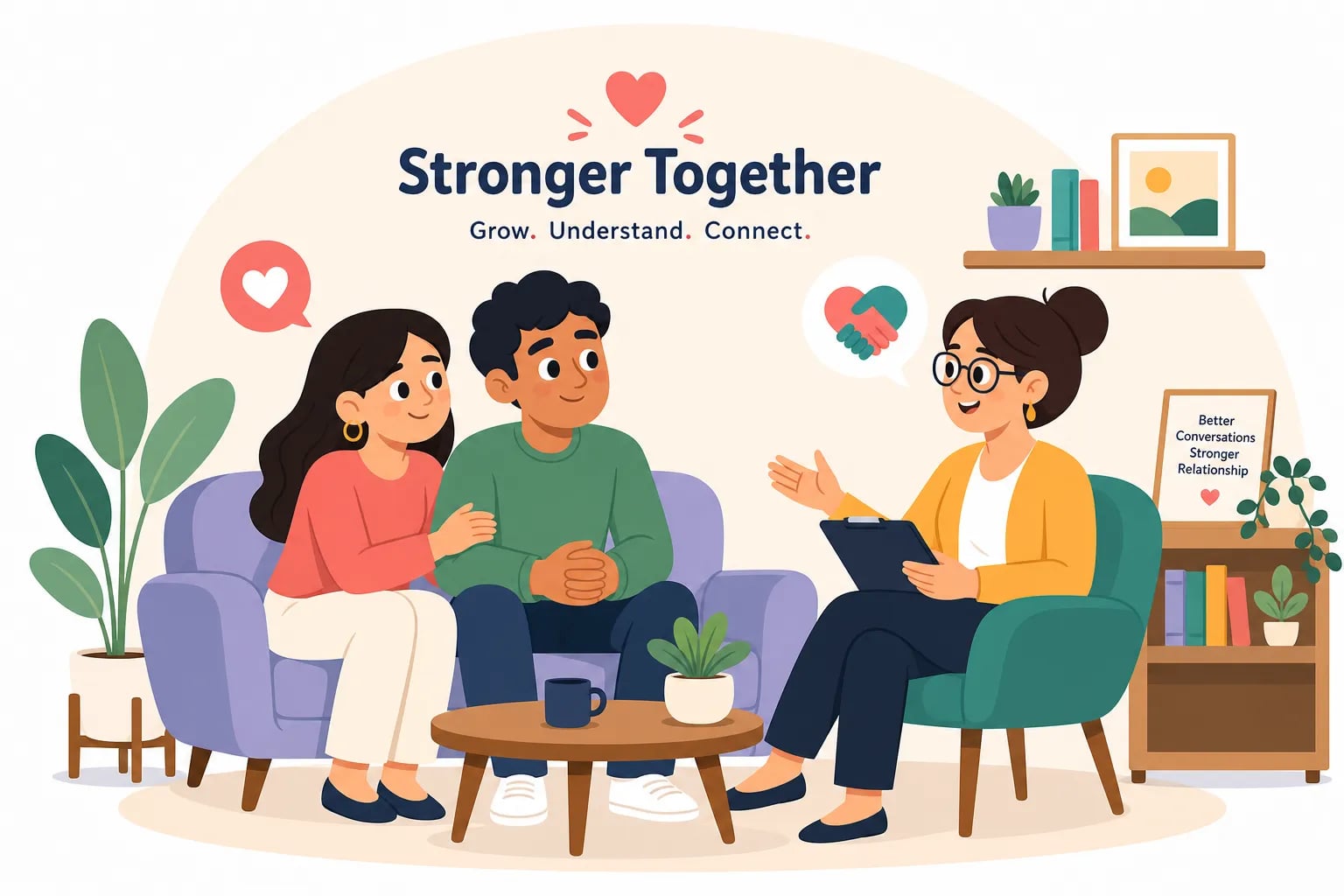
A couples therapist is a trained neutral party whose role is to create safety, interrupt destructive cycles, and ensure both partners feel heard. They are not there to decide who is right. That distinction matters because one of the most common reasons couples resist going is the fear that the therapist will take sides. A competent relationship therapist works with the dynamic between you, not against either of you individually.
Is couples therapy only for relationships in crisis?
The clear answer is no. The “we’re not that bad yet” mindset keeps many couples from seeking help until their patterns are deeply entrenched, which makes change harder and takes longer. Outcome data consistently shows that couples who start earlier tend to see stronger, more durable results. Common barriers to seeking help include stigma, cost, and the belief that therapy is only warranted once a relationship reaches a breaking point, none of which should be disqualifying.
Proactive couples work, sometimes called enrichment therapy or premarital counseling, is widely used among couples who are functioning well but want to strengthen communication, prepare for a major life transition, or build better tools before conflict escalates. The couples who show up for relationship counseling represent a wide range of situations: recurring disagreements about parenting or finances, growing emotional distance without obvious conflict, one partner managing anxiety or depression that affects the relationship, or two people preparing to marry who want to start that chapter on solid footing.
Marriage counseling and relationship counseling are not synonymous with “we’re about to end things.” The research on when therapy produces its strongest outcomes points consistently to one window: after recurring problems have become noticeable, but before conflict patterns are so entrenched that goodwill has eroded. That window is wider than most people assume, and it’s open long before a relationship reaches a breaking point.
Couples counseling approaches: what the evidence says
The two most research-supported models are Emotionally Focused Therapy and Behavioral or Integrative Behavioral Couple Therapy, with the Gottman Method carrying strong process research and growing outcome evidence. CBT for couples, which focuses on changing unhelpful thought patterns and building concrete communication skills, is classified as possibly efficacious under APA Division 12 criteria. These aren’t competing philosophies so much as different entry points into similar goals.
Emotionally Focused Therapy (EFT)
Emotionally Focused Therapy targets the underlying attachment cycle: the pursue-withdraw, criticize-shut down, or attack-flee patterns that repeat regardless of what the argument is actually about. EFT helps partners identify the vulnerable feelings beneath their reactions, express them safely, and respond with greater emotional availability. Clinical trials and reviews of EFT research report that roughly 70 to 75 percent of couples move from a clinically distressed range to non-distressed status, one of the strongest outcome profiles in the field, though results refer specifically to relationship satisfaction measures and do not guarantee relationship continuation.
Gottman Method
The Gottman Method approaches the same goal from a different direction. It uses structured assessment and targeted exercises around friendship, conflict repair, shared meaning, and communication habits. It suits couples who want practical, concrete tools alongside the relational work.
CBT for Couples
CBT for couples adds behavioral homework and problem-solving frameworks that work especially well when unhelpful thought patterns are driving repeated misunderstandings. A skilled marriage therapist matches the approach to the couple’s specific patterns and adjusts when something isn’t landing. EFT tends to fit couples who feel emotionally unsafe or disconnected. Gottman-based work tends to fit couples who feel connected but keep handling conflict badly. Many experienced therapists integrate elements of both, because most real relationships don’t fit cleanly into one category.
What can you realistically expect to gain?
That same meta-analysis of 30 randomized controlled trials found that couples receiving therapy did better than approximately 80 percent of untreated couples, with generally moderate-to-large effects across established models. Those are meaningful numbers, but they come with an honest qualifier: improvement rates are not universal, and outcomes depend heavily on therapist training, both partners attending consistently, and starting before severe disengagement has set in.
In practical terms, most couples first notice changes in how they argue, not whether they argue. Discussions become less destructive. Recovery after conflict comes faster. Each partner feels more understood, and the emotional distance that accumulates after repeated unresolved arguments starts to close. Research on session timelines suggests most couples notice some shift within four to eight sessions, with more substantial and lasting improvement arriving between eight and twenty sessions for most concerns, though this varies by problem type, severity, and therapist training.
What couples counseling is not a guarantee of is that the relationship will survive. It is a process that gives two people the best-informed path forward, whatever that looks like. Some couples enter with the goal of repairing a specific breach. Others enter to decide with clarity whether to continue. A good relationship therapist supports both without prescribing the outcome.
How do you find the right couples counseling fit?
Licensure is a starting point, not a finish line. Licensed Marriage and Family Therapists carry the most directly relationship-focused training by design, but a Licensed Clinical Social Worker or Licensed Professional Counselor with strong couples-specific training can be equally or more effective. What matters more than the letters is the therapist’s actual couples caseload, their training in a named evidence-based model like EFT or the Gottman Method, and their approach to safety screening for high-conflict or trauma-affected relationships.
Before committing, most practices offer a brief consultation. Use it. Ask specifically what therapeutic approach the therapist uses and why it fits your concerns. Ask how they handle situations where one partner is more motivated than the other, because that asymmetry is common and how a therapist navigates it tells you a lot. Ask what the intake process looks like, how they define progress, and when they would recommend a formal review of the treatment plan.
On cost: couples counseling in Chicago typically runs between $200 and $300 per session for private-practice therapists, based on regional private-practice rate data. Most major insurance plans do not cover relationship counseling when the goal is purely relational, but coverage is more likely when sessions are part of treatment for a diagnosed condition affecting one partner, billing under CPT codes such as 90847 is one common approach worth asking about. Virtual sessions through a private-practice therapist are often comparable in cost to in-person care; the primary benefit is scheduling flexibility rather than significant savings.
HSA and FSA funds can generally be applied to qualified therapy costs per IRS guidance, though it’s worth confirming with your plan administrator before your first session. For couples searching for couples counseling online or looking for a relationship therapist near them in the Chicago area, teletherapy through an Illinois-licensed provider offers a practical alternative to in-office care without sacrificing the structure of an evidence-based approach.
When is the right time to reach out?
The right time is usually earlier than you think. A recurring argument that never fully resolves, a growing sense of emotional distance without obvious conflict, a major life transition on the horizon such as a move, a new baby, or a career shift that’s reshaping your dynamic, any of these are valid entry points, and none of them require the relationship to be in free fall before you act.
Couples in Chicago and the surrounding area have access to practices equipped to meet them wherever they are. At River North Counseling, relationship counseling is available for couples at any stage, with in-person appointments at their River North and Skokie offices as well as couples counseling online for clients across Illinois. The goal isn’t to fix a broken relationship. It’s to help two people build the skills and connection that make a relationship worth staying in.
If you’ve been wondering whether couples counseling is the right next step, that’s a reasonable place to start. Reach out to River North Counseling to schedule a consultation and take one concrete step toward the relationship you actually want.
Frequently Asked Questions
Will insurance cover couples counseling?
Insurance often does not cover couples counseling when the goal is purely relational. Coverage is more likely when sessions are part of treatment for a diagnosed condition affecting one partner, and billing under codes such as 90847 is one common approach worth asking about; confirm specifics with your insurer or provider.
What can I do if my partner refuses to attend counseling?
You can still start couples counseling even if one partner is less willing, because therapists commonly handle situations where one partner is more motivated. Ask the therapist how they navigate asymmetry in motivation during a brief consultation and expect them to outline strategies for engaging both partners or working productively when only one attends.
How should we prepare for our first couples counseling session?
Arrive ready to describe your relationship history, recurring patterns, and goals since early sessions typically begin with an intake and assessment. Be prepared for a joint session and possibly brief individual meetings, and expect the therapist to ask targeted questions to build a shared picture of the relationship and set initial goals.
Are online couples counseling sessions available and how do they compare to in-person care?
Yes, teletherapy is available through Illinois-licensed providers and often matches private-practice in-person scheduling and cost. The primary benefit of virtual sessions is scheduling flexibility rather than significant savings, and online care preserves the structure of an evidence-based approach.