

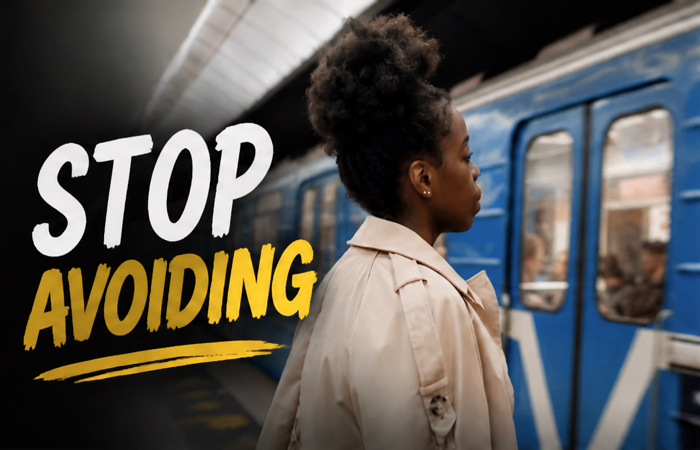
Anxiety and Avoidance: A CBT Plan for Small Steps Forward
Anxiety can make everyday situations feel threatening, uncertain, or overwhelming. Avoidance may bring short-term relief, but repeated avoidance can make fear stronger over time. Cognitive behavioral therapy, often called CBT, offers practical ways to identify anxious thought patterns, reduce avoidance, and take manageable steps toward important activities. For people in Chicago, counseling can provide structure and support as they practice these skills at a pace that fits their needs.
Anxiety can affect choices that may seem simple from the outside. A person may delay making a phone call, avoid a social event, postpone a medical appointment, skip public transportation, or spend hours worrying about an upcoming conversation. Each decision can reduce distress for a short time.
That relief can make avoidance feel useful. The problem is that avoidance may also teach the brain that the feared situation was too dangerous or difficult to handle. When this pattern repeats, more situations may begin to feel uncomfortable, and daily routines can become increasingly restricted.
Cognitive behavioral therapy focuses on the connection between thoughts, emotions, physical sensations, and behavior. In anxiety treatment, CBT may help a person examine fearful predictions and practice responding differently to situations that have become difficult to face.
Why Anxiety and Avoidance Can Reinforce Each Other
Anxiety often begins with a prediction about what might happen. Someone may expect embarrassment, rejection, panic, failure, conflict, or loss of control. Even when the feared outcome has not happened, the body can respond as if a threat is already present.
Common physical reactions can include a rapid heartbeat, muscle tension, sweating, stomach discomfort, dizziness, trembling, restlessness, or difficulty concentrating. These sensations can feel intense, especially when you interpret them as signs that something is wrong.
Avoidance can quickly reduce that discomfort. Leaving a crowded room, canceling plans, avoiding an elevator, or asking another person to handle an uncomfortable task may bring immediate relief. That relief can reinforce the belief that escaping was necessary.
Over time, the cycle can strengthen. Anxiety leads to avoidance, avoidance creates short-term relief, and the relief makes avoidance more likely the next time anxiety appears.
What Avoidance Can Look Like in Daily Life
Avoidance is not always obvious. Staying home instead of attending an event is a clear example, but many forms of avoidance are subtle.
Someone with social anxiety may attend a gathering but avoid eye contact or conversation. A person worried about making mistakes may spend an excessive amount of time checking an email before sending it. Someone concerned about health may repeatedly search symptoms online or ask others for reassurance.
Other patterns can include procrastination, overpreparing, excessive checking, staying close to exits, depending on another person to complete certain tasks, or avoiding situations that involve uncertainty.
These behaviors can feel protective. CBT helps examine whether they are useful in the long term or whether they are keeping anxiety in control.
A CBT Plan for Taking Small Steps Forward
CBT does not require someone to begin with the hardest possible challenge. A more useful approach often involves identifying a specific situation and breaking it into smaller steps to practice.
For example, someone who has started avoiding elevators may not be ready to ride alone to the top floor of a high-rise building. A smaller starting point could involve standing near an elevator, watching the doors open and close, riding one floor with another person, and gradually increasing the challenge.
You can use the same basic approach for other fears, including public speaking, driving, crowded places, social interactions, medical appointments, work meetings, or difficult conversations.
- Identify the situation. Define the specific activity or setting that has become difficult rather than describing the problem only as anxiety.
- Notice the prediction. Identify what the mind expects will happen and how likely that outcome seems.
- Choose a manageable step. Select an action that creates some discomfort without making the task unnecessarily overwhelming.
- Observe the experience. Notice thoughts, physical sensations, urges, and what actually happens during the situation.
- Review the result. Compare the original prediction with the outcome and decide the next practice step.
The goal is not to feel completely calm before taking action. Progress may mean completing an important task while anxiety is still present.
Repeated practice can help a person learn that discomfort does not always mean danger. It can also provide evidence that feared outcomes may be less likely, less severe, or more manageable than expected.
Thoughts Are Predictions, Not Guarantees
CBT also examines how a person interprets anxious experiences. A racing heart may be viewed as proof that panic is about to occur. A quiet moment during a conversation may be interpreted as evidence of rejection. A small mistake may be treated as proof that an entire performance failed.
These interpretations can increase anxiety even when the situation itself has not changed.
A CBT therapist may help a person examine the evidence behind a fearful thought. Questions may focus on what supports the prediction, what does not, and whether uncertainty is being treated as certainty.
The purpose is not to replace every negative thought with a positive one. A more balanced thought should still feel realistic. For example, Nothing bad will happen” may not feel believable. A statement such as may be uncomfortable, but discomfort does not mean the situation is unsafe “may be more useful.
Local Spotlight: Anxiety Treatment and Daily Life in Chicago
Chicago offers many situations that can become difficult when anxiety and avoidance begin to influence daily routines. Public transportation, busy sidewalks, elevators, restaurants, office buildings, networking events, medical appointments, and crowded public spaces can all become sources of stress.
A person with social anxiety might begin by asking a store employee a simple question or having a short conversation with a neighbor. Someone who avoids public transportation could start with a short ride during a less crowded time of day. A person uncomfortable in busy places might first visit during a quieter period before trying a busier setting.
These small exercises can be useful because they turn broad goals into specific actions. “Be less anxious” is difficult to measure. ” Ride the train for two stops” and “ask one question during a meeting “are much more concrete.
Chicago also makes it possible to complete many tasks without direct interaction. Food delivery, online shopping, remote work, digital appointments, and app-based services can be helpful and convenient. However, they can also become part of an avoidance pattern when people use them mainly to escape fear.
The important question is not whether a convenience is good or bad. The more useful question is whether anxiety is reducing a person’s choices.
Why Repetition Matters in CBT for Anxiety
One successful experience can be encouraging, but repetition often provides stronger learning. Someone may complete a feared task once and decide it only went well because of luck. Repeating the task in different situations can help create a broader sense of what is manageable.
Practice can also reveal which safety behaviors are maintaining anxiety. For example, a person who feels anxious during meetings may write out every sentence in advance. Another person may only enter crowded places when accompanied by someone else.
Early practice may include these supports. Later practice may involve gradually reducing them when clinically appropriate.
The pace of treatment depends on the individual. Symptoms, diagnosis, medical history, other mental health conditions, treatment goals, and personal circumstances can all affect how CBT is used.
Exposure-based work should be planned thoughtfully. This is especially important when anxiety overlaps with trauma symptoms, obsessive-compulsive symptoms, panic attacks, medical concerns, substance use, or other behavioral health conditions.
Common Questions Around Anxiety, Avoidance, and CBT
Can Avoiding Anxiety Make It Worse?
Avoidance can reduce distress in the short term, but repeated avoidance may strengthen the belief that a situation cannot be handled. It can also prevent a person from learning whether the feared outcome would actually occur. Over time, avoidance may spread to additional situations and interfere with daily life.
What Is an Exposure Hierarchy in CBT?
An exposure hierarchy organizes feared or avoided situations according to difficulty. A person may begin with a more manageable task and progress toward more challenging situations. The purpose is to create structured practice rather than forcing someone into the most difficult situation immediately.
Does CBT Mean Facing the Biggest Fear Right Away?
No. CBT can use gradual steps based on symptoms, goals, and individual circumstances. Smaller exercises may be easier to repeat and can provide useful information about thoughts, anxiety levels, and coping patterns.
How Long Does CBT Take to Help Anxiety?
No single timeline applies to everyone. The length of treatment can depend on symptom severity, the type of anxiety, other health conditions, treatment goals, session frequency, and how often skills are practiced outside therapy.
Some people notice changes relatively quickly, while others need longer-term support. Progress may also occur unevenly, with improvement in one area before another.
When Should Someone Seek Professional Help for Anxiety?
Professional support may be helpful when anxiety becomes difficult to manage or begins interfering with work, relationships, sleep, transportation, school, medical care, or daily responsibilities.
New or unexplained physical symptoms should also be discussed with a medical professional because some health conditions can produce symptoms that resemble anxiety.
Anyone experiencing a mental health crisis in the United States can call or text 988 for immediate crisis support.
Moving From Avoidance Toward Meaningful Activity
Progress with anxiety is not always measured by how calm someone feels. A more useful measure may be whether anxiety influences important decisions less.
A person may still feel nervous before giving a presentation but complete it anyway. Someone may notice physical anxiety while riding public transportation yet stay on the train until reaching the planned stop. A difficult conversation may remain uncomfortable, but it may no longer be postponed for weeks.
These changes matter because they increase choice. CBT does not aim to remove every uncomfortable feeling. It often helps people respond to thoughts and emotions in ways that support important activities, relationships, and responsibilities.
Small behavioral steps can also make progress easier to measure. Instead of focusing only on whether anxiety disappeared, a person can track whether they completed an avoided activity, reduced a safety behavior, or whether a feared prediction came true.
This type of information can guide future treatment decisions. It can also help distinguish between discomfort and actual danger.
For people in Chicago who notice anxiety limiting work, relationships, social activities, travel, medical care, or everyday responsibilities, counseling may provide a structured setting for understanding these patterns and developing an individualized treatment plan.
Contact River North Counseling Group LLC
River North Counseling Group LLC
405 North Wabash Avenue
Suite 3209
Chicago, Illinois
60611
Office: 312.467.0000
https://www.rivernorthcounseling.com
Those interested in counseling for anxiety, avoidance, or related concerns can contact River North Counseling Group LLC to learn more about available services.
Related Terms
- Cognitive behavioral therapy for anxiety
- Anxiety avoidance cycle
- Exposure therapy
- Anxiety counseling in Chicago
- Behavioral experiments
Relevant words
anxiety and avoidance, CBT for anxiety, cognitive behavioral therapy Chicago, anxiety counseling Chicago, anxiety therapist Chicago, CBT therapist Chicago, exposure therapy for anxiety, anxiety avoidance cycle, overcoming avoidance, behavioral therapy for anxiety, anxiety treatment, gradual exposure, behavioral experiments, River North counseling, Chicago anxiety counseling
Anxiety, Cognitive Behavioral Therapy, CBT, Avoidance, Exposure Therapy, Anxiety Counseling, Chicago Therapy, River North Chicago, Mental Health, Behavioral Therapy
Additional Resources
National Institute of Mental Health:
https://www.nimh.nih.gov/health/topics/anxiety-disorders
MedlinePlus:
https://medlineplus.gov/anxiety.html
American Psychological Association:
https://www.apa.org/topics/anxiety
Expand Your Knowledge
National Institute of Mental Health: Psychotherapies
https://www.nimh.nih.gov/health/topics/psychotherapies
SAMHSA: Find Support
https://www.samhsa.gov/find-support
988 Suicide & Crisis Lifeline
https://988lifeline.org/