
Anxiety vs Stress: How to Tell Which One You’re Dealing With
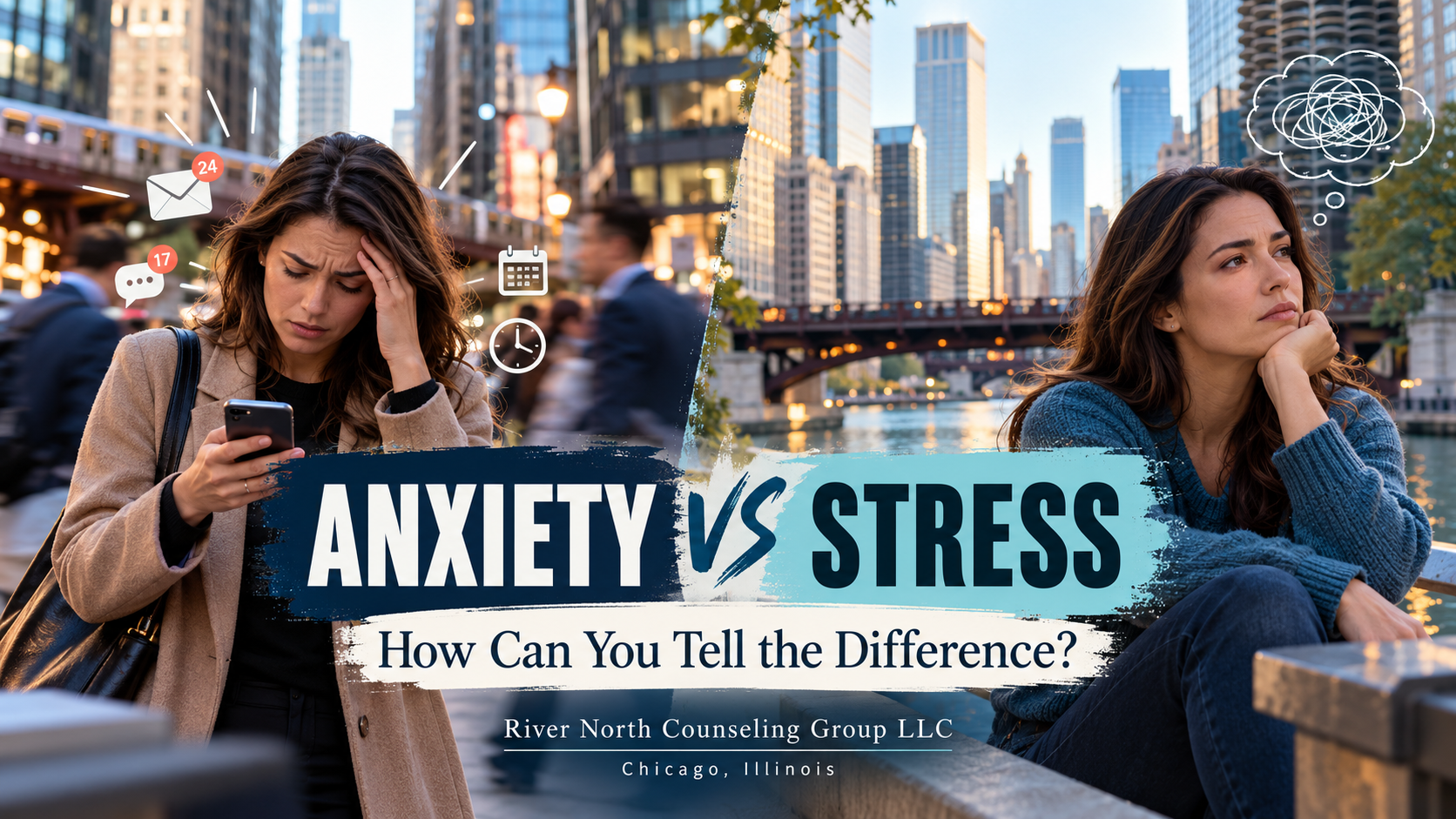
Stress and anxiety can produce many of the same physical and emotional symptoms, but they are not exactly the same. Stress is often connected to an identifiable demand or outside pressure. Anxiety can continue after a stressful event has passed or appear when no immediate threat is present. Understanding the difference can make it easier to choose useful coping strategies and recognize when professional support may be appropriate.
A racing heart before an important meeting can feel like anxiety. Lying awake while thinking about an approaching deadline can feel like stress. Muscle tension, irritability, trouble concentrating, stomach discomfort, fatigue, and restless sleep can occur with either experience. That overlap is one reason people often use the words””stres”” and””anxiet”” as if they mean the same thing.
There is an important distinction. The National Institute of Mental Health describes stress as a physical or mental response to an external cause. Anxiety is a reaction that can occur even when there is no current threat. The American Psychological Association makes a similar distinction, explaining that stress usually has an external trigger while anxiety can involve persistent worries that remain even without a clear stressor.
Neither experience automatically means that someone has a mental health disorder. Temporary stress and occasional anxiety are normal parts of life.Moree useful questionsfocus onn what is causing the reaction, how long it lasts, whether it settles when circumstances change, and how much it interferes with everyday life.
What Is the Difference Between Stress and Anxiety?
Stress often makes sense when viewed in context. A difficult workload, financial concern, relationship conflict, illness, family responsibility, major move, academic demand, or unexpected event can create pressure. The body and mind respond to that pressure, sometimes with increased alertness, tension, faster breathing, or changes in sleep.
Once the situation improves, the stress response often becomes less intense.For example, someonee worried about a major presentatio, may feel tense for several days. After the presentation is finished, the tension may begin to fade.
Anxiety does not always follow that pattern. A person may finish the presentation successfully but continue thinking about everything that could have gone wrong. Another person may become intensely worried about the next presentation even though none is scheduled. The mind can remain focused on possible danger long after the immediate demand has disappeared.
A simple way to think about the distinction is that stress frequently asks,””How will this difficult situation be handled”” Anxiety may keep asking,””What if something bad happens”” even when the immediate situation is uncertain, distant, or already resolved.
Signs That Point More Toward Stress
Stress tends to have a recognizable source. Someone might identify a demanding week at work, conflict at home, an upcoming examination, financial pressure, caregiving responsibilities, or another specific problem.
Common stress responses can include irritability, headaches or body discomfort, fatigue, difficulty sleeping, muscle tension, digestive changes, trouble concentrating, and feeling overwhelmed. Stress can be short-lived, but ongoing pressures can also contribute to chronic stress.
The key clue is often the relationship between symptoms and circumstances. If emotional and physical tension rises around a specific problem and decreases as that problem becomes manageable, stress may be playing the larger role.
Signs That Point More Toward Anxiety
Anxiety can involve fear, dread, uneasiness, restlessness, tension, rapid heartbeat, difficulty concentrating, and physical discomfort. It can be a normal response to stressful circumstances. The concern becomes more significant when worry is difficult to control, continues for a long time, or starts restricting daily activities.
Persistent anxiety can also affect behavior. Someone may begin avoiding meetings, social activities, driving, travel, unfamiliar places, difficult conversations, or other situations because of anticipated fear. Avoidance can provide short-term relief while making anxiety harder to manage over time.
Anxiety disorders include several different conditions, so persistent anxiety does not look identical for everyone. Generalized anxiety disorder, for example, can involve excessive worry about several areas of everyday life. Panic disorder involves repeated episodes of intense fear, while social anxiety disorder centers on strong fear related to social or performance situations.
Why Stress and Anxiety Can Feel So Similar
The distinctioncan bes confusing because both experiences cantriggere many of the same mental and physical responses. The National Institute of Mental Health identifies excessive worry, uneasiness, tension, headaches or body pain, elevated blood pressure, and loss of sleep among symptoms that can occur with both stress and anxiety.
Context is often more informative than any single symptom. A rapid heartbeat cannot independently determine whether someone is experiencing stress, anxiety, panic, a medication effect, excess caffeine, or a medical problem. The same is true for fatigue, poor concentration, digestive discomfort, and sleep difficulties.
That is why self-diagnosis based on a short symptom checklist has limits. A mental health professional can consider duration, triggers, severity, avoidance patterns, health history, daily functioning, and other factors when evaluating what may be happening.
A Practical Stress vs Anxiety Check
Consider four questions: Is there a clear external problem creating the reaction? Do the symptoms improve when that problem is resolved? Does worry continue even when there is no immediate danger? Is fear or worry beginning to interfere with work, relationships, sleep, school, or normal activities?
A person facing an unusually demanding month at work may experience headaches, irritability, and poor sleep. If those symptoms improve after the workload returns to normal, stress may provide a reasonable explanation.
Now consider someone whose busy period ends but who continues expecting mistakes, job loss, illness, financial disaster, or other negative outcomes. If worry remains difficult to control despite the absence of an immediate problem, anxiety deserves closer attention.
Stress and anxiety can also occur together. A stressful event may trigger anxiety, and ongoing anxiety can make ordinary demands feel more stressful. The goal is not always to force an experience into one category. It is to understand the pattern well enough to choose appropriate support.
Local Spotlight: Stress and Anxiety in Chicago
Living or working in downtown Chicago can involve many overlapping demands. Commuting, professional deadlines, family schedules, financial responsibilities, social commitments, weather disruptions, and limited downtime can all contribute to periods of stress. A busy environment does not cause an anxiety disorder by itself, but daily pressures can make existing anxiety symptoms more noticeable.
River North can present a particular mix of professional, residential, and social demands. Someone may function effectively through a full workday while still experiencing racing thoughts, muscle tension, poor sleep, irritability, or difficulty relaxing after returning home.
High functioning does not necessarily mean that emotional strain is minor. People sometimes delay counseling because they continue meeting deadlines, maintaining relationships, or handling responsibilities. Daily functioningmatterst, but sodoe theeffortt required to maintain it and theimpactt symptoms have on quality of life.
River North Counseling Group LLC provides mental health services in Chicago, including support related to anxiety and stress management. The practice is located at 405 North Wabash Avenue, Suite 3209, inChicago’ss River North area.
When Stress or Anxiety May Need Professional Support
Occasional stress can sometimes improve with practical changes such as addressing the source of pressure, protecting sleep, getting regular physical activity, reducing excess caffeine, creating realistic boundaries, and maintaining supportive relationships.
Similar strategies can help with mild anxiety. Persistent or severe symptoms, however, may require more individualized attention. Professional support is worth considering when worry feels difficult to control, symptoms continue despite attempts to cope, avoidance is increasing, or emotional distress is affecting important areas of life.
Psychotherapy is one established treatment option for anxiety disorders. Cognitive behavioral therapy, commonly called CBT, isane approachthat helpsp people examine patternsofg thoughts, emotions, and behaviors. Treatment shouldmatcho the individual rather thanbe based onm symptoms alone.
Physical symptoms also deserve appropriate medical attention. Shortness of breath, chest discomfort, dizziness, rapid heartbeat, or other symptoms can occur with anxiety, but they can also have physical causes. New, severe, unexplained, or concerning symptoms should not automatically be attributed to stress or anxiety.
What Can Help With Everyday Stress and Anxiety?
Useful coping strategies tend to focus on both the body and the source of distress. The National Institute of Mental Health recommends approaches such as maintaining a sleep routine, exercising, eating regular nutritious meals, limiting excess caffeine, challenging unhelpful thoughts, and connecting with supportive friends or family.
It can also help to identify patterns rather than reacting only to individual episodes. Tracking when symptoms appear, what happened beforehand, how long they lasted, and what made them better or worse can provide useful information.
Stress management may require solving or restructuring an external problem. Anxiety treatment may place greater emphasis on the thoughts, behaviors, avoidance, and fear responses that continue around perceived threats. In practice, counseling can address both at the same time.
Common Questions Around Anxiety vs Stress
How can someone tell whether they have anxiety or are simply stressed?
A clear trigger is one useful clue. Stress commonly develops in response to an identifiable demand and may ease when that demand passes. Anxiety can continue without an immediate threat and may involve persistent fear or worry that is difficult to control. Duration and impact on daily functioning are also important.
Can stress turn into anxiety?
Stress and anxiety are related, and stressful circumstances can contribute to anxiety symptoms.Many factors influence persistent anxietys, however, so it is usually too simple to identify one cause. Genetics, biology, environment, life experiences, and ongoing stress can all play roles in anxiety disorders.
Can anxiety cause physical symptoms?
Yes. Anxiety can be associated with symptoms such as rapid heartbeat, sweating, tension, dizziness, aches, digestive discomfort, shortness of breath, fatigue, and sleep problems. Because these symptoms can also have medical causes,discuss concerningg or unexplained physical symptomswithh an appropriate health care professional.
When should someone see a therapist for stress or anxiety?
Professional support may be helpful when symptoms do not improve, feel difficult to manage, cause significant distress, interfere with everyday responsibilities, disrupt relationships or sleep, or lead to increasing avoidance. Therapy does not require waiting until symptoms reach a crisis level.
Is anxiety always an anxiety disorder?
No. Anxiety can be a normal emotional response, particularly during uncertainty or stressful events. An anxiety disorder involves a more persistent or severe pattern that causes meaningful distress or interferes with everyday functioning. Diagnosis should be made by an appropriately qualified professional.
Finding Anxiety and Stress Support in River North
Understanding whether symptoms are primarily related to stress, anxiety, or a combination of both can be a useful first step. The next step is deciding whether current coping strategies are enough.
Counseling can provide a structured setting for examining triggers, thought patterns, emotional responses, behaviors, and sources of ongoing pressure. For people living or working in downtown Chicago, having an office near regular work or commuting routes may also make consistent appointments easier to maintain.
The map below shows the Chicago location of River North Counseling Group LLC.
Stress often has a visible source. Anxiety can remain after the source disappears. Both can affect the body, sleep, concentration, mood, and daily routines. What matters most is not finding the perfect labee, but recognizing when symptomspersistt enough to deserve additional attention.
If stress or anxiety is interfering with work, relationships, sleep, or everyday activities, a licensed mental health professional can help assess the pattern and discuss appropriate options.
Related Terms
- Generalized anxiety
- Chronic stress
- Cognitive behavioral therapy
- Stress management
- Anxiety counseling
Additional Resources
- National Institute of Mental Health: Stress and Anxiety
- American Psychological Association: The Difference Between Stress and Anxiety
- MedlinePlus: Anxiety
Expand Your Knowledge
National Institute of Mental Health: Generalized Anxiety Disorder
National Institute of Mental Health: When to Seek Mental Health Help
American Psychological Association: Stress Resources
Talk With a Chicago Counseling Professional
When stress or anxiety begins affecting everyday life, professional counseling can provide a place to understand what is happening and develop practical ways to respond. River North Counseling Group LLC offers mental health services for people in Chicago and the surrounding area.
River North Counseling Group LLC
405 North Wabash Avenue
Suite 3209
Chicago, Illinois
60611
Office: 312.467.0000
https://www.rivernorthcounseling.com
This information is educational and is not a substitute for diagnosis or individualized medical or mental health care. Anyone in immediate emotional distress or thinking about self-harm can call or text 988 in the United States for the 988 Suicide & Crisis Lifeline.