
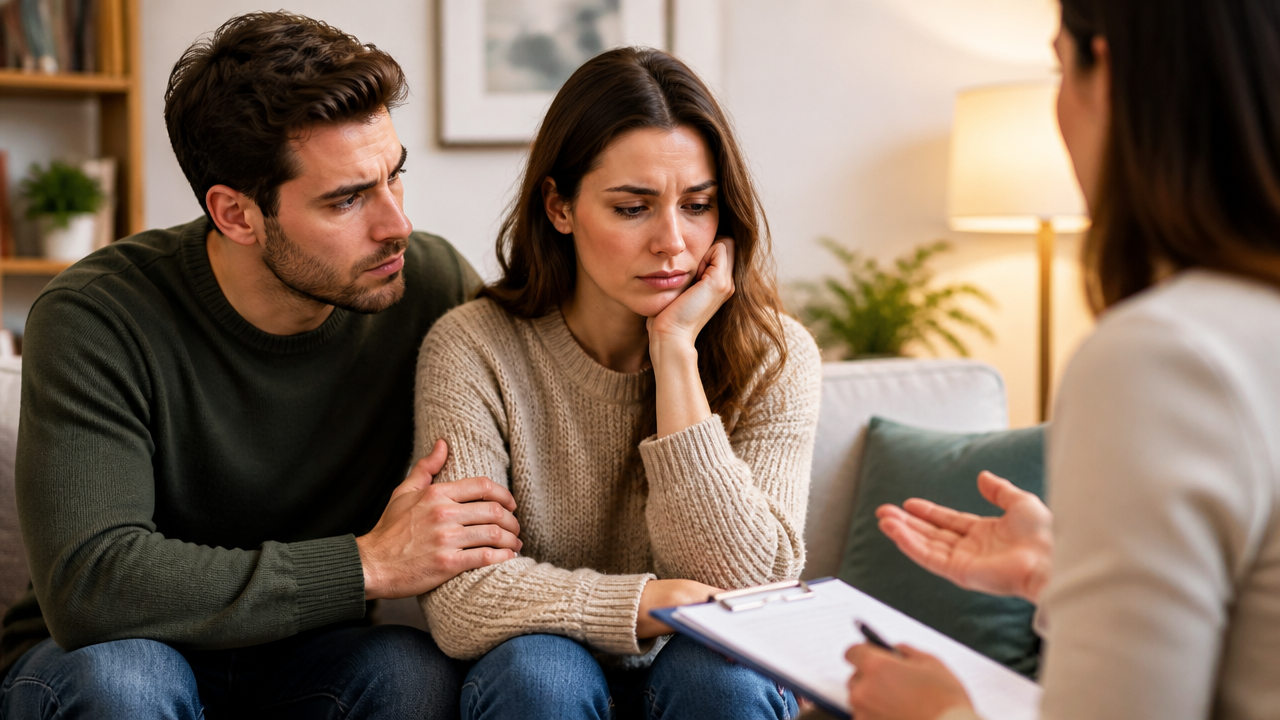
Anxiety rarely stays contained within one person. In a close relationship, constant worry, irritability, avoidance, sleep trouble, and physical tension can shape communication, intimacy, decision-making, and daily routines for both partners. Couples therapy can help identify these patterns, reduce blame, and build healthier ways to respond together. When anxiety affects a relationship, treatment does not need to focus on fault. It can focus on understanding, teamwork, and practical change.
Many couples notice the same cycle. One partner feels overwhelmed, on edge, or mentally exhausted. The other starts adjusting around the anxiety by taking on more responsibilities, avoiding difficult topics, or trying to prevent stress before it starts. Over time, both people can feel trapped. One may feel misunderstood or judged. The other may feel helpless, frustrated, or shut out.
Couples therapy for anxiety creates space to slow that cycle down. Instead of seeing the anxious partner as the problem, therapy looks at how stress moves through the relationship. That includes communication habits, emotional triggers, family expectations, work pressure, parenting strain, and the way each person reacts under stress. The goal is not perfection. The goal is to help both partners understand what is happening and respond the way I say that protectts the relationship.
Anxiety can show up in many forms. Some people experience racing thoughts, panic symptoms, muscle tension, or a constant sense that something will go wrong. Others become avoidant, controlling, restless, snappy, or emotionally distant. In relationships, these symptoms can be mistaken for lack of interest, criticism, or unwillingness to connect. That misunderstanding often causes another layer of hurt on top of the anxiety itself.
How anxiety affects both partners
When one partner lives with persistent stress or anxiety, the relationship often starts reorganizing around it. Plans may be canceled. Social events may feel hard to manage. Financial decisions may become more tense. Parenting may feel uneven. Even simple choices, such as travel, scheduling, or household responsibilities, can become loaded with pressure.
The non-anxious partner may start walking on eggshells to avoid triggering more stress. In some relationships, that looks like overfunctioning, where one person carries most of the planning, emotional labor, or problem-solving. In others, it looks like withdrawal, where conversations get shorter, affection decreases, and conflict is avoided until resentment builds. Neither pattern usually fixes the anxiety. Both can make the relationship feel less secure.
The anxious partner may also feel deeply alone. Many people with anxiety already judge themselves harshly. When tension grows at home, they may believe they are failing their partner or damaging the relationship. That shame can increase defensiveness, reassurance-seeking, or avoidance. Couples therapy helps interrupt this loop by turning attention toward the pattern instead of the person.
Common relationship signs tied to anxiety
Couples often seek help when they notice repeated issues such as conflict around small decisions, trouble feeling emotionally close, one-sided caregiving, increased irritability, sleep-related strain, or ongoing fear about health, work, parenting, or safety. In some relationships, anxiety shows up as constant checking and reassurance. In others, it appears as emotional distance, control, perfectionism, or conflict that escalates quickly.
Why couples therapy can help
Individual therapy can be very helpful for anxiety, and in many cases it remains an important part of treatment. Couples therapy adds another layer by helping both partners understand how symptoms affectheirhe boem. This matters because relationships can either intensify anxiety or become a strong source of stability.
In therapy, couples can learn how to recognize triggers without attacking each other, discuss anxiety without shame, and set healthier boundaries around reassurance, avoidance, and emotional labor. Sessions often focus on communication skills, emotional regulation, conflict patterns, and shared coping strategies that fit real life. The process is practical. It is not about assigning blame to one partner for having symptoms or to the other for feeling worn down.
For many couples, one of the biggest shifts is learning the difference between support and accommodation. Support might sound like empathy, patience, and clear communication. Accommodation happens when the relationship starts revolving around anxiety in ways that keep both people stuck. A therapist can help couples spot that difference and make supportivchanges e without reinforcing fear.
What couples may work on in therapy
A therapy plan may include identifying stress cycles, improving conflict repair, building emotional safety, reducing reassurance loops, handling avoidance, and creating better routines around sleep, work stress, parenting, or family pressure. Couples may also practice ways to talk about symptoms early, before anxiety turns into shutdown, criticism, or repeated arguments.
Did You Know? Chicago stressors can shape relationship tension
Life in a major city can amplify stress in ways couples feel every day. Long commutes, packed schedules, career pressure, childcare logistics, financial strain, and limited downtime can all raise the emotional temperature at home. In neighborhoods near downtown Chicago, many couples manage demanding jobs while trying to protect time for connection, rest, and family responsibilities. When anxiety is already part of the picture, urban stress can make everyday friction feel more intense.
That does not mean city life causes anxiety on its own. It does mean context matters. Couples often benefit when therapy looks at the full picture, including workload, environment, life stage, and support systems. A treatment approach grounded in both mental health knowledge and relationship dynamics can help couples make sense of what is happening and choose a steadier way forward.
What treatment may include
Therapy for couples affected by anxiety is usually tailored to the needs of both partners. Some couples need help de-escalating conflict. Others need support rebuilding trust after months or years of stress-driven misunderstandings. Some are trying to navigate panic attacks, health anxiety, social anxiety, or generalized anxiety. Others are coping with life transitions such as marriage, parenthood, relocation, grief, or career chang,ewhichat havincreased theof stress in the relationship.
A well-rounded approach often includes psychoeducation about anxiety, tools for nervous system regulation, and strategies for clearer communication. It may also include structured exercises that help couples discuss difficult topics without becoming overwhelmed. In some cases, therapy works best when couples counseling is paired with individual treatment, medication management, or other mental health support.
Healthy goals for couples therapy
Healthy goals are usually specific and realistic. Examples include reducing repeated conflict around anxiety symptoms, improving emotional responsiveness, creating a plan for high-stress moments, setting fair expectations at home, increasing closeness, or learning how to respond to fear without feeding it. These goals help couples move from crisis response toward shared problem-solving.
When to consider couples counseling for anxiety
Many couples wait until strain has built up for a long time. Help may be worth considering when anxiety is affecting communication, intimacy, parenting, trust, work-life balance, or daily functioning. It can also help when one partner feels responsible for managing the other person’s emotions, or when both partners feel exhausted by the same repeated cycle.
Another sign is when good intentions keep missing the mark. One partner may try to comfort the other, but the anxious partner still feels alone. Or the non-anxious partner may set limits in a healthy way, but guilt and conflict follow. Therapy can make these moments easier to understand. Often, the issue is not lack of care. It is that both people need a better map.
Common Questions Around Couples Therapy for Anxiety
Can couples therapy help if only one partner has anxiety?
YesOne person may experience anxietyon, but relationship patterns often involve both partners. Couples therapy can help each person understand the cycle, improve communication, and reduce unhealthy coping patterns that increase strain at home.
Will therapy focus only on the anxious partner?
No. Therapy usually looks at the relationship system as a whole. That includes how each partner reacts to stress, how conflict unfolds, and how the couple can work together in a healthier way.
Is couples therapy a replacement for individual therapy?
Not always. Some people benefit from both. Individual therapy may address personal symptom management, trauma history, or panic-related treatment, while couples therapy helps the relationship respond in a more stable and supportive way.
What if anxiety has already caused resentment?
That is common. Resentment often grows when stress has shaped routines for a long time without enough understanding or support. Therapy can help couples address that resentment directly while also building new habits that lower tension.
Can couples counseling help with panic attacks or health anxiety?
It can help the relationship respond more effectively. A therapist can help couples create a plan for support, reduce fear-based cycles, and clarify which responses are helpful versus which ones keep anxiety in control of the relationship.
Relevent words
couples therapy for anxiety, anxiety in relationships, relationship stress counseling, couples counseling Chicago, marriage counseling for anxiety, anxiety affecting both partners, therapy for stressed couples, communication help for couples, mental health counseling Chicago, relationship support for anxiety
Related Terms
- Generalized anxiety disorder in relationships
- Emotionally focused couples therapy
- Communication skills for couples
- Stress management for partners
- Relationship burnout and anxiety
Additional Resources
- National Institute of Mental Health – Anxiety Disorders
- American Psychological Association – Anxiety
- American Association for Marriage and Family Therapy
Expand Your Knowledge
MedlinePlus – Anxiety
SAMHSA – Mental Health Resources
NAMI – Anxiety Disorders
Find support in Chicago
For couples dealing with anxiety, professional support can help turn recurring stress into a more workable, compassionate pattern. Therapy can help both partners feel heard, understood, and better equipped to respond when anxiety starts shaping the relationship. Early support can reduce conflict, increase clarity, and strengthen the connection both people want to protect.
River North Counseling Group LLC
405 North Wabash Avenue
Suite 3209
Chicago, Illinois
60611
Office: 312.467.0000
https://www.rivernorthcounseling.com
Couples therapy, anxiety counseling, relationship anxiety, marriage counseling, Chicago therapy, stress in relationships, mental health counseling, couples counseling Chicago