
Many couples feel trapped in the same painful argument without knowing why it keeps happening. One partner reaches harder for reassurance, closeness, or answers. The other pulls back, shuts down, or asks for space. These patterns often connect to attachment style, which shapes how emotional safety, trust, and connection are handled in adult relationships. Understanding attachment can help couples stop personalizing the cycle and start changing it.
Relationship conflict is often about more than the topic being discussed. A disagreement about texting, time together, emotional availability, household stress, intimacy, or follow-through can quickly turn into something deeper. One person may feel disconnected and begin to push for contact. The other may feel overwhelmed, creating more distance. Both reactions can make sense from the inside, yet still leave each partner feeling alone.
Attachment style helps explain why this happens. It is not a diagnosis, and it is not a fixed life sentence. It is a pattern of relating that can influence how people respond to closeness, vulnerability, stress, and repair. In couples work, attachment language often helps people move away from blame and toward a clearer understanding of what each partner is trying to protect.
When attachment needs feel threatened, the nervous system reacts quickly. Some people protest the distance by calling, texting, questioning, or pressing for clarity. Others protect themselves by going quiet, becoming more logical, changing the subject, or physically leaving the room. What looks like overreaction or emotional unavailability is often a stress response connected to safety, fear, and past relational learning.
What attachment styles look like in adult relationships
Attachment is often described in four broad patterns: secure, anxious, avoidant, and disorganized or fearful-avoidant. A secure attachment style usually supports direct communication, emotional flexibility, and a greater ability to tolerate disagreement without assuming the relationship is falling apart. Insecure patterns can make conflict feel much more threatening and much harder to regulate.
Anxious attachment and the need to pursue
Anxious attachment often shows up as sensitivity to distance. A short text, a delayed reply, a distracted tone, or a canceled plan can trigger strong worry. The person may start seeking reassurance, asking repeated questions, replaying a conversation, or trying to reconnect right away. Underneath the urgency is often a fear of rejection, abandonment, or emotional disconnection.
In couples, this can look like chasing. The partner may want to keep talking until things feel settled. They may press for immediate clarity because waiting feels unbearable. The intention is usually connection, not control. Still, the delivery can come out as criticism, desperation, or emotional intensity, especially when distress is high.
Avoidant attachment and the need to withdraw
Avoidant attachment often shows up as discomfort with emotional pressure. Intense conversations may feel engulfing, shaming, or impossible to navigate in the moment. The person may withdraw to lower stress, regain control, or avoid saying something they will regret. Silence, distance, minimal responses, or a sudden shift into problem-solving mode may all be attempts to manage overwhelm.
This does not always mean the person does not care. In many cases, the withdrawing partner cares deeply but struggles to remain emotionally engaged when conflict heats up. Vulnerability may feel risky. Depending on another person may feel unsafe. Pulling back becomes the fastest way to calm the body, even when it hurts the relationship.
Secure attachment and repair
Secure attachment does not mean a couple never argues. It means conflict is less likely to threaten the bond. Partners are more able to say what they feel, hear each other without collapsing into defense, and return to repair after a hard moment. Security can also grow over time. Many people become more secure through healthier relationships, personal insight, and therapy.
Why one partner chases while the other withdraws
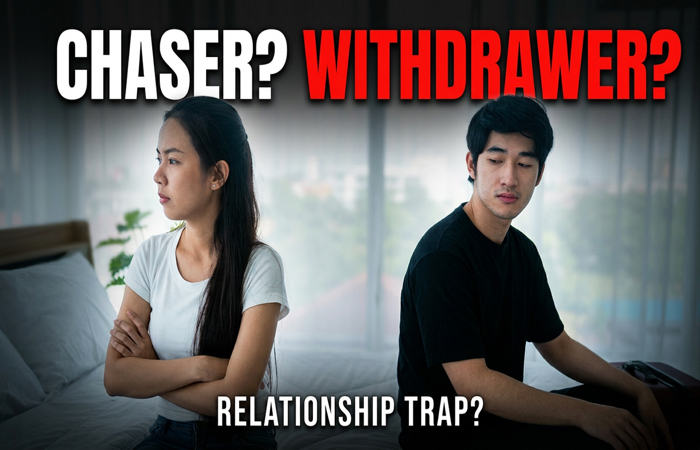
The chase-withdraw cycle is one of the most common patterns in couples counseling. It often starts with a simple trigger. One partner notices the distance and feels alarmed. They move closer, ask more questions, or push for a response. The other partner feels pressured, criticized, or emotionally flooded and moves away. That distance raises the first partner’s alarm even more, leading to stronger pursuit.
Both people are trying to feel safer, but their strategies clash. The pursuer seeks relief through contact. The withdrawer seeks relief through space. Each person’s coping style unintentionally activates the other person’s fear. Over time, the pattern becomes familiar and automatic.
This is why so many couples say they keep having the same argument in different forms. The topic changes, but the emotional choreography stays the same. One partner ends up labeled as too much. The other gets labeled as unavailable. These labels rarely capture the full picture. The more accurate story is that both partners are caught in a protective loop.
What each partner may be feeling underneath
The chasing partner may be thinking: “This relationship is slipping away. Something is wrong. There has to be an answer right now.” The withdrawing partner may be thinking: “This is getting too intense. Nothing said will be enough. Space is the only way to get through this.” Neither inner experience is trivial. Both deserve attention.
Problems arise when those private feelings are never expressed in direct language. Instead of saying, “There is fear of losing connection,” one partner may criticize the other. Instead of saying, “This conversation is overwhelming, and a short pause would help,” the other may disappear. The cycle then becomes more painful because each person sees only the behavior, not the fear beneath it.
Did You Know? Relationship stress can build faster in busy city life
In a busy city, couples often juggle demanding work schedules, commuting, parenting logistics, financial pressure, and limited downtime. In areas like River North, where life can move quickly, partners may spend more time coordinating than actually connecting. That makes it easier for attachment stress to take over when something feels off.
Many couples do not struggle because love is absent. They struggle because stress narrows patience and reduces the ability to slow down after a trigger. A text left unanswered during a long workday can feel much bigger than it should. A request for space after a packed week can sound like rejection. Context matters, especially when both people are already running low on emotional bandwidth.
That is one reason local couples counseling can be helpful. Consistent support close to home can make it easier to understand the pattern, practice new responses, and follow through when life gets hectic.
How couples can break the pursue-withdraw cycle
The goal is not to erase personality differences. The goal is to create more safety inside the relationship. That starts with recognizing the pattern earlier and responding with more clarity and less reactivity.
For the partner who tends to chase
It helps to separate fear from fact. Not every pause means rejection. Not every need for space means the relationship is in danger. A softer, more direct request usually lands better than protest behavior. Asking, “Can there be twenty minutes tonight to talk and reconnect?” is often more effective than repeated texts, criticism, or escalating demands.
Regulation matters too. When the nervous system is highly activated, communication gets less clear. Grounding exercises, journaling, movement, calm breathing, and reaching out to a safe support outside the relationship can reduce the sense of urgency. That can make room for a calmer and more effective bid for connection.
For the partner who tends to withdraw
Space can be healthy when it is structured and respectful. Going silent without reassurance usually deepens insecurity. A better approach is to name the overwhelm and give a return plan. Saying, “This is getting intense. A twenty-minute pause will help, and the conversation can continue at 7:30,” is much more stabilizing than shutting down or walking away with no timeline.
It also helps to practice emotional language, even if it feels awkward. Many withdrawing partners communicate facts well but struggle to name internal experience. Words such as overwhelmed, pressured, ashamed, confused, sad, or afraid can quickly build understanding. Emotional clarity reduces guesswork and helps the other partner feel less shut out.
For both partners
Couples often improve when they stop arguing only about content and begin to look at the process. What triggered the nervous system? What story did each person tell themselves? What did each person need in that moment? That shift builds compassion and opens the door to repair.
Repair can include softer conversation starters, reflective listening, short time-outs with return times, and reassurance that does not dismiss real concerns. Small changes matter. A calmer tone, a shorter delay before reconnecting, or one honest sentence about fear can interrupt an old loop that has been running for years.
When couples counseling can help
Some patterns are so rehearsed that good intentions alone do not change them. A couple may understand attachment intellectually and still fall into the same conflict during stress. Counseling can help turn awareness into practice. It offers a place to slow the pattern down, identify triggers, and build new ways of responding.
Couples counseling may be especially helpful when arguments escalate quickly, repair takes too long, one or both partners shut down, trust has weakened, or repeated reassurance and repeated distance are wearing the relationship down. In many cases, therapy works best when the cycle becomes the focus rather than one partner being framed as the problem.
Attachment-focused work can help couples understand why arguments feel so personal, why old reactions keep resurfacing, and how to build a more secure bond through consistency, responsiveness, and healthier communication.
Common Questions Around Attachment Styles in Couples
Can attachment style change over time?
Yes. Attachment patterns can shift through safer relationships, better self-awareness, repeated repair, and therapy. People are not locked into one style forever.
Is one partner always the problem in a chase-withdraw relationship?
No. In most cases, both people are contributing to the cycle in different ways. One seeks to restore the connection. The other withdraws to lower distress. The pattern is the problem, not only one person.
Does anxious attachment mean someone is too needy?
No. Wanting reassurance and closeness is normal in intimate relationships. The issue is usually not the need itself, but how the need is expressed and how the couple responds to it.
Is withdrawal always a sign of low commitment?
No. Withdrawal can be a stress response rather than proof that love is missing. It still affects the relationship, but it is often linked to overwhelm, sensitivity to conflict, or discomfort with vulnerability.
Can couples with different attachment styles still have a healthy relationship?
Yes. Many couples with different attachment patterns build strong relationships by learning each other’s triggers, communicating more directly, and consistently practicing repair.
Attachment styles in couples, anxious attachment in relationships, avoidant attachment in marriage, why one partner chases, and the other withdraws, pursue withdraw cycle, emotional distance in relationships, couples counseling Chicago, relationship anxiety, intimacy issues in couples, attachment-based couples therapy
Attachment styles, couples counseling, anxious attachment, avoidant attachment, relationship communication
Find support in Chicago
When the same conflict keeps repeating, the issue may be deeper than communication habits alone. Attachment patterns can help explain why one partner pursues while the other pulls away. With the right support, couples can learn to slow the cycle, communicate more clearly, and rebuild a stronger sense of connection.
River North Counseling Group LLC
405 North Wabash Avenue
Suite 3209
Chicago, Illinois 60611
Office: 312.467.0000
https://www.rivernorthcounseling.com
Additional Resources
- National Institute of Mental Health – Psychotherapies
- National Library of Medicine – Adult Attachment and Mental Health Treatment
- American Psychological Association – Attachment-Based Psychotherapy in Practice
Expand Your Knowledge
“`