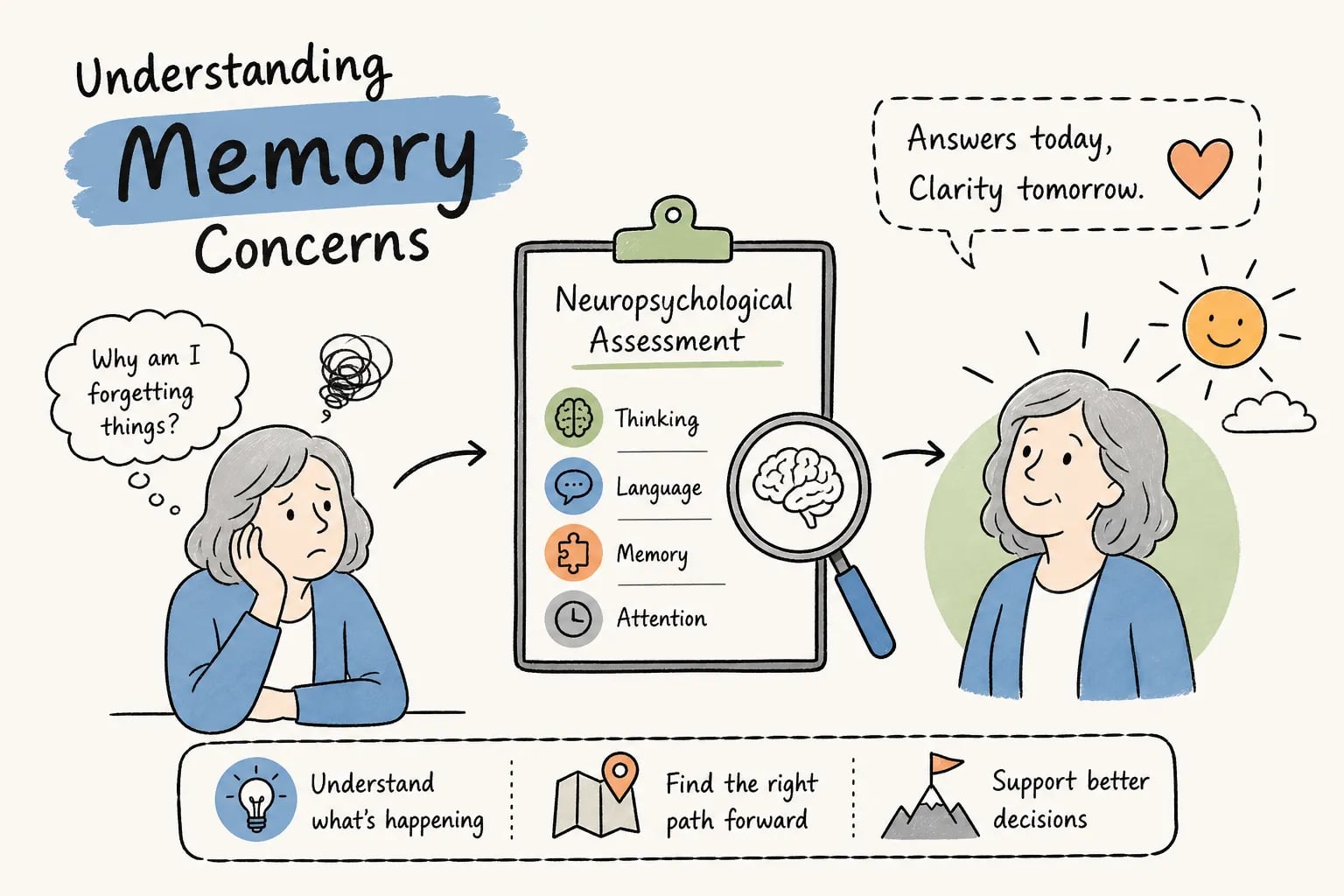

Most adults have a moment like this: you reach for a name that was just there, lose a thought mid-sentence, or notice that keeping track of multiple things at once feels harder than it used to. The first instinct is often to brush it off. A few moments later, the second instinct arrives: wondering whether something is actually wrong. That tension between dismissing a concern and worrying too much is exactly where an adult brain assessment can help. Instead of living inside that uncertainty, you get structured information about how your memory and thinking are actually performing.
At River North Counseling, we work with Chicago-area adults who carry that exact question. They’re not in crisis. They’re paying attention to themselves, which is a strength, not a weakness. This article gives you an honest guide to what cognitive tests measure, which online tools are worth your time, how to read results without overreacting, and when it makes sense to move from a screen to a clinical evaluation.
What an adult brain assessment actually measures
The main domains your brain gets tested on
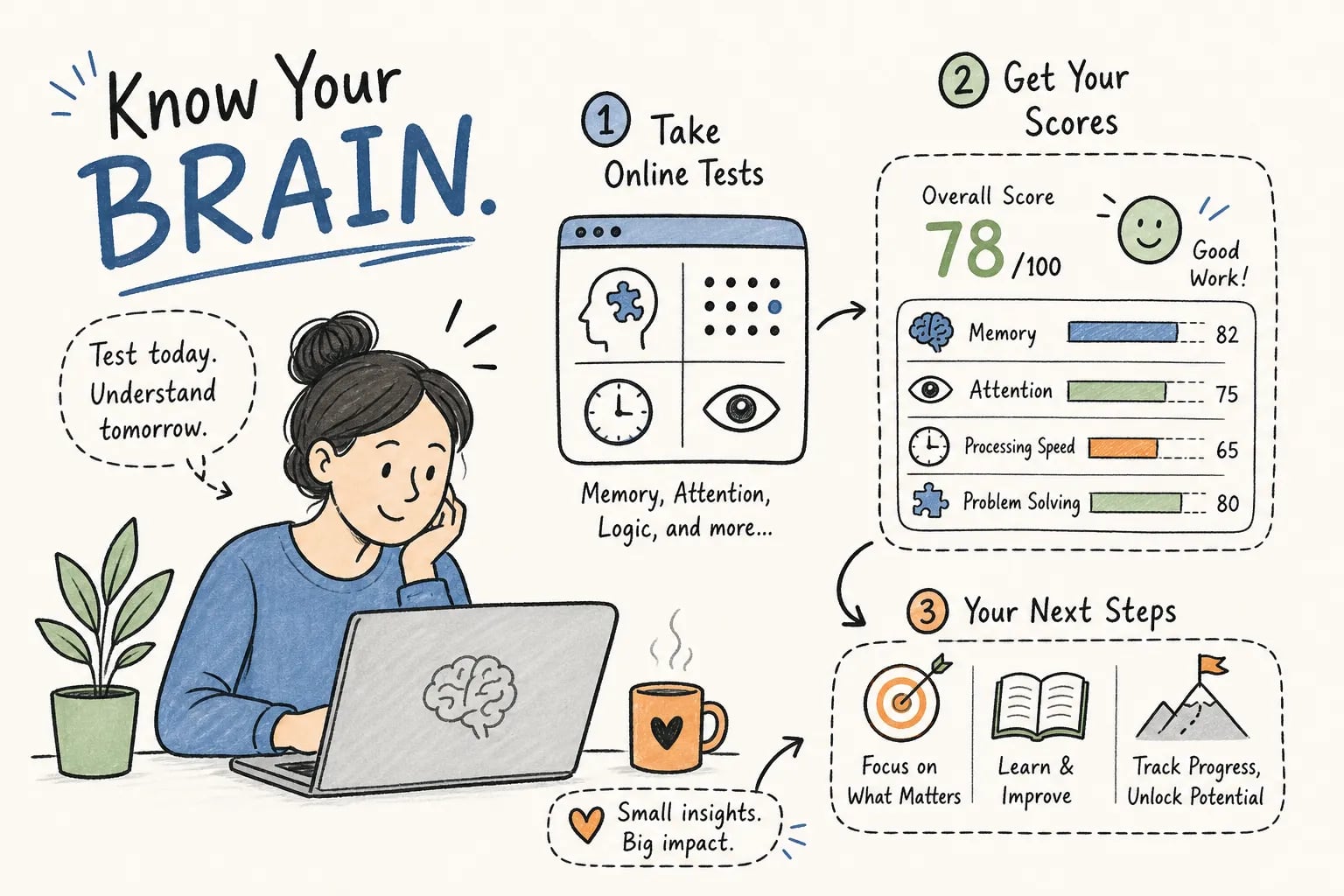
A standard adult cognitive assessment covers several distinct domains, each capturing a different aspect of brain function. Memory is the most commonly cited concern. Evaluations typically test both immediate recall (what you can hold right after hearing something) and delayed recall (what sticks after a distraction or time gap). Attention and concentration measure your ability to focus and filter competing information, while processing speed reflects how quickly your brain handles and responds to input.
Language and verbal fluency are assessed through tasks like naming objects or generating as many words in a category as possible under time pressure. Visuospatial ability captures how well you perceive and reproduce spatial relationships, which matters for driving, navigation, and reading a map. Executive functions cover higher-order skills: planning, mental flexibility, and the ability to sequence tasks and solve novel problems. Think of executive function as the brain’s project manager, coordinating everything else.
Emotional and psychological functioning
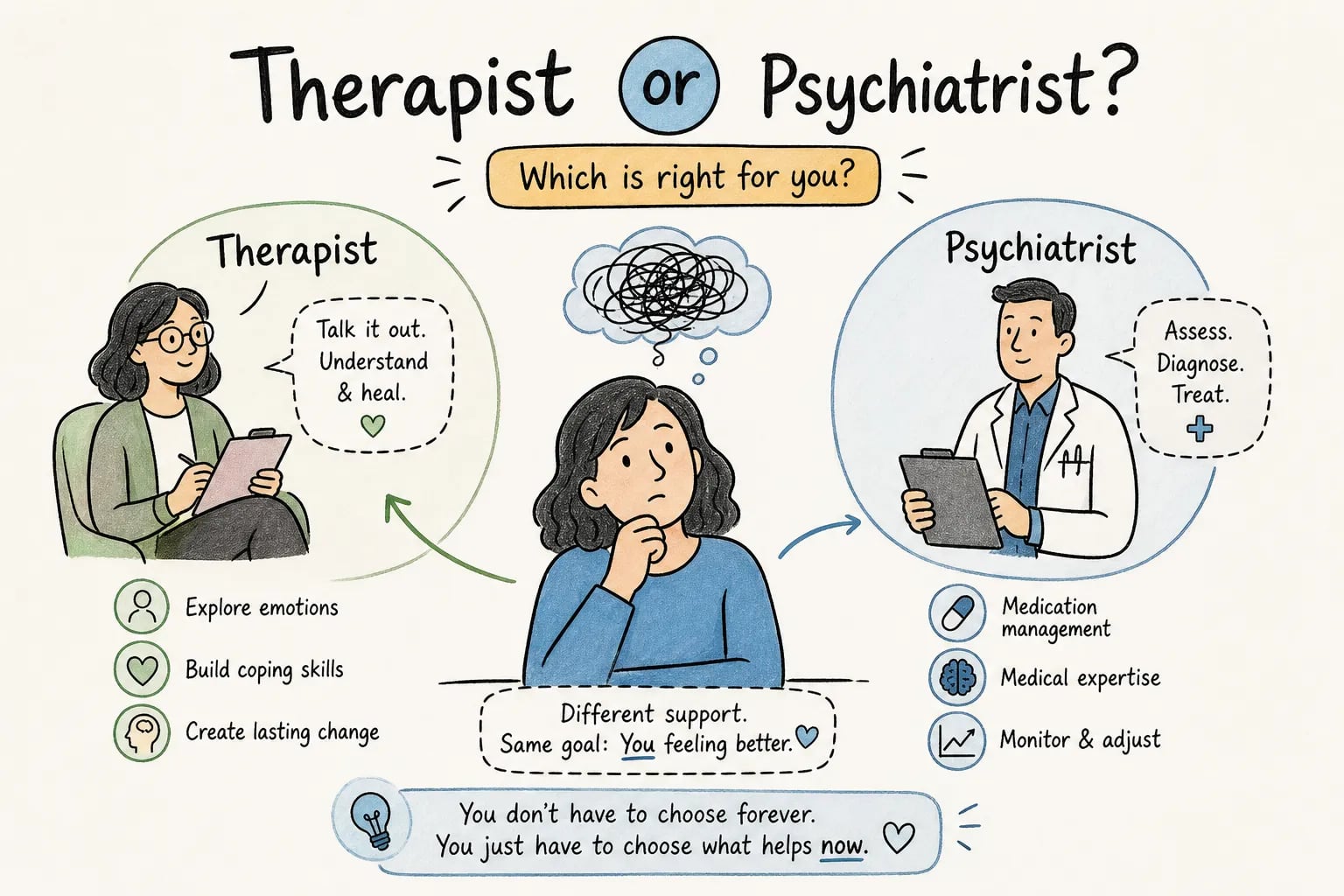
Here’s something many people don’t expect: a thorough cognitive evaluation often assesses mood and psychological well-being alongside thinking skills. Depression and anxiety don’t just feel bad; they actively suppress cognitive performance, slowing processing speed, fragmenting attention, and impairing memory in ways that can closely resemble early cognitive decline. A score that looks concerning in isolation might look very different once emotional contributors are accounted for.
This is why separating emotional distress from true cognitive change matters so much clinically. For example, a person whose memory screening score falls in the borderline range may actually be experiencing the concentration and recall disruption that characterizes moderate depression rather than any structural brain change. A brain health quiz alone can’t make that distinction, but a comprehensive evaluation can, and that difference shapes everything about what happens next.
Reputable cognitive screening tools available online
Validated clinical screeners: MoCA, MMSE, and SLUMS
Three tools dominate clinical cognitive screening, and understanding what each one does helps you make sense of any results you encounter. The MoCA (Montreal Cognitive Assessment) is the most sensitive option for catching early or mild cognitive impairment, with pooled sensitivity around 89% and specificity around 75% in major meta-analyses. It’s the preferred choice when the goal is catching subtle problems early. The MMSE (Mini-Mental State Examination) has a longer track record but lower sensitivity for MCI, around 62% in those same reviews, meaning it misses more early cases while performing reasonably well for established impairment.
The SLUMS (Saint Louis University Mental Status) is a strong alternative and a useful memory assessment in its own right, with sensitivity for mild cognitive impairment reported at 92 to 96% in early validation studies, though its overall evidence base is smaller than the MoCA’s. Test choice matters: a tool optimized for established dementia screening will miss mild impairment at rates that matter clinically. While clinicians typically administer these tools, understanding their differences helps you evaluate any cognitive test for adults that you encounter.
Digital brain health batteries worth knowing
Several validated digital tools are accessible to adults outside of a clinical setting, though access varies by tool. The Brain Health Assessment (BHA), developed by Baycrest, is freely available to the public and validated against gold-standard neuropsychological testing for detecting amnestic MCI in adults from age 20 to 94. The BoCA (Boston Cognitive Assessment) is also self-administered and free, with published peer-reviewed validation data showing strong correlation to MoCA scores. Creyos is a platform-level assessment backed by more than 400 peer-reviewed studies, though it operates primarily through clinician or institutional access rather than direct consumer use.
The distinction that matters most is between tools with published peer-reviewed validation and the far larger category of general “brain fitness” apps and quizzes with little or no psychometric evidence. If a tool can’t point to a published validation study, treat it as entertainment, not assessment. Sites like Human Benchmark offer tasks based on validated research paradigms, which makes them useful for curiosity, but they present themselves as educational rather than clinical.
Adult brain assessment scores: what the numbers actually mean
What different score ranges typically signal
For the MoCA, a score of 26 or higher is generally considered normal, while scores in the 18 to 25 range may indicate mild cognitive impairment, and scores below 18 point toward more significant impairment. It’s worth noting that these cutoffs shift based on education level and age, and exact thresholds vary across studies and clinical settings. That’s one reason a number alone rarely tells the whole story. The MMSE uses a similar framework, with scores below 24 often flagged for follow-up, while SLUMS thresholds vary depending on educational background.
What these scores give you is a starting point, not a diagnosis. A score is one data point. What carries clinical weight is the pattern across multiple domains over time. For instance, a person might score normally overall but show a notable dip in delayed recall specifically, which could warrant monitoring even without a flagged total score.
Why a single test score never tells the whole story
One test on one day is a snapshot. Fatigue, acute stress, illness, medication effects, and test anxiety can all suppress scores temporarily and meaningfully. Cognitive screening is designed to flag whether further investigation is warranted, not to replace clinical judgment.
A useful way to think about it: a screening score is like a blood pressure reading. It’s genuinely useful information, but it needs context before it means anything definitive. A single high reading prompts closer attention, not an immediate diagnosis. The same logic applies to any adult brain assessment result you receive.
Can you trust an online brain test?
What research says about accuracy compared to clinical testing
Well-validated self-administered digital batteries can show moderate-to-good reliability, with intraclass correlation coefficients in the 0.70 to 0.83 range across subtests in published validation studies. Concurrent validity with gold-standard clinician-administered neuropsychological testing is meaningful for the best-supported tools, with correlations reaching 0.78 for some total scores. That’s a real signal.
Accuracy varies significantly by tool and by cognitive domain, however. Memory tasks in unmonitored settings are more vulnerable to performance inflation than tasks like symbol coding or verbal fluency, where the format is harder to game. Validated online tools are useful for screening and monitoring. They are not equivalent to a full neuropsychological evaluation, and that distinction matters when the stakes are higher than satisfying curiosity.
Privacy and data red flags to check before you start
Before you click “begin” on any commercial or research-based brain test, read the privacy policy for a few specific things. Confirm what data is actually collected, because some platforms gather device identifiers, account information, and neural data alongside your scores. Check whether the data can be shared with third parties for analytics, advertising, or product development. Look for a stated retention period and a clear process for requesting deletion.
Concrete red flags include vague privacy language that doesn’t mention neural or brain data specifically, no deletion option, broad sharing rights buried in terms of service, and consent that isn’t presented as a clear standalone decision. Anonymization helps but isn’t a complete safeguard when data can be combined with other datasets. These aren’t hypothetical concerns. Industry analyses of commercial brain-health platforms have documented exactly these practices, including inadequate disclosure of data collection scope and limited user controls over retention.
When a screening score isn’t enough
Warning signs that call for professional evaluation
Certain situations call for moving beyond a self-screen, regardless of what the score shows. A result below the normal cutoff on a validated tool is an obvious trigger. So is a pattern of functional changes at work or at home that others have noticed, or symptom progression over weeks or months rather than years. Cognitive symptoms appearing before age 65 warrant specialist attention, because early-onset causes are more varied and require detailed assessment to distinguish.
Equally important: a normal online score doesn’t rule out a problem if other symptoms are present. When what you experience day to day doesn’t match what the screen shows, that discrepancy is itself a reason to talk to a clinician rather than reassure yourself with a number.
What a comprehensive neuropsychological assessment provides
A full neuropsychological evaluation goes well beyond what any screening tool can capture. It produces a detailed profile of strengths and weaknesses across all cognitive domains, paired with emotional and personality assessment, a clinical interview, and a thorough history review. A licensed psychologist interprets the full picture, which means reversible contributors like depression, thyroid dysfunction, medication effects, or vitamin deficiencies can be distinguished from true cognitive change. That distinction changes everything about what happens next.
River North Counseling offers neuropsychological assessment services for adults in Chicago and Skokie, with virtual options extending reach across Chicagoland. If your adult brain assessment results, your daily experience, or both suggest something needs a closer look, this is where clinical clarity replaces uncertainty. Reach out to our team to learn whether a comprehensive evaluation is the right next step for you.
A simple plan to monitor and protect your cognitive health
Lifestyle habits with the strongest evidence behind them
The evidence for protecting long-term brain health is more specific than general wellness advice suggests. Aerobic exercise is the most consistently supported intervention across the research literature, with demonstrated effects on memory, processing speed, and executive function. Quality sleep isn’t optional for cognitive maintenance; it’s when the brain consolidates learning and clears metabolic waste. Social connection, ongoing cognitive challenge through learning new skills, and managing cardiovascular risk factors like blood pressure and blood sugar all carry meaningful research support.
These are levers you can pull regardless of where your screening scores land. They’re not guarantees, but they represent the closest thing to a proven maintenance plan for adult brain health.
Building a monitoring routine that actually works
Here’s a concrete structure that aligns with clinical recommendations. Take a validated baseline screen now, such as the BHA or a clinician-administered MoCA, and note the date and score. Schedule a follow-up screen in six to twelve months, keeping in mind that timing should be individualized based on your symptoms and risk factors. If scores shift meaningfully between screenings, or if your symptoms change before that window closes, that’s your signal to book an appointment with a professional rather than retest indefinitely on your own.
The goal is a monitoring habit that gives you real information over time rather than a single anxious data point. Tracking your brain health is something you can do proactively, not just in reaction to a crisis. Over months and years, that accumulation of structured observations becomes something genuinely useful: a baseline your clinician can actually interpret.
What to do with what you’ve learned
Noticing changes in memory or thinking isn’t a sign of weakness. It’s a sign of self-awareness, and it puts you ahead of most people who never examine their cognitive health at all. Understanding what an adult brain assessment covers means you’re equipped to act on real information rather than sit with unanswered questions.
The key takeaways: validated tools like the MoCA, SLUMS, BHA, and BoCA measure specific domains with published evidence behind them; scores are data points that need context, not diagnoses; and certain signs call for professional evaluation rather than repeated self-screening. One test on one day is a snapshot. A pattern over time, interpreted by a clinician, becomes clinical intelligence.
If you’re ready to go beyond a score, River North Counseling’s neuropsychological assessment services in Chicago are here for exactly that. Our team works with adults who want clear, clinically grounded answers about how their memory and thinking are functioning, and what to do with that information. Schedule your evaluation and take the next step with the support of licensed professionals who are committed to getting it right.