

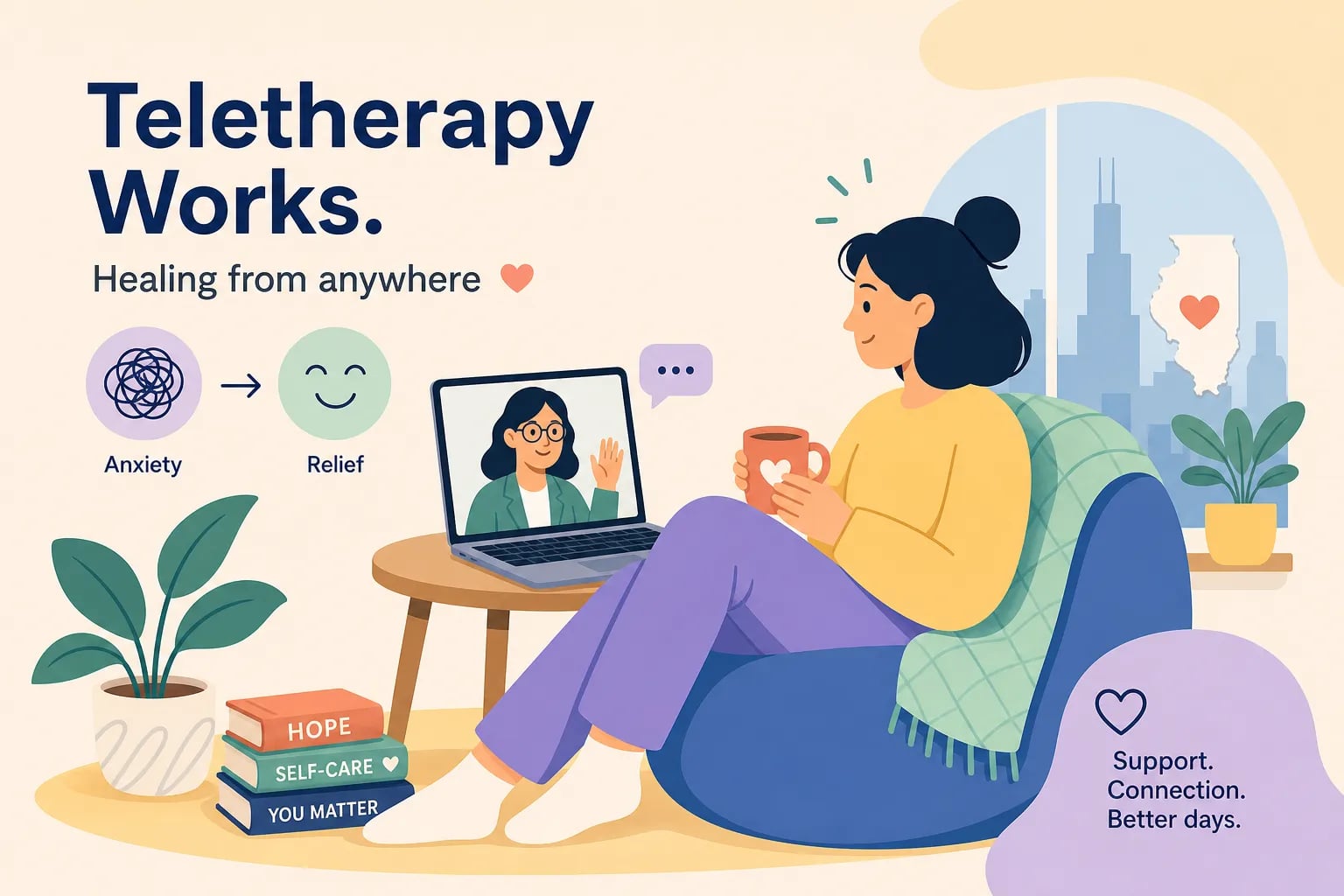
If you’re weighing teletherapy effectiveness for depression and anxiety in Illinois, your first question probably isn’t about scheduling or pricing. It’s simpler and more personal than that: Will it actually work? That skepticism is reasonable. Therapy is a real investment of time, money, and emotional energy, and you deserve a straight answer grounded in clinical evidence rather than a service pitch.
The short answer is yes, virtual therapy works. The longer answer is more useful: research repeatedly shows that teletherapy produces outcomes comparable to in-person care for depression and anxiety, Illinois residents have both legal protections and a solid insurance framework to access it confidently, and knowing what to look for in a provider makes a meaningful difference in your experience. This article walks through all of it. If you’re looking for a licensed Illinois provider before you finish reading, River North Counseling offers HIPAA-compliant virtual therapy across the state, with in-person offices also available in Chicago’s River North neighborhood and in Skokie.
What the research actually shows about teletherapy effectiveness for depression
The clinical evidence here is now substantial enough to draw a clear conclusion. Multiple meta-analyses comparing video-based teletherapy to in-person therapy for depression find no clinically meaningful difference in symptom reduction. One meta-analysis reported an effect size of g = 0.04 (95% CI −0.12 to 0.20), which is statistically negligible. A separate systematic review of 12 studies involving 1,876 participants found an SMD of −0.03, again indicating equivalence. A nine-trial review of 1,268 participants reached the same conclusion: no statistically or clinically significant differences in depression severity, quality of life, therapeutic alliance, or treatment satisfaction between telehealth and in-person care. That convergence across independent research teams and diverse study populations is what makes this finding credible.
To be transparent about limitations: evidence quality across these reviews is rated as low to moderate in some cases, and results can vary by population, therapy format, and severity of presentation. One review flagged in-person delivery as slightly favored over video for depression, though that finding carried a low-quality evidence rating. The broader pattern, however, holds up in study after study: teletherapy for depression is not a lesser substitute for in-person care. Across most trials and populations studied, it functions as a clinically equivalent delivery format.
How virtual therapy holds up for anxiety and combined presentations
The evidence for anxiety disorders follows a similar pattern. Systematic reviews and meta-analyses report no significant differences between telehealth and face-to-face therapy on anxiety symptom reduction, functioning, satisfaction, or working alliance, and this holds across generalized anxiety disorder, social anxiety, and panic-related presentations. One retrospective telepsychiatry outcome study reported an average symptom reduction of 45.7% for anxiety by the final visit, a single-site, nonrandomized finding worth noting for context, but one that gives a grounded sense of what clinical improvement can look like through a screen.
Many people seeking therapy carry both depression and anxiety at the same time and don’t fit neatly into one diagnostic category. For that combined picture, the evidence is equally reassuring. Reviews of video-based CBT for mood and anxiety disorders together show that both symptom clusters respond comparably to virtual and in-person care, with improvements in depression, anxiety, and stress tracking alongside quality-of-life gains. If you’re managing both conditions, teletherapy is not a compromise for either one.
Which therapy approaches work best when delivered online
Not all therapy modalities have the same volume of teletherapy research behind them, and that distinction matters when you’re choosing a provider. Cognitive Behavioral Therapy is by far the most studied approach in virtual delivery, and it performs comparably to in-person CBT for both depression and anxiety in study after study. The reason CBT translates so naturally to a video format is structural: it relies on psychoeducation, thought records, behavioral assignments, and skill-building exercises that work just as well on a shared screen as they do across a desk.
Behavioral activation has strong telehealth evidence specifically for depression, including a noninferiority trial in older adults that showed remission rates comparable to in-person care. Acceptance and Commitment Therapy and mindfulness-based approaches have a growing evidence base for anxiety in particular, and both adapt well to video delivery. These are legitimate options depending on your presenting concerns and what resonates with your therapist’s expertise. The key point is that the delivery format, when handled competently, does not appear to reduce the efficacy of any of these established approaches. River North Counseling’s therapists are trained in CBT and trauma-informed care and apply evidence-based methods in both in-person and virtual sessions.
When virtual therapy is a strong fit, and when to reconsider
Teletherapy is best supported for mild-to-moderate depression and anxiety, which describes the majority of people searching this topic. It is not typically designed for acute psychiatric emergencies, active suicidality, or severe presentations requiring immediate in-person assessment. If you’re in crisis, calling or texting 988 (the Suicide and Crisis Lifeline) connects you to immediate support. For most other presentations that show up in a therapist’s caseload, virtual care has strong clinical backing.
One of the most common concerns people raise is whether a genuine therapeutic relationship can form through a screen. Multiple independent reviews say yes. Client-rated therapeutic alliance, satisfaction, empathy, and relationship quality are comparable in video and in-person therapy across the literature. Therapists sometimes report feeling slightly less connected in early video sessions, but clients’ own ratings tell a different story. Most people adjust within a session or two, and the real work of therapy, building trust, identifying patterns, practicing new responses, proceeds with the same depth it would in person.
Telehealth access, licensure, and insurance in Illinois
Illinois law is clear on who can legally provide teletherapy to Illinois residents: any therapist treating a patient located in Illinois must be licensed or authorized to practice in Illinois. The patient’s physical location during the session determines which state’s licensure rules apply. This means out-of-state therapists generally cannot see Illinois residents via telehealth unless they hold Illinois credentials or meet a narrow authorization exception. That rule protects you. Before booking with any virtual provider, verify their Illinois license through the Illinois Department of Financial and Professional Regulation’s public lookup tool.
On the insurance side, Illinois law mandates that individual and group health insurance policies reimburse in-network behavioral health telehealth services at the same rate as comparable in-person services. Insurers cannot require an in-person visit before covering teletherapy. That parity rule is meaningful: it removes the assumption that virtual sessions will cost more or be covered differently than office visits. Illinois Medicaid also generally reimburses behavioral telehealth at parity with equivalent in-person services, though specific coverage details are worth confirming directly, since Medicaid policy can vary by plan and circumstance.
For residents outside Chicago’s urban core, the access argument for virtual therapy is especially strong. According to HRSA data, more than 8.6 million Illinois residents, roughly 21% of the state population, live in designated mental health shortage areas. Suburban and rural communities face longer commute times and a smaller pool of specialized providers. Virtual therapy expands the range of licensed, qualified clinicians available to you without requiring a drive. That’s a structural benefit, not just a convenience.
How to verify an Illinois teletherapy license
Use the Illinois Department of Financial and Professional Regulation’s public license lookup to confirm that any therapist you’re considering holds a current, active Illinois license. Search by name or license number, confirm the license type matches the services offered (e.g., LCPC, LCSW, LMFT), and check that the license is in good standing with no disciplinary actions noted. This step takes about two minutes and provides meaningful protection when choosing an online provider.
How to find a qualified teletherapy provider in Illinois
The market for online therapy has grown quickly, and not all platforms operate at the same clinical standard. When evaluating a provider, look for verified Illinois licensure, documented training in evidence-based modalities like CBT, HIPAA-compliant video platforms, and a clear intake and therapist-matching process. These criteria matter because they separate practices with genuine clinical depth from lower-cost app-based services that may not offer the same quality of care or the same legal protections. For example, a practice that uses a structured intake to match clients with a specific clinician, rather than auto-assigning the next available provider, signals attention to fit, which research links to stronger therapeutic outcomes.
River North Counseling is a licensed, multi-specialty group practice serving adults, couples, children, and families across Illinois. With in-person offices in River North and Skokie, plus HIPAA-compliant virtual therapy available statewide, the practice offers flexibility without sacrificing clinical quality. Their team includes therapists trained in CBT, trauma-informed care, and evidence-based approaches for depression and anxiety, and each client goes through a thoughtful matching process to connect with the right clinician for their specific needs and goals. They also work with many insurance plans, so reaching out to ask about coverage and availability is a practical first step.
Frequently asked questions about teletherapy for depression and anxiety in Illinois
Is teletherapy effective for severe depression?
The strongest evidence for teletherapy effectiveness applies to mild-to-moderate depression and anxiety. For severe depression, particularly presentations involving active suicidality, psychosis, or the need for medication management alongside therapy, in-person assessment is typically the appropriate starting point. If you’re unsure where your symptoms fall, a licensed clinician can help you evaluate the right level of care during an initial consultation.
Can I use my Illinois insurance for online therapy sessions?
In most cases, yes. Illinois law requires that individual and group health insurance policies cover in-network behavioral health telehealth services at the same rate as in-person care, and insurers cannot require a prior in-person visit before approving teletherapy. Illinois Medicaid generally follows similar parity rules. That said, plan-specific details vary, so confirming directly with your insurer, and with any prospective provider, before your first session is worth the few minutes it takes.
How do I know if an Illinois teletherapy provider is properly licensed?
Use the Illinois Department of Financial and Professional Regulation’s public license lookup tool to verify any therapist’s current licensure status before booking. Any therapist treating a patient physically located in Illinois must hold an active Illinois license or meet a narrow authorization exception. Out-of-state providers without Illinois credentials cannot legally see Illinois residents via telehealth under standard rules.
The bottom line on teletherapy effectiveness for depression and anxiety in Illinois
The research on this question is more settled than many people realize. Overall, evidence strongly supports teletherapy effectiveness for depression and anxiety in Illinois, with outcomes comparable to in-person therapy across multiple independent meta-analyses, using established modalities like CBT, behavioral activation, and ACT. Illinois residents benefit from legal protections through licensure requirements, and financial protections through insurance parity mandates, that together make virtual care a well-supported choice.
Choosing virtual therapy is not a compromise. For most people managing depression, anxiety, or both, it’s a legitimate and clinically sound way to access care that fits their schedule, location, and life. The next step is simpler than the research might make it sound: find a licensed Illinois provider, confirm availability and insurance coverage, then schedule that first session. If you’re looking for a place to start, contact the team at River North Counseling to learn more about virtual therapy options and how they can be matched to your specific situation.

