
Psychological Testing for Adults: Common Reasons People Schedule
Psychological testing for adults can clarify concerns involving attention, memory, mood, personality, learning, and daily functioning. A comprehensive evaluation may help distinguish between conditions with similar symptoms, guide treatment planning, and provide practical recommendations for work, school, health care, or personal growth. Adults often schedule testing when persistent difficulties cannot be fully explained through a brief screening or routine conversation.
Adults seek psychological testing for many reasons. Some have struggled with focus, organization, anxiety, or emotional changes for years. Others notice new problems after a medical event, major life transition, or prolonged period of stress. Testing offers a structured way to examine these concerns and understand how they affect daily life.
A psychological evaluation is more than a single questionnaire. Depending on the referral question, it may include a clinical interview, standardized measures, behavioral observations, a review of records, and information from other sources. The goal is not simply to assign a label. A useful evaluation explains patterns, considers possible causes, and identifies practical next steps.
Psychological testing can also help when several explanations appear possible. Trouble concentrating, for example, may be associated with attention-deficit/hyperactivity disorder, anxiety, depression, trauma, sleep problems, medication effects, or a medical condition. A thorough assessment helps the clinician consider the full picture rather than relying on one symptom.
What Psychological Testing for Adults Can Measure
Psychological tests are standardized tools designed to measure specific areas of behavior, emotion, personality, or cognitive functioning. Standardization allows a clinician to compare a person’s responses or performance with appropriate reference groups. Test results are interpreted alongside personal history, current circumstances, and clinical observations.
An adult psychological assessment may examine attention, memory, processing speed, problem-solving, language skills, executive functioning, emotional symptoms, personality characteristics, or adaptive functioning. The exact combination depends on the reason for the evaluation. There is no universal testing battery that fits every person or every concern.
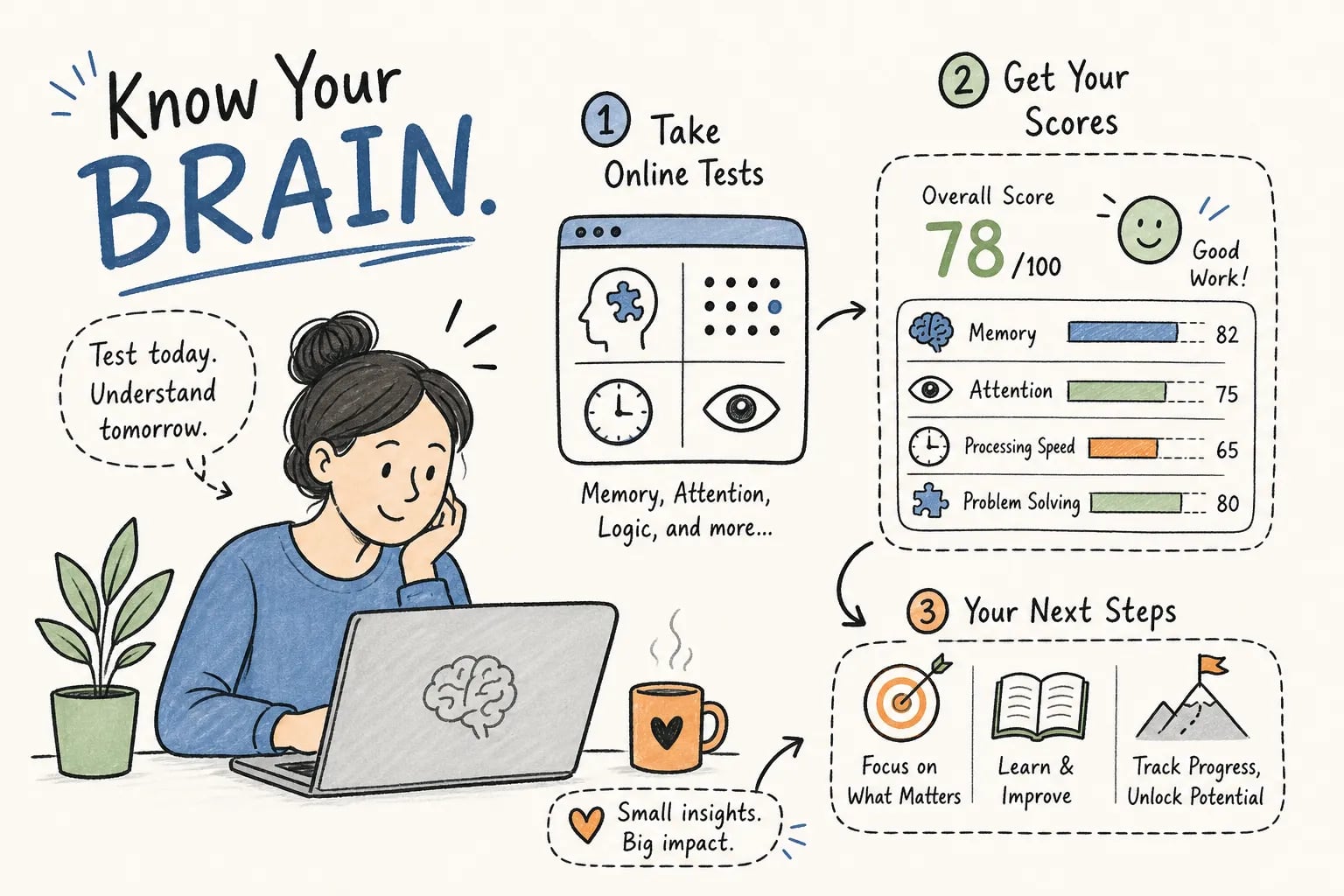
Testing is also different from online self-screening. A screening questionnaire may identify signs that deserve further attention, but it usually cannot establish a diagnosis by itself. A comprehensive evaluation uses multiple sources of information and considers whether symptoms could be better explained by another psychological, medical, developmental, or environmental factor.
Psychological Screening Versus a Comprehensive Evaluation
A screening is usually brief and focused. It may estimate whether symptoms of depression, anxiety, ADHD, or another condition are present. Screening can be a useful starting point, especially in primary care or counseling settings.
A comprehensive psychological evaluation is broader. It may investigate when symptoms began, how they changed, where they occur, and how much they interfere with functioning. The clinician may compare results across several measures to identify consistent patterns and apparent contradictions. This process can be especially helpful when a person has overlapping symptoms or a complicated treatment history.
The final report often includes a summary of findings, diagnostic impressions when appropriate, and individualized recommendations. Those recommendations may address therapy, medication consultation, workplace strategies, academic support, health habits, or additional medical evaluation.
Common Reasons Adults Schedule Psychological Testing
There is no single profile of an adult who benefits from testing. Some people are referred by a therapist, physician, psychiatrist, employer, attorney, or educational program. Others seek an evaluation because they want clearer answers about long-standing difficulties.
- Attention and executive functioning concerns: Persistent problems with concentration, time management, organization, task completion, impulsivity, or forgetfulness may lead an adult to request an ADHD evaluation.
- Mood, anxiety, or trauma symptoms: Testing may help clarify complex symptoms involving depression, panic, intrusive thoughts, emotional instability, chronic worry, or reactions to traumatic experiences.
- Memory or cognitive changes: Adults may seek testing after noticing changes in memory, language, reasoning, processing speed, or decision-making.
- Diagnostic clarification: An evaluation may help distinguish between conditions that share similar features or identify more than one condition affecting daily life.
- Work, school, or treatment planning: Results may support practical recommendations, accommodations, rehabilitation planning, or a more focused approach to therapy.
Attention Problems and Possible Adult ADHD
Many adults request psychological testing because they suspect ADHD. They may lose track of deadlines, underestimate how long tasks will take, struggle to begin routine work, or become overwhelmed by competing demands. Some have experienced these patterns since childhood but developed ways to compensate until adult responsibilities increased.
An ADHD evaluation should consider more than present-day distractibility. Clinicians typically review developmental history, functioning across settings, current symptoms, and other possible explanations. Anxiety, depression, trauma, sleep deprivation, substance use, chronic pain, and certain medical conditions can all affect attention.
Testing may include measures of sustained attention, working memory, processing speed, inhibition, and executive functioning. Rating scales may also gather information about real-world behavior. No single score confirms or rules out ADHD. The overall pattern, history, and level of impairment matter.
Anxiety, Depression, Trauma, and Overlapping Symptoms
Emotional conditions do not always fit neatly into one category. Anxiety can cause restlessness, poor concentration, irritability, fatigue, and sleep disruption. Depression can affect motivation, memory, decision-making, and physical energy. Trauma-related symptoms may include avoidance, emotional numbness, heightened alertness, intrusive memories, or difficulty trusting others.
Psychological testing may help organize these symptoms and examine their severity. Personality and symptom measures can identify patterns that may not emerge during a short interview. Testing can also reveal whether distress appears situational, long-standing, or connected with specific triggers.
Results should be interpreted with care. A high score on a symptom scale does not automatically establish a diagnosis. Cultural background, current stress, health conditions, medication changes, sleep, and recent life events can all influence responses. A qualified evaluator considers these factors before drawing conclusions.
Memory, Thinking, and Changes in Daily Functioning
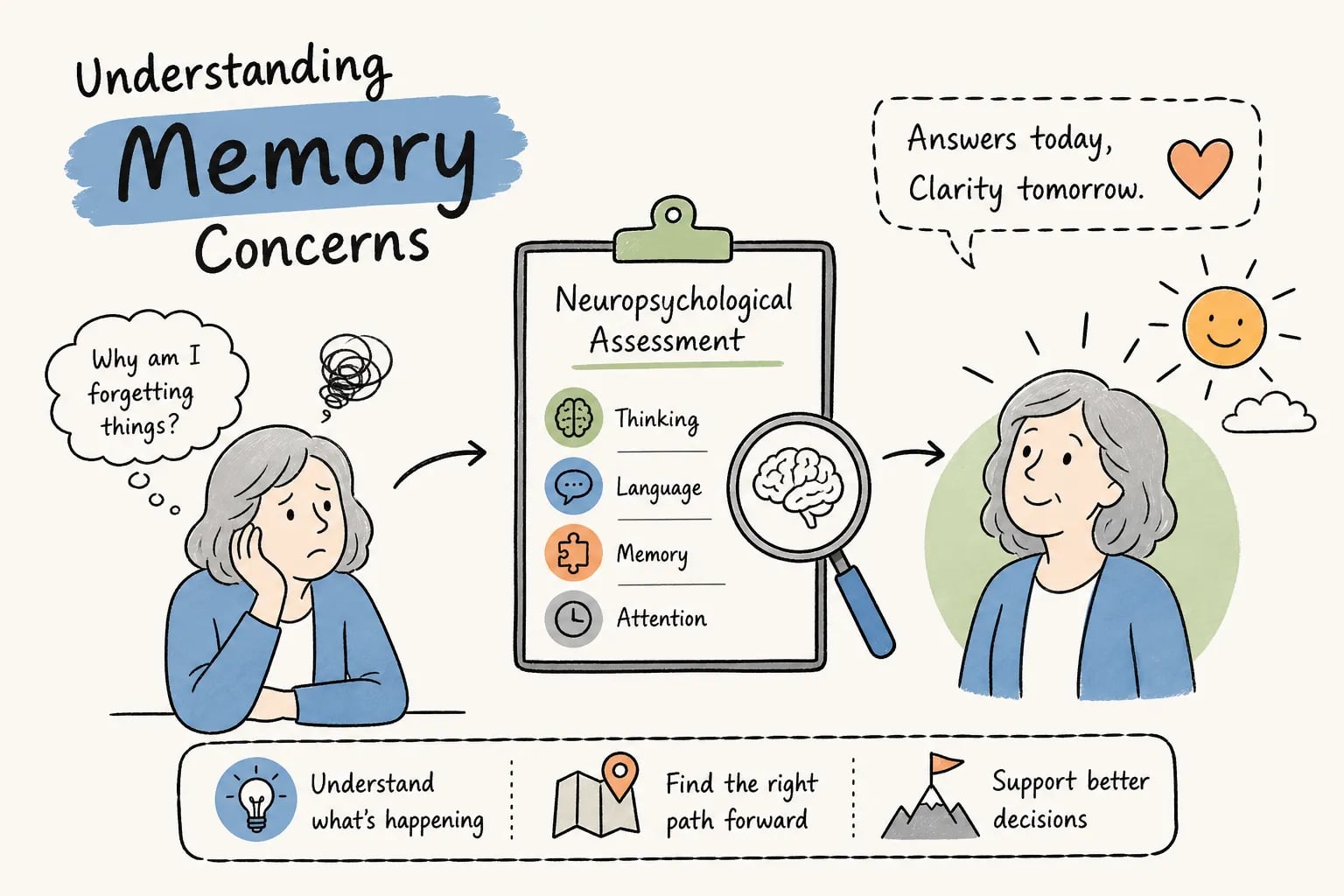
Adults sometimes schedule testing after noticing that everyday mental tasks feel harder. A person may forget conversations, lose the thread of a discussion, make unusual errors, or require more time to complete familiar work. Family members or coworkers may notice changes before the person does.
Cognitive concerns can have many causes. Stress, grief, depression, anxiety, sleep disorders, medication effects, substance use, hormonal changes, chronic illness, neurological conditions, and normal aging can affect mental performance. Psychological or neuropsychological testing may help identify which abilities appear strong and which need closer attention.
Testing is not a substitute for medical care. New, sudden, or rapidly worsening cognitive symptoms should be discussed with a physician. A medical examination may be needed to identify physical causes. Psychological findings can then become one part of a broader diagnostic process.
Local Spotlight: Seeking Adult Psychological Testing in Chicago
Living and working in Chicago can create demands that make attention, mood, and stress-related difficulties more visible. Long commutes, crowded schedules, high-pressure careers, graduate programs, caregiving duties, and limited recovery time may expose problems that were easier to manage in less demanding settings.
Adults in River North and nearby Chicago neighborhoods may seek testing when symptoms begin affecting professional responsibilities, relationships, academic work, or independent living. A local evaluation can make follow-up discussions, record collection, and coordination with treating providers more manageable.
Location is only one factor when selecting an evaluator. Adults should also consider the clinician’s qualifications, experience with the referral question, testing process, expected timeline, fees, insurance arrangements, and whether a written report is included. It is reasonable to ask how the clinician protects privacy and how results will be explained.
What to Expect During an Adult Psychological Evaluation
The process usually begins with a conversation about the reason for testing. The evaluator may ask about current symptoms, childhood development, education, employment, relationships, medical history, medications, sleep, substance use, previous diagnoses, and treatment experiences. Honest answers help the clinician choose appropriate measures.
Testing may take place in one appointment or across several sessions. Some measures involve answering questions about feelings or behavior. Others involve solving problems, remembering information, responding to visual material, or completing timed tasks. Breaks may be available during longer appointments.
Preparation is usually simple. Adults may be asked to bring identification, medication information, prior evaluation reports, school records, medical records, or contact information for someone who knows them well. Normal sleep, regular meals, and prescribed medications can help produce a more typical picture of functioning unless the evaluator gives different instructions.
After testing, the clinician scores and interprets the results. This work may require several sources of information and should not be reduced to an automated score report. A feedback session allows the adult to review the findings, ask questions, and discuss recommendations.
How Results May Support Treatment and Daily Life
Clear findings can improve treatment planning. An adult whose concentration problems are strongly connected with anxiety may need a different approach than someone whose history supports ADHD. A person with memory complaints related to depression may receive different recommendations from someone showing a possible neurological pattern.
Testing can also identify strengths. Strong verbal reasoning, visual problem-solving, persistence, insight, or memory skills may provide useful starting points for treatment and compensation strategies. A balanced report should describe abilities as well as difficulties.
Recommendations should be realistic and connected to the referral question. They may include psychotherapy, psychiatric consultation, sleep evaluation, medical follow-up, skill-building, organizational systems, stress management, academic support, or workplace changes. Not every recommendation will apply to every setting, and formal accommodations may require additional documentation.
Common Questions Around Psychological Testing for Adults
Can psychological testing diagnose an adult mental health condition?
Psychological testing can contribute to a diagnosis, but tests are not interpreted in isolation. A clinician considers interview information, history, observed behavior, test validity, symptom patterns, and other possible causes. Some evaluations lead to a diagnosis, while others identify concerns that need further assessment.
How long does adult psychological testing take?
The length depends on the referral question and the number of measures needed. A focused evaluation may require only a few hours of direct testing. A more comprehensive assessment may involve several appointments, record review, scoring, interpretation, report writing, and a feedback session.
Is psychological testing the same as therapy?
No. Therapy focuses on treatment, coping, behavior change, emotional processing, or personal goals. Psychological testing focuses on assessment and clarification. An evaluator may recommend therapy after testing, but the evaluation itself is not a substitute for ongoing treatment.
Can adults be tested for ADHD even without childhood records?
Yes, although childhood information remains important because ADHD is a developmental condition. When formal records are unavailable, an evaluator may consider personal history, report cards, past work patterns, family observations, and other evidence. The clinician also examines whether another condition better explains the symptoms.
What happens if the results do not confirm the expected diagnosis?
An unexpected result can still be useful. Testing may identify another explanation, show that symptoms fall below diagnostic thresholds, or reveal several contributing factors. The purpose is to reach the most supportable understanding, not to confirm a preferred label.
Will an employer or family member automatically receive the report?
Psychological records are generally handled according to privacy laws, professional standards, and signed authorization forms. The evaluator should explain who will receive the report and how information may be shared. Certain legal, forensic, safety, or court-related evaluations can follow different rules, so the limits of confidentiality should be discussed before testing begins.
Does insurance cover psychological testing for adults?
Coverage varies by insurance plan, clinical need, diagnosis, provider network, authorization requirements, and the type of evaluation. Some plans cover medically necessary testing but exclude educational, employment, legal, or administrative evaluations. Adults should contact both the provider and insurer before scheduling.
When should cognitive changes receive urgent medical attention?
Sudden confusion, severe disorientation, new speech difficulty, weakness, head injury, or rapidly changing mental status may require urgent medical care. Psychological testing is usually scheduled for stable concerns. Immediate or severe symptoms should be evaluated through appropriate medical or emergency services.
Choosing the Next Step
Psychological testing may be worth considering when symptoms remain unclear, several diagnoses appear possible, or treatment has not addressed the main difficulty. It may also help when an adult needs a documented assessment of attention, cognition, emotional functioning, or personality patterns.
A useful first conversation should define the referral question. Instead of asking only for “full testing,” the adult can describe the specific problems that need explanation. Examples include repeated work errors, long-standing disorganization, panic symptoms, memory changes, treatment uncertainty, or difficulty completing school assignments. A precise question helps the evaluator select the right methods.
Testing has limits. Results reflect functioning during a specific period and may be influenced by sleep, health, effort, language, culture, stress, medication, and testing conditions. A report should explain those limits and avoid conclusions that extend beyond the available evidence.
When completed by a qualified professional, psychological assessment can turn a confusing collection of symptoms into a clearer working picture. That clarity can support better questions, more focused care, and practical decisions about the future.
Schedule a Consultation in Chicago
River North Counseling Group LLC
405 North Wabash Avenue
Suite 3209
Chicago, Illinois 60611
Office: 312.467.0000
https://www.rivernorthcounseling.com
Related Terms
- Adult psychological assessment
- ADHD testing for adults
- Diagnostic clarification
- Cognitive testing
- Personality assessment
Relevant Words: psychological testing for adults, adult psychological evaluation, psychological assessment Chicago, adult ADHD testing Chicago, diagnostic testing for mental health, cognitive assessment for adults, personality testing, memory testing, executive functioning assessment, River North counseling.
Psychological Testing, Adult Mental Health, ADHD Assessment, Cognitive Testing, Diagnostic Evaluation
Additional Resources
American Psychological Association: Understanding Psychological Testing and Assessment
MedlinePlus: Mental Health Screening
National Institute of Mental Health: Psychotherapies
Expand Your Knowledge
MedlinePlus: Cognitive Testing
American Psychological Association: Guidelines for Psychological Assessment and Evaluation
This article provides general educational information and is not a diagnosis or a substitute for individualized medical or mental health care.