
Therapy for Men in Chicago: Why It’s Hard to Start and Why It Helps
Starting therapy can feel unfamiliar, especially for men who have spent years solving problems without discussing their emotions. A man may manage a demanding career, support a family, maintain friendships, and appear successful while feeling anxious, disconnected, exhausted, or uncertain underneath. Because he is still functioning, he may assume that his concerns are not serious enough for counseling.
Other men recognize that something is wrong but struggle to describe it. Emotional distress does not always appear as sadness or frequent crying. It may surface as irritability, overworking, sleep problems, physical tension, substance use, emotional withdrawal, impulsive decisions, or repeated conflict with a partner. These experiences can be easy to dismiss until they begin affecting health, relationships, or daily performance.
Therapy does not require a crisis, a diagnosis, or a perfect explanation of what is happening. A person can begin with a simple concern: life feels harder than it should, stress is becoming difficult to control, or familiar coping habits are no longer working. That starting point is enough.
Why Many Men Find It Difficult to Begin Therapy
Men are often encouraged to be self-reliant from an early age. Independence can be valuable, but rigid expectations about strength may leave little room for fear, uncertainty, grief, or vulnerability. Some men learn that asking for help signals weakness. Others receive the message that emotional conversations are uncomfortable, unproductive, or inappropriate.
These beliefs can shape how a man responds to stress. Instead of naming anxiety, he may focus on working harder. Instead of discussing loneliness, he may isolate himself. Instead of acknowledging hurt, he may become angry or emotionally unavailable. The original problem remains, while the coping response creates added strain.
Pressure to Remain in Control
Therapy involves discussing situations that may not have clear answers. That uncertainty can be uncomfortable for someone who is used to fixing problems quickly. A first session may also feel risky because the therapist is unfamiliar. Men who value privacy may worry about being judged, misunderstood, or pushed into conversations before they are ready.
Good therapy respects personal boundaries and moves at a workable pace. A therapist may ask questions, clarify goals, and help identify patterns, but the client remains an active participant. Sessions are collaborative rather than confrontational. It is acceptable to say that a subject feels difficult, that a question is unclear, or that a particular approach is not helpful.
Difficulty Identifying Emotions
Some men arrive in counseling knowing what happened but not knowing how they feel about it. They may describe a job loss, divorce, family conflict, medical concern, or stressful transition in great detail while struggling to name the emotional effect.
This does not mean the person lacks emotions or cannot benefit from therapy. Emotional awareness is a skill that can be developed. A therapist may begin with physical sensations, thoughts, behaviors, and recent events. Over time, the client can build a clearer vocabulary for experiences such as disappointment, shame, fear, resentment, loneliness, or grief.
Fear That Therapy Will Change Who They Are
Some men worry that counseling will make them less driven, less independent, or less capable of handling pressure. Therapy is not designed to remove ambition, confidence, humor, competitiveness, or personal values. It can help a person use those strengths without being controlled by stress, perfectionism, anger, or fear of failure.
The goal is not to produce a particular personality. The goal is to help the client function with more choice. A man who understands his emotional reactions can decide how to respond instead of repeating an automatic pattern.
Local Spotlight: The Pressures Men Face in Chicago
Chicago offers strong professional, educational, cultural, and social opportunities, but city life can also add pressure. Long workdays, high housing costs, crowded commutes, harsh winter weather, family responsibilities, and limited personal time can make stress feel constant. In business districts such as River North and the Loop, the line between work and personal life may become especially thin.
A professional may leave the office but continue checking messages throughout the evening. A parent may manage work demands, school schedules, household responsibilities, and a relationship without setting aside time to recover. People may surround someone who recently moved to Chicago yet lack close local support. Men living alone may go days without a meaningful conversation about how they are doing.
Chicago’s pace can also reward outward productivity. A man may receive praise for working long hours while the same behavior contributes to poor sleep, irritability, disconnection, or burnout. Therapy creates a place to examine whether a successful routine is also sustainable.
How Therapy Can Help Men Build Practical Skills
Psychotherapy includes several treatment approaches that help people examine troubling emotions, thoughts, and behaviors. According to the National Institute of Mental Health, therapy may help people develop coping strategies, improve communication, address the effects of trauma, and change patterns that interfere with daily life.
The exact structure depends on the client, therapist, treatment approach, and goals. Some men prefer focused sessions with practical exercises. Others need room to explore family history, identity, relationships, or experiences they have rarely discussed.
Managing Anxiety and Chronic Stress
Anxiety may appear as constant planning, difficulty relaxing, racing thoughts, muscle tension, impatience, or a need to control details. A man may prepare for every possible problem yet never feel prepared enough. Therapy can help identify exaggerated threat predictions, perfectionistic standards, and habits that keep the nervous system activated.
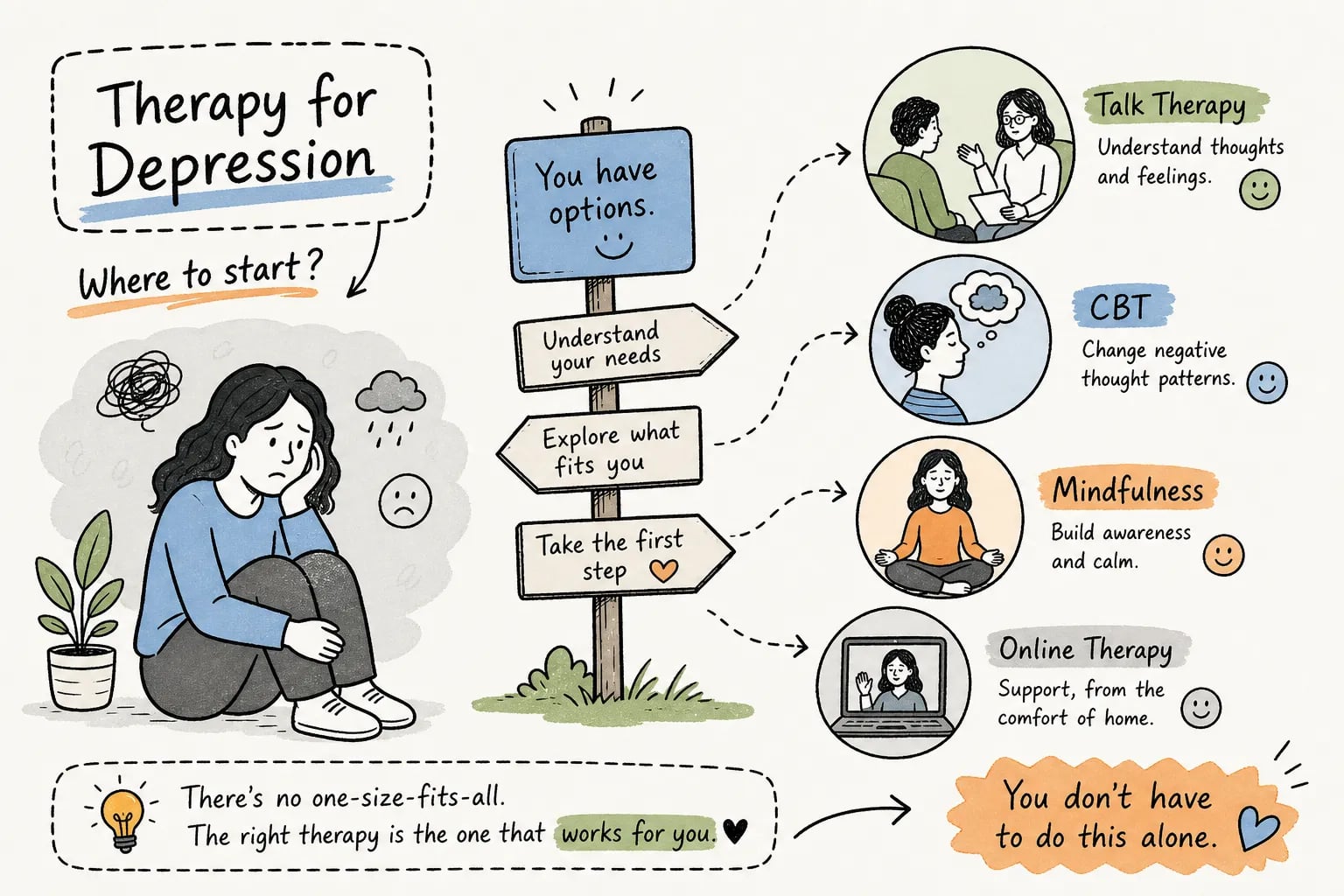
Cognitive behavioral therapy, often called CBT, is one approach used to examine connections between thoughts, emotions, and behavior. Sessions may address avoidance, negative assumptions, or routines that provide short-term relief while maintaining anxiety. The work can include communication practice, relaxation methods, gradual exposure to feared situations, and more balanced ways of interpreting uncertainty.
Understanding Anger and Irritability
Anger is not automatically unhealthy. It can signal unfair treatment, crossed boundaries, fear, embarrassment, grief, or unmet needs. Problems arise when anger becomes the only emotion a person can express or when it leads to intimidation, damaged relationships, risky behavior, or regret.
Therapy can slow the sequence between a trigger and a reaction. A client may learn to recognize early warning signs, identify the emotions beneath anger, and communicate before frustration reaches its highest point. This process is not about suppressing anger. It is about expressing it without allowing it to control important decisions.
Improving Relationships and Communication
Relationship problems often involve repeating cycles. One partner asks for more connection, the other feels criticized and withdraws, and the withdrawal causes the first partner to push harder. Both people may feel rejected even though each is trying to protect the relationship.
Individual therapy can help men recognize these cycles and communicate needs more directly. Counseling may address conflict, trust, intimacy, separation, dating concerns, family boundaries, or the transition into marriage and parenthood. It can also help a man distinguish between responsibility for his behavior and responsibility for another person’s emotions.
Handling Depression That Does Not Look Like Sadness
Depression can include low mood, but it may also involve loss of interest, fatigue, isolation, hopelessness, concentration problems, disrupted sleep, or changes in appetite. The NIMH resource on men and mental health notes that men experiencing mental health problems may show changes in mood, behavior, energy, sleep, or substance use.
A man with depression may still attend meetings, exercise, complete tasks, and support others. Functioning does not cancel distress. Therapy can help clarify what is happening, identify contributing factors, and determine whether additional evaluation or coordinated medical care may be appropriate.
What the First Therapy Session Usually Involves
The first appointment is commonly an assessment and conversation rather than an intense disclosure session. The therapist may ask what led to the appointment, how long the concern has been present, and how it affects work, sleep, health, or relationships. Questions about personal history, current stressors, medications, substance use, safety, and previous treatment may also be included.
A client does not need to prepare a complete life story. A brief description of the main concern is useful. Examples include feeling constantly on edge, arguing more often, losing motivation, struggling after a breakup, or feeling disconnected despite outward success.
The first few meetings also allow the client to evaluate fit. A therapist may be qualified but still not feel like the right match. Useful signs include feeling respected, understanding how the therapist works, and being able to discuss goals openly. Some discomfort is normal when addressing painful subjects, but the relationship should not feel shaming or dismissive.
Choosing Between In-Person and Online Therapy
In-person counseling provides physical separation from home and work. That transition can make it easier to focus. For men who live or work near downtown Chicago, a River North location may fit naturally into a weekday schedule.
Online therapy may reduce travel time and provide greater scheduling flexibility. It can be useful for Illinois residents who travel frequently, work from home, or live outside central Chicago. Privacy, internet reliability, clinical needs, and personal preference should guide the decision. Some clients use one format consistently, while others choose the option that best supports regular attendance.
Common Questions Around Therapy for Men in Chicago
How can a man tell when it is time to see a therapist?
Therapy may be helpful when stress, anger, anxiety, sadness, substance use, sleep problems, or relationship conflict persists and begins affecting daily life. Counseling can also support personal growth before a problem becomes severe. A sudden behavior change, increasing isolation, hopelessness, or difficulty completing normal responsibilities deserves timely attention.
What do men usually discuss in therapy?
Common topics include career pressure, relationships, divorce, dating, fatherhood, family conflict, anger, anxiety, depression, grief, trauma, loneliness, confidence, sexual concerns, identity, health changes, and major transitions. Sessions are shaped around the client’s goals rather than a standard list of subjects.
Does therapy mean talking about childhood every week?
Not necessarily. Earlier experiences may be relevant when they explain current beliefs or relationship patterns, but many therapies also focus on present concerns and practical skills. Clients can ask how a therapist balances past experiences with current problem-solving.
How long does therapy take to work?
The timeline varies with the concern, its severity, treatment goals, attendance, and the therapeutic relationship. Some clients notice useful changes within several sessions. Long-standing trauma, depression, relationship patterns, or complex life circumstances may require longer care. Progress should be reviewed so therapy remains connected to clear goals.
Is therapy confidential?
Licensed therapists generally protect client privacy under professional ethics and applicable laws. There are limited exceptions, such as immediate safety concerns, suspected abuse in situations covered by mandatory reporting laws, or certain legal requirements. A therapist should explain confidentiality and its limits during the intake process.
Can therapy help with work stress and burnout?
Yes. Therapy can help identify unsustainable expectations, perfectionism, weak boundaries, avoidance, and beliefs that connect personal worth to performance. It may also help a client make realistic decisions about workload, communication, rest, career direction, and competing responsibilities.
What happens when a man is not comfortable opening up?
That concern can be discussed directly. A therapist can begin with specific situations, daily routines, physical symptoms, or practical goals rather than requesting immediate emotional disclosure. Trust usually develops through consistent, respectful conversations. Openness is not an entrance requirement for therapy. It can be one result of the process.
Beginning Therapy in River North
Choosing therapy is not an admission that a man has failed to manage his life. It is a decision to examine what is no longer working. The process can help turn vague distress into understandable patterns and manageable goals.
A first step may be as small as contacting a counseling practice, asking about availability, or scheduling an initial consultation. There is no requirement to feel fully ready. Many people begin while feeling uncertain, skeptical, or uncomfortable. Readiness often grows after the process starts.
Schedule Therapy in Chicago
River North Counseling Group LLC, 405 North Wabash Avenue, Suite 3209, Chicago, Illinois 60611. Office: 312.467.0000. https://www.rivernorthcounseling.com. Contact the practice to ask about therapist availability, appointment formats, and services that may fit current concerns.This article provides general educational information and is not a substitute for diagnosis, medical advice, or emergency care. Anyone facing an immediate mental health crisis can call or text 988. Call 911 when there is an immediate danger.
Related Terms
- Men’s mental health counseling
- Individual therapy for men
- Anxiety therapy in Chicago
- Depression counseling for men
- River North therapist
Additional Resources and Further Reading
- Additional resource: National Institute of Mental Health: Men and Mental Health
- Additional resource: National Institute of Mental Health: Psychotherapies
- Additional resource: Chicago Department of Public Health: Mental Health Centers
- Expand your knowledge: American Psychological Association: Men, Depression, and Treatment Stigma
- Expand your knowledge: National Institute of Mental Health: Finding Mental Health Help
Relevant words
Therapy for men in Chicago
Relevant Words: men’s therapist Chicago, counseling for men Chicago, male mental health Chicago, individual therapy Chicago, anxiety therapy for men, depression counseling for men, anger management therapy Chicago, work stress counseling, burnout therapy Chicago, relationship counseling for men, River North counseling, Chicago psychotherapist, online therapy Illinois, CBT therapy Chicago, therapy for fathers Chicago.
Therapy for Men, Men’s Mental Health, Chicago Therapy, River North Counseling, Anxiety Counseling, Depression Therapy, Individual Counseling, Work Stress, Relationship Counseling, Online Therapy.