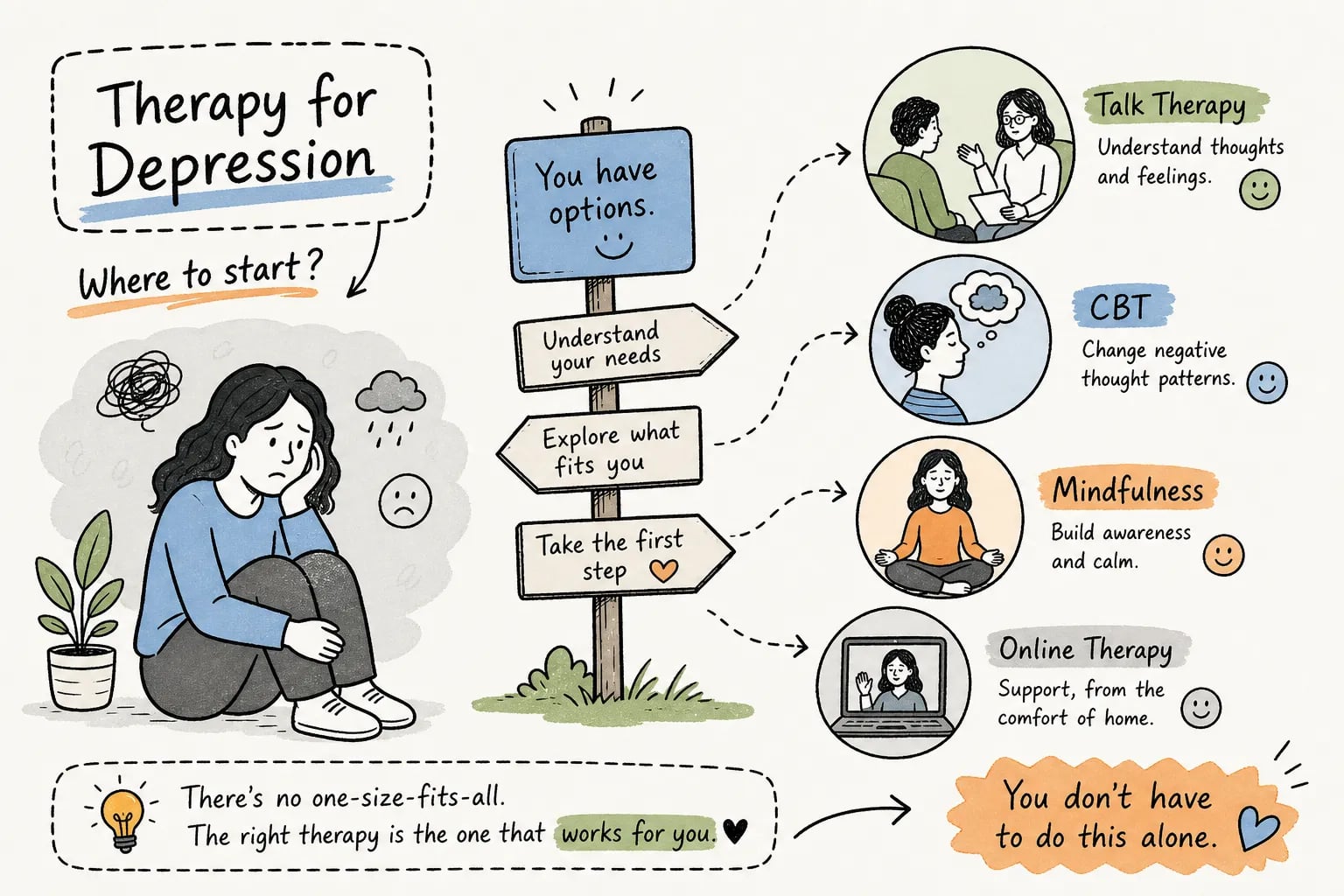


Most people have had the experience of watching a single stressful thought spiral into something overwhelming. A missed phone call becomes an imagined emergency. A vague comment from a coworker becomes evidence of imminent job loss. A minor headache becomes a feared diagnosis. That mental leap — from one difficult moment to the absolute worst conclusion — has a name: catastrophizing.
Catastrophizing is one of the most common cognitive distortions treated in therapy, and it can quietly fuel anxiety, depression, and chronic stress. The good news is that cognitive behavioral therapy (CBT) offers a practical, evidence-based skill for interrupting this pattern— one that can be learned, practiced, and applied today.
What Is Catastrophizing?
Catastrophizing is a style of thinking in which the mind automatically moves toward the worst possible outcome and treats it as the most likely or even inevitable result. Psychologists sometimes describe it using two related patterns: magnifying the perceived severity of a problem and minimizing the ability to cope with it.
It often feels completely rational in the moment. The thoughts come quickly, feel urgent, and carry a strong emotional charge. But when examined carefully, catastrophic thinking is almost always a distortion — a mental shortcut that amplifies threat and underestimates resilience.
Catastrophizing frequently appears alongside:
Generalized anxiety disorder (GAD)
Social anxiety
Health anxiety
Depression
Post-traumatic stress
Chronic pain conditions
It is not a character flaw or a sign of weakness. It is a learned pattern — which means it can be unlearned.
Why the Brain Catastrophizes
Understanding why this happens can reduce the shame many people feel about it. The brain’s threat-detection system, often associated with the amygdala, is wired to scan for danger and prioritize worst-case outcomes. In genuinely dangerous environments, this served an important protective function. In everyday modern life, the same mechanism can misfire— treating a tense email or an overdue bill as a catastrophic threat.
Stress, sleep deprivation, past trauma, and prolonged anxiety can all lower the threshold at which this system activates, making catastrophic thinking more frequent and harder to interrupt. That is precisely where CBT comes in.
The CBT Skill: Cognitive Restructuring
Cognitive restructuring is the cornerstone CBT technique for
addressing cognitive distortions such as catastrophizing. It does not tell people to think positively or pretend problems are not real. Instead, it teaches a structured way to examine the evidence behind a thought and arrive at a more accurate and balanced conclusion.
The process follows a clear sequence that can be practiced independently or with a therapist:
Step 1: Catch the Thought
The first step is simply noticing when catastrophizing is happening. This sounds straightforward, but because these thoughts move so quickly and feel so convincing, catching them requires deliberate attention. Useful cues include sudden spikes in anxiety, a sense of dread that feels disproportionate to the situation, or thoughts that begin with “what if” and escalate rapidly.
Writing the thought down is more effective than trying to examine it mentally. Putting it in words on paper (or a notes app) creates a small but important distance between the thinker and the thought.
Step 2: Identify the Catastrophe
Ask: What is the worst outcome this thought is predicting? State it plainly. For example: “I am going to be fired and will never find another job.” “My partner is pulling away, and the relationship is ending.” “That symptom means something is seriously wrong with my health.”
Getting the catastrophe into specific language makes it possible to examine. Vague dread is much harder to challenge than a concrete, stated fear.
Step 3: Examine the Evidence
This is the heart of the technique. Ask two questions:
What evidence supports this worst-case outcome?
What evidence contradicts it or points to a different, less severe outcome?
Most people find that when they actually list the evidence on both sides, the catastrophic conclusion is supported by very little — and contradicted by quite a lot. A performance review that went well, a relationship history without serious conflict, a clean bill of health at the last checkup — these are real data points the catastrophizing mind tends to ignore.
Step 4: Consider the Most Realistic Outcome
Based on the actual evidence, what is the most likely outcome? Not the best possible, and not the worst — the most realistic. This step helps the brain calibrate to probability rather than possibility.
Most realistic outcomes are far less dire than the catastrophe. They may still involve difficulty or uncertainty, but they are manageable— which brings up the next step.
Step 5: Ask “Could I Cope?”
Even if something difficult did happen, ask honestly: would there be any ability to handle it? Most people, when they pause and reflect, can identify times they coped with hard things in the past. Catastrophizing tends to lead to a sense of total helplessness in the face of difficulty. Deliberately recalling evidence of pastexclusion ddirectly counters thissassumption
Step 6: Form a Balanced Thought
Finally, write a replacement thought — not a forced affirmation, but a grounded, evidence-based statement. For example: “It is possible I made a mistake at work, and it is also true that my overall record is strong. I can address this professionally and most likely move forward. Even in a difficult scenario, I have coped with setbacks before.”
This is not the same as the original catastrophic thought, but it is not empty reassurance. It is an accurate, balanced reflection of what the evidence actually shows.
Building the Habit
Cognitive restructuring takes practice. The mind has often run the catastrophizing pattern thousands of times, and a new pattern needs consistent repetition to take hold. Keeping a thought record — a simple log of catastrophic thoughts, the evidence for and against them, and the more balanced conclusion — helps accelerate this process.
Many therapists recommend practicing cognitive restructuring daily, even on lower-stakes worries, to build the skill before it is needed in a high-anxiety moment. Over time, the structured six-step process often becomes more automatic, and the pause between a triggering event and a catastrophic conclusion naturally grows longer.
When Self-Practice Is Not Enough
For some people, catastrophizing is deeply entrenched or connected to significant anxiety, trauma, or depression. In those cases, working with a licensed therapist makes a meaningful difference. A trained clinician can help identify the specific patterns driving catastrophic thinking, address any underlying conditions contributing to it, and guide the restructuring process with nuance and skill that self-help alone may not fully provide.
Therapy also provides accountability and a space to practice these techniques with professional support, which research consistently shows leads to faster and more durable change.
People Also Ask
What is catastrophizing?
Catastrophizing is a cognitive distortion in which a person automatically assumes the worst possible outcome in any given situation, even when evidence suggests a less severe result is far more likely. It is one of the most common patterns addressed in cognitive behavioral therapy.
Is catastrophizing a symptom of anxiety?
Yes. Catastrophizing is strongly associated with anxiety disorders, depression, and chronic stress. It often fuels a cycle in which anxious thinking leads to more anxiety, which in turn amplifies catastrophic interpretations of events.
Can CBT really help with catastrophic thinking?
Yes. CBT is among the most well-researched treatments for cognitive distortions, including catastrophizing. Techniques such as cognitive restructuring teach clients to identify and challenge worst-case thoughts, replacing them with more accurate, balanced perspectives.
How long does it take to stop catastrophizing with therapy?
Progress varies by individual, but many clients notice meaningful shifts in thinking patterns within several weeks of consistent CBT work. A licensed therapist can tailor the pace and approach to each person’s specific needs and history.
Where can I find a therapist in Chicago who specializes in CBT for anxiety?
River North Counseling Group LLC, located in Chicago’s River North neighborhood, offers CBT-informed therapy for anxiety, cognitive distortions, and related concerns. Contact information and scheduling options are available at rivernorthcounseling.com.
Trusted Resources on CBT and Cognitive Distortions
American Psychological Association — Cognitive Behavioral Therapy
National Institute of Mental Health — Psychotherapies
Beck Institute for Cognitive Behavior Therapy
Find River North Counseling Group
Ready to Stop the Spiral? Talk to a Therapist Today.
Catastrophizing does not have to be a permanent pattern. The team at River North Counseling Group LLC works with individuals across Chicago who are ready to challenge anxious thinking and build lasting mental clarity. Reaching out is the first step.
River North Counseling Group LLC
405 North Wabash Avenue
Suite 3209
Chicago, Illinois 60611
Office: 312.467.0000
www.rivernorthcounseling.com