

Mood Swings vs. Bipolar Disorder: What’s the Difference?
Everyone has ups and downs, but bipolar disorder is more than “being moody.” This guide explains how to tell the difference between everyday mood swings and bipolar disorder, when to get help, and how therapy in Chicago can support you or someone you love.
It can feel scary to wonder, “Are these just mood swings, or is it bipolar disorder?” Many people search for the exact question after noticing emotional highs and lows in themselves, a partner, or a child.
The good news is that you do not have to figure this out alone. Mental health professionals use explicit criteria to diagnose bipolar disorder and can help you understand what is happening, why it is happening, and how to treat it.
This article walks through the key differences between normal mood swings and bipolar disorder, what symptoms to watch for, and how counseling at River North Counseling Group LLC in Chicago can support your next step.
What Are “Normal” Mood Swings?
Normal mood swings are emotional changes that align with what is happening in your life. You feel happy when things go well, annoyed when they are stressful, and sad when something painful happens. Those feelings rise and fall, but they usually:
- Last from a few minutes to a few hours, sometimes a day or two
- Are linked to clear triggers, like stress at work or conflict at home
- Do not completely disrupt school, work, or relationships
- Do not cause dangerous behavior or extreme choices
- Settle with rest, support, or time
These kinds of changes are part of being human. Hormones, sleep, blood sugar levels, illness, significant life changes, and even weather can all influence your mood. Feeling more emotional does not automatically mean you have bipolar disorder.
What Is Bipolar Disorder?
Bipolar disorder is a mental health condition that causes clear shifts in mood, energy, activity level, and sleep that are stronger and last longer than typical mood swings.
People with bipolar disorder have episodes of:
1. Mania or hypomania (the “up” side)
During a manic or hypomanic episode, a person may:
Feel extremely “up,” excited, or wired
Need much less sleep and still feel full of energy
Talk very fast, jump between topics, or feel like thoughts are racing
Take big risks with money, sex, driving, or substances
Feel unusually confident, powerful, or important
Mania is more intense and usually lasts at least 7 days or leads to a hospital stay. Hypomania is a milder form of mania that lasts at least 4 days and is noticeable to others, but may not cause as much harm.
2. Depression (the “down” side)
During a depressive episode, a person may:
Feel sad, empty, or hopeless most of the day
Lose interest in activities they usually enjoy
Sleep much more or have trouble sleeping
Feel very tired or “heavy” in their body
Have trouble thinking clearly, focusing, or making decisions
Feel worthless, guilty, or like a burden
Think about death or suicide
These episodes typically last at least two weeks and significantly impact daily life.
How common is bipolar disorder? In the United States, bipolar disorder affects an estimated 2.8% of adults each year, and most people experience severe impairment during episodes.
Key Differences: Mood Swings vs. Bipolar Disorder
Both mood swings and bipolar disorder involve mood changes. The differences are evident in the intensity of the moods, their duration, and the extent to which they impact daily life.
1. Intensity
With typical mood swings, you may feel irritable, sad, or cheerful, but you still feel like yourself. You can usually pause, think, and choose how to respond.
With bipolar episodes, the emotion may feel extreme or out of control. During a manic episode, a person may feel “on top of the world” or become very irritable and angry. During depression, they may feel so low that even small tasks feel impossible.
2. Duration
Regular mood shifts are usually short. You might wake up grumpy, feel better after lunch, and feel relaxed by evening.
Bipolar episodes last longer. Manic episodes usually last at least a week, hypomanic episodes at least 4 days, and depressive episodes at least 2 weeks if untreated.
3. Impact on daily life
Every day mood swings might make a day harder, but you can still get to work, care for kids, pay bills, and stay mostly on track.
Bipolar episodes often disrupt daily life. People may miss work or school, spend large amounts of money, damage relationships, or need emergency or hospital care.
4. Pattern over time
Bipolar disorder has a pattern of mood episodes that come back over months or years. Many people notice cycles of ups and downs, or long periods of depression with brief hypomanic periods.
Typical mood swings are usually more random, short-lived, and closely tied to daily stress, hormonal fluctuations, or significant life events.
Quick comparison: mood swings vs. bipolar disorder
- Cause: Mood swings often relate to stress or events; bipolar episodes can appear even when life seems “fine.”
- Length: Mood swings last hours or a day; bipolar episodes last days to weeks or longer.
- Control: With mood swings, you still feel mostly in control; with bipolar mania or depression, control can feel lost.
- Functioning: Mood swings bother you, but you still function; bipolar episodes often disrupt school, work, or relationships.
- Risk: Bipolar episodes carry a higher risk of unsafe behavior, self-harm, or suicidal thoughts.
What About Mood Swings in Teens and Young Adults?
Teens and young adults naturally experience more mood changes as their brains, hormones, and lives undergo significant shifts. School stress, social media, friend groups, and identity can all affect mood.
Bipolar disorder in youth is less common, but it does occur. In children and teens, symptoms can overlap with ADHD, depression, anxiety, or behavior problems, which makes careful evaluation very important.
Warning signs that go beyond typical teen moodiness include:
Very short sleep for several nights with high energy
Big shifts from intense excitement to deep despair
Risky behavior that is not typical for your teen
Intense anger or agitation that seems to come out of nowhere
Thoughts of self-harm, death, or suicide
If you see these signs, it is essential to reach out to a licensed mental health professional who has experience with youth mood disorders.
Local Spotlight: Mood and Stress in Chicago
Living in Chicago has many strengths, including a bustling downtown, diverse neighborhoods, and numerous opportunities. It also brings stress. Long commutes, packed schedules, financial pressure, and noise can all take a toll on your mood and energy.
Recent reports show that over a quarter of adults in Illinois reported significant symptoms of anxiety or depressive disorder in 2023, a considerable increase compared with just a few years earlier. Many families in Cook County also face higher rates of depression and anxiety, with significant differences between zip codes.
Those numbers do not mean everyone has bipolar disorder. They do show that many people in our state are struggling with their mood and are looking for help. Access to timely, skilled care can make a significant difference in how people feel and function on a day-to-day basis.
When Is It Time to Talk With a Professional?
If you are unsure whether you are experiencing “normal” mood swings or something more, focus on the impact and patterns rather than just one bad day.
You may benefit from a professional evaluation if you notice:
- Mood changes that keep coming back and last for days or weeks
- Times when you sleep very little but feel wired or overly confident
- Periods of deep sadness, emptiness, or hopelessness
- Big changes in spending, sex, or risk-taking that feel out of character
- Thoughts of death, self-harm, or suicide
If you ever have thoughts of harming yourself or others, or feel you cannot stay safe, treat it as an emergency and call 911, go to the nearest emergency room, or contact the 988 Suicide & Crisis Lifeline by calling or texting 988 in the United States.
How a Chicago Therapist Can Help
A full evaluation for bipolar disorder usually includes:
A detailed conversation about your current symptoms
Questions about your past mood history and family history
Screening tools or structured questionnaires
Review of medical conditions, medications, and substances that can affect mood
From there, your care team may talk with you about options such as:
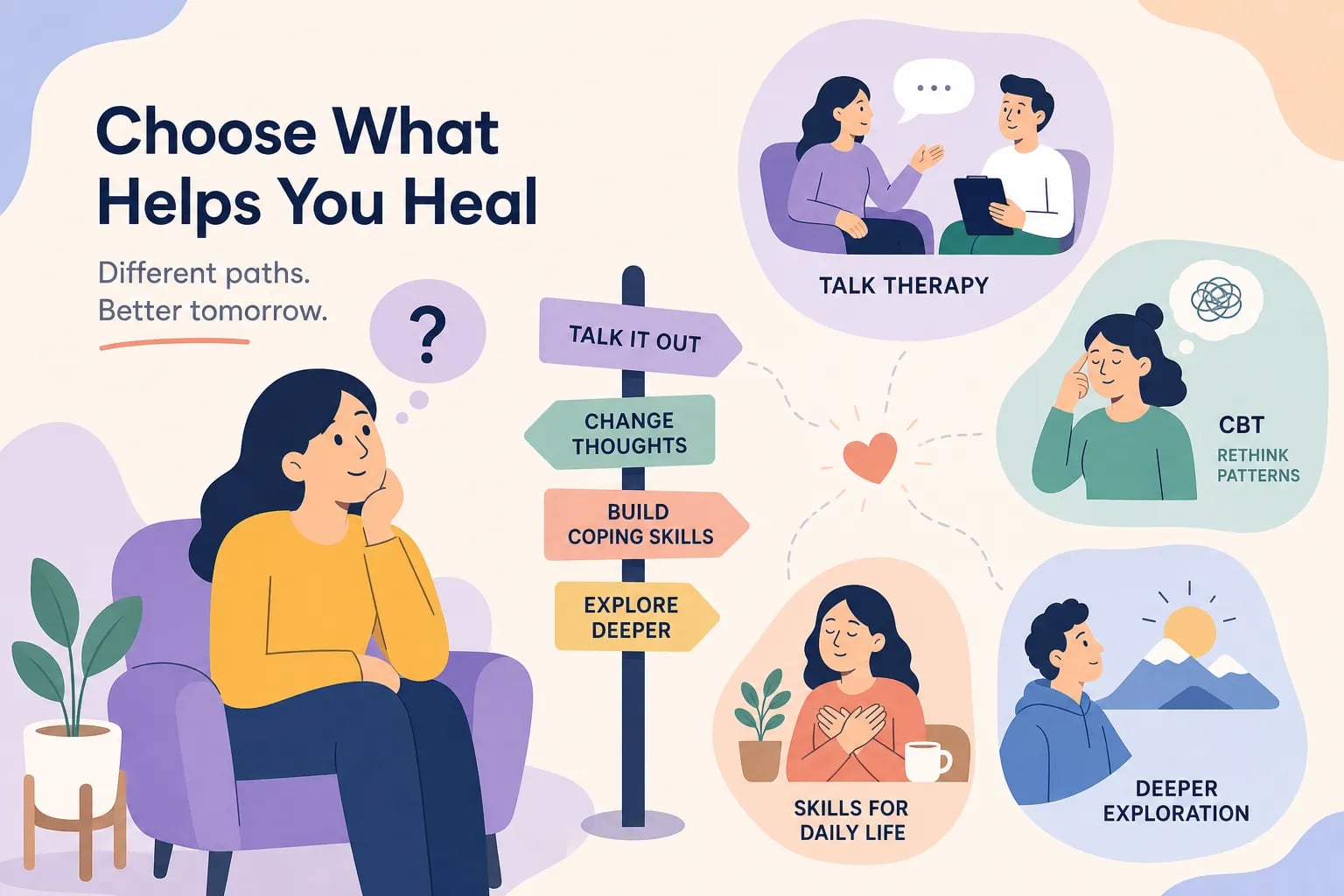
Psychotherapy to build coping skills, understand triggers, and improve relationships
Medication to stabilize mood, when appropriate, prescribed by a medical professional
Lifestyle changes like regular sleep, routines, movement, and stress management
Counselors and psychologists can also help you track your moods over time, allowing patterns to become clear. This information enables psychiatrists and primary care physicians to fine-tune treatment.
Visit River North Counseling Group LLC in Chicago
If you or someone you love is worried about mood swings, sadness, or the possibility of bipolar disorder, an in-person or virtual session can be a wise next step.
River North Counseling Group LLC
Chicago Office:
405 North Wabash Ave
Suite 3209
Chicago, Illinois 60611
Office: 312.467.0000
https://www.rivernorthcounseling.com
Our Chicago office serves individuals, couples, families, and youth throughout the city and its surrounding suburbs. Therapists provide evaluation, ongoing counseling, and coordination with medical providers when bipolar disorder or other mood disorders are a concern.
Use the map below to find our Chicago location in River North:
If you are unsure whether what you are feeling is “just stress,” depression, or possible bipolar disorder, your therapist can walk through that question with you in a structured, thoughtful way.
Common Questions Around Mood Swings vs. Bipolar Disorder in Chicago
Is every big mood swing a sign of bipolar disorder?
No. Significant reactions can come from stress, trauma, lack of sleep, substance use, hormonal changes, or other medical issues. Bipolar disorder involves a clear pattern of manic, hypomanic, and depressive episodes that last days to weeks and seriously affect daily life.
How long do bipolar mood episodes usually last?
In many people, manic episodes last at least 7 days or require hospital care, hypomanic episodes last at least 4 days, and depressive episodes last at least 2 weeks when untreated. Some people experience shorter or longer episodes, which is why professional assessment is essential.
Can someone have bipolar disorder and still work or go to school?
Yes. With correct diagnosis and ongoing care, many people with bipolar disorder work, study, parent, and have strong relationships. Treatment often involves a combination of psychotherapy, medication, and healthy lifestyle habits. The goal is not to erase emotion, but to reduce the intensity and length of episodes.
How is bipolar disorder different from depression alone?
People with major depressive disorder have depressive episodes without mania or hypomania. People with bipolar disorder have both depression and periods of unusually high or irritable mood with increased energy and activity. Sometimes depression shows up first, which can delay a bipolar diagnosis until a manic or hypomanic episode appears.
When should someone in Chicago seek urgent help?
Seek urgent or emergency help if you or someone you know has thoughts of suicide, wants to harm others, is unable to care for basic needs, is acting dangerously, or is so agitated or confused that safety is at risk. Call 911, go to the nearest emergency department, or contact the 988 Suicide & Crisis Lifeline by calling or texting 988.
Related Terms
Related terms: bipolar I disorder, bipolar II disorder, hypomania, mood disorder, major depressive disorder.
Additional Resources
National Institute of Mental Health – Bipolar Disorder
NIMH – Bipolar Disorder booklet (PDF)
Mayo Clinic – Bipolar disorder: Symptoms and causes
Expand Your Knowledge
Cleveland Clinic – Bipolar Disorder: Symptoms & Treatment
NIMH – Bipolar Disorder in Teens and Young Adults: Know the Signs
NAMI – Mental Health by the Numbers
Mood swings, bipolar disorder, bipolar vs mood swings, Chicago therapy, River North counseling, mood disorder treatment.
Mood swings vs bipolar disorder, signs of bipolar disorder, bipolar symptoms Chicago, mood disorder counseling in River North, bipolar evaluation Chicago therapist, difference between mood swings and bipolar, therapy for mood swings Chicago.